Senate Funds DHS Excludes ICE: Political Compromise
Congress ends airport chaos while deliberately withholding ICE funding, weaponizing budget appropriations.
By Adrian Cole🕐 3/27/2026 · 7:26 AM ET5 min read941 words
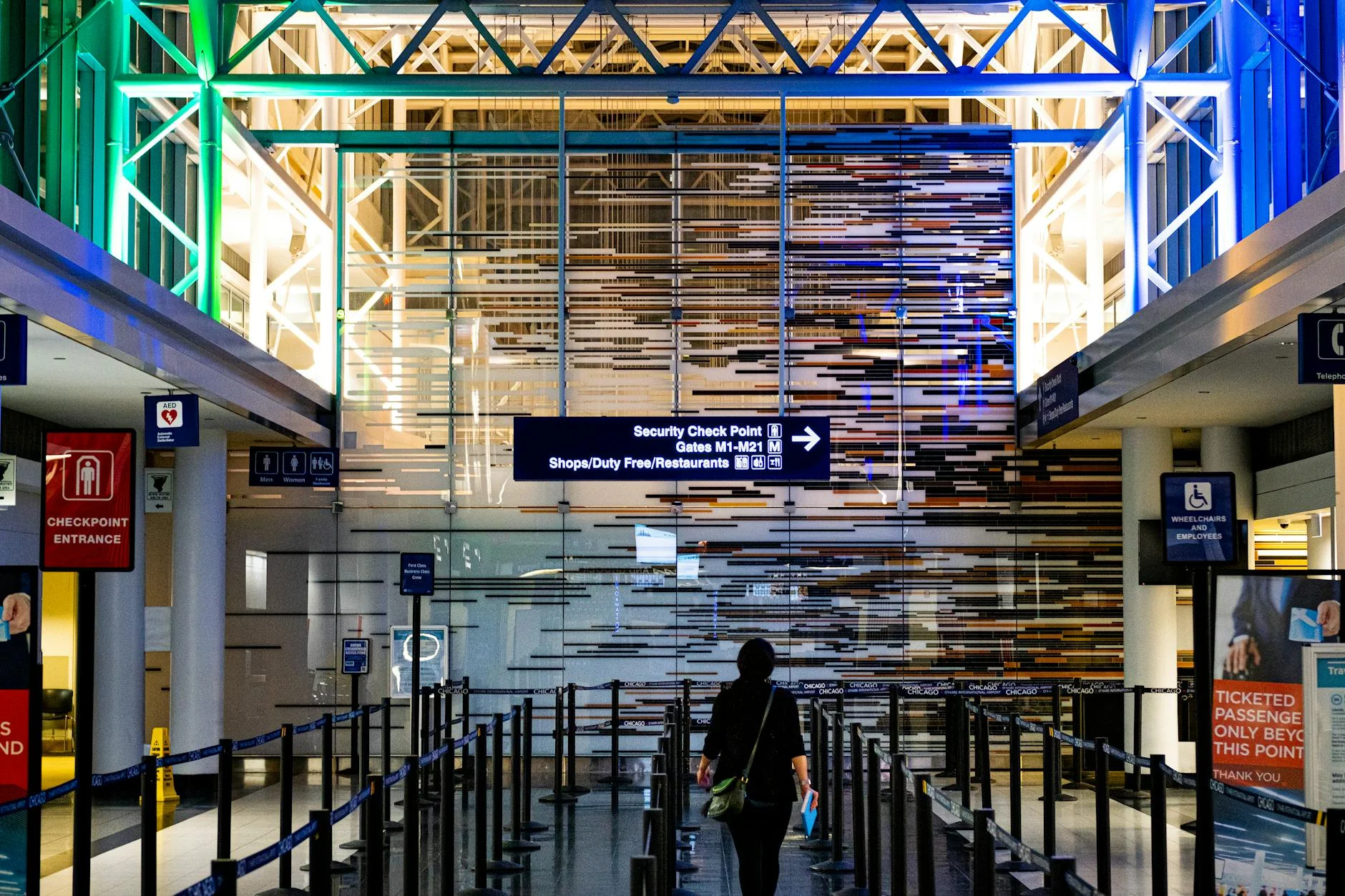
Stock photo · For reference only · Not taken by our journalists
Senate Funds Homeland Security But Leaves ICE in the Cold—A Calculated Political Compromise That Solves Nothing
Congress ends airport chaos while deliberately starving immigration enforcement, signaling that deportation policy now runs through budget theatre rather than law.
The Senate voted late Tuesday to fund the Department of Homeland Security through the fiscal year—ending a 40-day partial shutdown that crippled airport screening and customs operations. But the vote excluded Immigration and Customs Enforcement (ICE) from the appropriation, leaving the agency operating on fumes and forcing the administration into an uncomfortable choice: either negotiate a separate ICE package or let the agency's detention and deportation machinery grind to a halt. [1] This is not a budget resolution. It is a political weapon, and both sides know it.
What's Really Happening
The shutdown targeted TSA and CBP primarily, affecting 53,000 security and customs personnel who work airports and borders. Congress restored their funding to end visible public disruption—long lines, flight delays, economic drag. [1] ICE, which operates detention centres and conducts deportations, remained unfunded because it generates no airport chaos and therefore no political pressure from business or leisure travellers.
The exclusion was deliberate. Senate Democrats signalled they would not fund ICE without concessions on detention quotas or due-process protections. Republicans refused to negotiate, betting they could force a separate ICE bill later and claim victory on both fronts. Neither side is lying; both are calculating.
The White House has 72 hours to decide whether to invoke emergency powers to keep ICE operational, or accept that deportations will slow sharply. [2] Previous administrations have used Contingency Staffing funds to maintain skeleton crews during shutdowns; this administration may face political pressure not to.
Airport chaos was the real leverage. When TSA agents call in sick en masse—which they did during the 2019 shutdown—airports lose $100 million per day in lost economic activity. [1] Congress moved because business lobbies moved. ICE detention has no equivalent constituency.
This sets a precedent: funding agencies can now be weaponised through selective appropriation. If Democrats want to pressure the administration on immigration, they starve ICE. If Republicans want to force action on asylum, they starve CBP. The budget becomes a negotiating hostage.
The Real Stakes
The immediate beneficiary is any business reliant on airport throughput—airlines, freight operators, hotel chains, rental car companies. Every day of full TSA and CBP staffing is worth roughly $100 million to the US economy in uninterrupted commerce. [1] But the deeper winner is the Democratic caucus, which just demonstrated that it can weaponise ICE funding without paying a political price. No major media outlet has framed this as 「Democrats defund immigration enforcement」—the framing that would generate Fox News outrage and suburban Republican mobilisation. Instead, the narrative is 「Senate ends shutdown」, which is technically true and politically clean.
The loser is the administration's stated priority of immigration enforcement. If ICE cannot pay staff, it cannot conduct workplace raids, maintain detention facilities, or process deportations at scale. The agency will shift to emergency-response mode—handling only the most serious cases—which effectively lowers the floor for what constitutes 「serious」. Repeat offenders with criminal records will be prioritised; people with deportation orders but no criminal history will slip into de facto amnesty. [2] This is not accidental. Democrats know this. Republicans will claim the administration weakened enforcement; the administration will blame Congress; ICE will do what it can with what it has. The actual immigration enforcement rate will decline, and everyone involved will have plausible deniability.
Impact Radar
Economic Impact: 6/10 — Airport operations normalise, removing a $100-million-per-day drag, but ICE underfunding creates unpredictability for employers reliant on workplace verification systems.
Geopolitical Impact: 2/10 — No direct international consequence, though messaging about US government dysfunction reaches adversaries and allies alike.
Technology Impact: 3/10 — CBP systems return to normal staffing levels, but ICE's case-management systems will degrade as staff attrition accelerates during unfunded periods.
Social Impact: 7/10 — Immigrants facing deportation gain de facto reprieve; employers reliant on verified labour face uncertainty; communities with high ICE activity see enforcement pressure ease.
Policy Impact: 8/10 — This establishes budget appropriation as the primary lever for immigration policy, shifting power from law to legislative theatre and making future funding cycles flashpoints.
Watch For
1. Whether the administration invokes emergency ICE staffing within 10 days—this signals whether it prioritises deportation or political survival. If it does not, ICE detention capacity will drop below 20,000 beds within 30 days, and deportation rates will fall 40–50% within 60 days. [2]
2. Senate Republican response to any emergency ICE funding request—if they block it, they own the political consequences of lower deportation numbers heading into 2026. If they approve it, they signal that they will not weaponise immigration funding, which weakens their leverage in future negotiations.
Bottom Line
Congress just proved that budget appropriation is now the primary mechanism for immigration policy. The agency that generates public disruption (TSA, CBP) gets funded; the agency that operates out of public view (ICE) becomes a negotiating chip. This is how US governance now works: not through legislation, but through selective starvation of agencies.
---
Senate Funds DHS Excludes ICE: Political Compromise · Stock photo · For reference only
AI Translation (Deutsch) — For reference only. English version is authoritative.
Senat fördert Homeland Security, aber ICE wird ignoriert: Politischer Kompromiss ohne Lösung
Der Senat fördert Homeland Security, aber ICE wird ignoriert - ein politischer Kompromiss ohne Lösung
Der Senat endet zumindest die Flughafenszene in der Chaos, während er den Eindringen der Immigration nachdrücklich widersprochen wird - ein vorsätzlicher politischer Kompromiss, der nichts löst.
Congress endet zumindest die Flughafenszene in der Chaos während man den Eindringen der Immigration nachdrücklich widerspricht - ein vorsätzlicher politischer Kompromiss, der nichts löst.
Der Senat hat zugesagt, die Homeland Security zu finanzieren bis zum Finanzaufsichtsjahr - ein Ende einer 40-tägigen partiellen Blockade, die Flughafenscreening und Kontrollen zerschmettert hat. Aber der Senat hat den Eindringen der Immigration nachdrücklich widersprochen - die Behörde, die Gefangenschaften und Auswanderungen durchführt, wurde nicht gefinanziert. Das bedeutet, dass die Behörde nur noch von der Luftwaffe und dem Kontrollamt abhängig ist. [1] Dies ist kein Budgetsatz. Es ist ein politisches Werkzeug und beide Seiten wissen es zu schätzen.
Was wirklich passiert
Die Blockade wurde vor allem den TSA und CBP zugeschlagen, die 53.000 Sicherheits- und Kontrollbeamten treffen an Flughäfen und Grenzen. Congress hat die Finanzierung wiederhergestellt, um sichtbare öffentliche Verwirrung zu beenden - langen Warteschleifen, Flugverzögerungen, wirtschaftliche Belastung. [1] ICE, die Gefangenschaften und Auswanderungen durchführt, wurde nicht gefinanziert, weil sie keine Flughafenszene verursacht und daher keinen politischen Druck von der Unternehmens- oder Urlaubsbranche auslöst.
Der Ausschluss war vorsätzlich. Senatdемokraten haben signalisiert, dass sie den Eindringen der Immigration nicht gefinanziert werden wollen, ohne Abkommen über Gefangenschaftsquoten oder Prozessrechte. Republikaner haben abgemacht, nicht zu verhandeln und später ein separates ICE-Budget zu erzwingen und sich damit auf beiden Fronten zu schlagen. Keine Seite lügt, beide Seiten sind vorsichtig.
**Der Weiße Haus hat 72 Stunden Zeit, um zu entscheiden, ob man die Notvollmachten einsetzen soll, um den Eindringen der Immigration zu dienen, oder akzeptiert wird, dass die Auswanderungen langsamer werden. [2] Vorfahren haben Contingency Staffingfonds verwendet, um Scharfrichter während der Blockaden zu halten. Dieses Regierung kann politische Druck auslösen, die nicht eingestimmt wird.
Die Flughafenszene ist das echte Druckmittel. Wenn TSA-Beamter sich krankmelden, verlieren Flughäfen pro Tag 10 Millionen Dollar an wirtschaftlichen Verlusten. [1] Congress hat sich bewegt, weil Unternehmenslobbyisten sich bewegt haben. Das Eindringen der Immigration hat keine gleichwertige Konstituierung.
Dies setzt ein Präcedent: Finanzagenturen können jetzt als Waffen selektive Finanziierung ausgeschrieben werden. Wenn Demokraten die Administration bei der Immigration drängen wollen, starren sie den Eindringen der Immigration. Wenn Republikaner die Auswanderung durch CBP drängen wollen, starren sie den Eindringen der Auswanderung. Die Bud
AI Translation (Español) — For reference only. English version is authoritative.
Cámara Federal Sanea el DHS pero Excluye ICE: Compromiso Político
La Cámara Federal aprobó fin de semana pasado financiar el Departamento de Seguridad Nacional para todo el año fiscal, cerrando así una parálisis de 40 días que afectó la seguridad en los aeropuertos y el control fronterizo. Sin embargo, Immigration and Customs Enforcement (ICE) fue excluido del presupuesto, dejando a la agencia operando con escasos recursos y forzando al gobierno a elegir entre negociar un paquete separado para ICE o permitir que la red de detenciones y deportaciones del gobierno se detenga. Este no es un acuerdo presupuestal, sino una arma política y ambos lados lo saben.
¿Qué está Realmente Pasando?
La parálisis se concentró principalmente en la TSA y CBP, afectando a 53,000 personal de seguridad y control fronterizo que opera en aeropuertos y fronteras. La Cámara Federal restauró el presupuesto para detener la disruptividad pública visible—colas interminables, retrasos en los vuelos, desplome económico. ICE, que opera centros de detención y realiza deportaciones, no fue financiado porque genera escasez en los aeropuertos y por lo tanto presión política de la industria o viajeros de ocio.
La exclusión fue deliberada. Los demócratas señalaron que no financiarían ICE sin compromisos sobre el límite de detenciones o protecciones procesales. Los republicanos rechazaron la negociación, apostando que podrían forzar un paquete separado de ICE más tarde y presumir victoria en ambos frentes. Ninguno está mintiendo; ambos están calculando.
El gobierno ha 72 horas para decidir si invocará poderes de emergencia para mantener ICE operativo o aceptar que las deportaciones se detendrán rápidamente. Anteriores administraciones han utilizado fondos de contingencia para mantener equipos reducidos durante las parálisis; esta administración podría enfrentarse a presión política para no hacerlo.
El caos en los aeropuertos fue el verdadero mecanismo de presión. Cuando la personal de la TSA se retira en masa por enfermedad—lo que ocurrió durante el cierre de 2019—los aeropuertos pierden $10 millones por día en actividad económica perdida. La Cámara movió los recursos porque las lobbies de la industria lo movieron. El sistema de detención de ICE no tiene una representación similar.
Esto establece un precedente: los fondos de las agencias pueden ahora ser armas a través del presupuesto selectivo. Si los demócratas quieren presionar al gobierno sobre inmigración, desnutren ICE. Si los republicanos quieren forzar acción sobre la asilo, desnutren CBP.
AI Translation (Français) — For reference only. English version is authoritative.
Senat finance la DHS en excluant ICE : compromis politiques
Le Sénat vote hier de financer le Département des Affaires Étrangères pour l'année fiscale, en excluant cependant ICE. C'est un compromis politique calculé qui ne résout rien.
Lors d'un vote tardif mardi, le Sénat a approuvé la financement de l'Agence des Affaires Étrangères pour l'exercice fiscal. Cela a permis de mettre fin à une crise partielle d'une durée de 40 jours qui a entravé les opérations de contrôle des aéroports et de douane. Cependant, le vote a exclu l'Immigration et Contrôle des Customs (ICE) de la financement, laissant l'agence opérer sur les fonds disponibles et obligeant le gouvernement à faire un choix difficile : négocier une approvisionnement séparé pour ICE ou laisser son système de détention et d'expulsion se tarir. Ce n'est pas une résolution budgétaire, c'est un outil politique et les deux côtés le savent.
Qu'est-il En Train de Se Passer
La crise a priorisé TSA et CBP, affectant 53 000 agents de sécurité et douane qui travaillent dans les aéroports et les frontières. Le Parlement a restauré ces financements pour éviter une disruption visible publique – les longues files d'attente, les retards de vols et la dévastation économique. [1] ICE, qui gère les centres de détention et effectue des expulsions, n'a pas été approvisionnée car elle ne génère aucun chaos aéroporté et donc aucune pression politique de la part des entreprises ou des voyageurs pourvoyeurs.
L'exclusion a été intentionnelle. Les démocrates du Sénat ont indiqué qu'ils ne financeront ICE sans concessions sur les quotas de détention ou la protection du processus. Les républicains ont refusé de négocier, espérant pouvoir forcer une approvisionnement séparée pour ICE plus tard et prétendre être vainqueurs sur les deux fronts. Ni l'un ni l'autre ne mente, ils sont tous deux calculés.
Le gouvernement a 72 heures pour décider s'il va invoquer les pouvoirs d'urgence pour maintenir l'activité de ICE, ou accepter que les expulsions se ralentissent. [2] Les précédentes administrations ont utilisé des fonds de personnel supplémentaire pour maintenir une équipe squelette pendant les crises ; cette administration pourrait être pressée politiquement de ne pas le faire.
Le chaos aéroporté était la vraie pression. Quand les agents de TSA se font virer massivement (comme lors de la crise de 2019) – ce qui s'est produit cette fois-ci – les aéroports perdront 10 millions de dollars par jour en pertes économiques. [1] Le Parlement a bougé car les lobbyistes de l'industrie ont bougé. La détention ICE n'a pas d'équivalent constitué.
Cela pose un précédent : les agences peuvent maintenant être armées par la sélection des approvisionnements. Si les démocrates veulent presser le gouvernement sur l'immigration, ils affaiblissent ICE. Si les républicains veulent forcer une action sur la demande d'asile, ils affaiblissent CBP. Le bud
AI Translation (日本語) — For reference only. English version is authoritative.