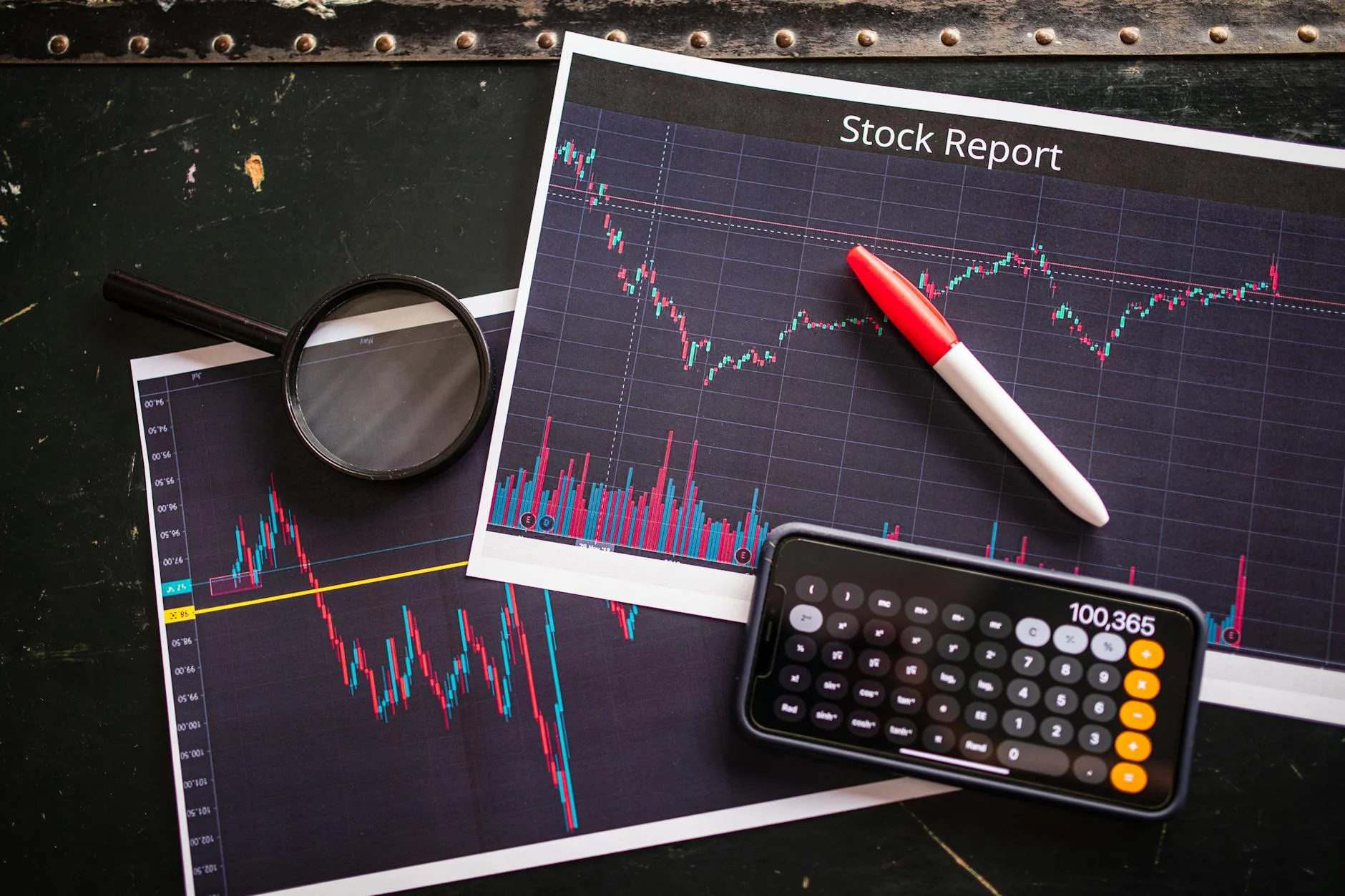
SpaceX has filed confidentially with the US Securities and Exchange Commission for an initial public offering, targeting a June 2026 listing with a fundraising goal of $50–75 billion [1]. If realised, the offering would be the largest IPO in history—more than triple Saudi Aramco's $25.6 billion debut in 2019—and would value the company at $1.5 trillion or higher [1][2]. The filing marks the moment when private space infrastructure becomes a public market asset, and when Elon Musk's control of satellite communications, rocket launches, and AI computing crosses from billionaire vanity into systemic economic and geopolitical consequence.
Dispatch
NEW YORK, 1 APRIL 2026 — Al Jazeera and Reuters first reported the confidential filing on 1 April 2026. The company's internal valuation has already doubled since December, driven by the February 2026 merger of SpaceX with Musk's AI firm xAI [1].
The space exploration company SpaceX has taken steps to sell its shares to the public for the first time, which could set the stage for one of the largest initial public offerings (IPOs) in modern history. The news could also put founder Elon Musk on the path towards becoming the world's first trillionaire. News reports on Wednesday stated that the company quietly filed for an IPO, which could take place as soon as June or July. The company's stock market listing is expected to bring in as much as $75bn.
Al Jazeera, 1 April 2026 [1]

The BBC offers a parallel framing that emphasises the corporate consolidation strategy:
Earlier this year, SpaceX took over xAI, Musk's artificial intelligence venture. After that all-stock merger, SpaceX is believed to have become the most valuable private company in the world, with an internal valuation of $1.25tn. Emily Zheng, a senior analyst at Pitchbook, earlier told the BBC that by bringing xAI under SpaceX, Musk could show potential investors that he was consolidating costs and able to easily share resources between his companies.
BBC, [2026] [2]
The New York Times adds critical context on Musk's personal wealth trajectory and the scale of the offering:
SpaceX values itself at more than $1 trillion and would be one of the most valuable companies to reach the stock market, after Saudi Aramco's 2019 debut valued the energy giant at $1.7 trillion. Aramco ultimately raised more than $29 billion from its offering. A SpaceX offering could signal a wave of enormous I.P.O.s, with the artificial intelligence companies OpenAI and Anthropic also exploring the possibility of going public. SpaceX's offering would be a generational moneymaking event for Wall Street, the company's employees and, of course, Mr. Musk, who is already one of the world's richest men and could become the first trillionaire.
New York Times, [2026] [3]
CNBC's reporting emphasises the federal funding underpinning SpaceX's valuation—a detail that reframes the IPO as a privatisation of public investment:
SpaceX has received over $24.4 billion from its work with the federal government since 2008, according to FedScout, which researches federal spending and government contracts. That includes contracts from NASA, the Air Force and Space Force, among other agencies. Over the course of 2025, SpaceX conducted 165 orbital flights, and additional test flights of its new and massive Starship Super Heavy Launch vehicle.
CNBC, [2026] [5]
What's Really Happening
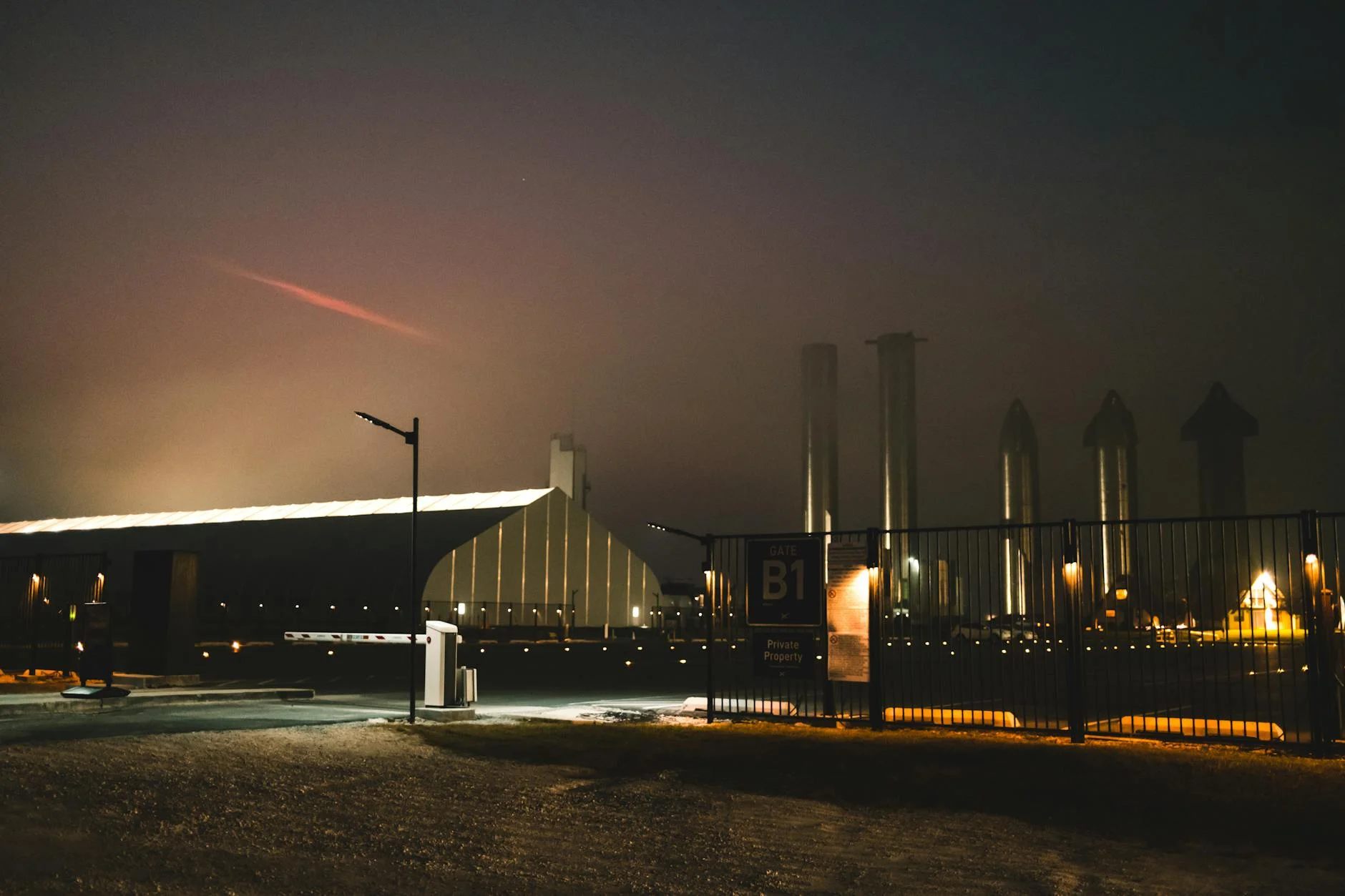
The Real Stakes
Who wins: Musk, SpaceX's early employees, and venture investors. Musk's personal net worth could cross $1 trillion, making him the wealthiest individual in recorded history [3]. Early SpaceX employees holding equity will become multimillionaires or billionaires. Wall Street—underwriting fees, trading volume, derivatives hedging—will capture $1–2 billion in transaction fees. Retail investors who buy at IPO and sell within 6–12 months may capture short-term gains if market enthusiasm persists. Kat Liu, vice president at IPOX, noted: The business is operationally mature, technologically ahead in several key areas, and profitable, which provides a solid fundamental underpinning. [1] This is not hype; SpaceX's fundamentals are genuine.
Who loses: Public shareholders who buy after the initial surge will likely overpay. Starlink's addressable market—rural broadband and maritime connectivity—is real but finite; at $1.5 trillion valuation, the company is priced for Mars colonisation and global space dominance, not just satellite internet. If Mars missions slip (Musk has already acknowledged a 50–50 chance of missing his 2026 uncrewed Mars target [1]), or if SpaceX's government contracts face political headwinds, the stock will correct sharply. Competing satellite operators (Amazon's Project Kuiper, OneWeb) will face capital disadvantage, as SpaceX's public equity will enable it to outbid them for spectrum and launch capacity.
What changes: The US space industrial base becomes partially privatised and concentrated in one man's hands. Starlink already operates in 100+ countries [implied from global satellite coverage claims]. Once public, SpaceX will face SEC disclosure requirements and shareholder governance—but Musk can retain voting control through dual-class shares, as he did with Tesla. This means public shareholders have no practical recourse if Musk uses SpaceX assets for political purposes, personal projects, or decisions that conflict with shareholder interests. The precedent is Tesla: Musk has used Tesla's balance sheet to fund xAI, and shareholders have had no formal say [2]. SpaceX will operate under the same structure. Additionally, the IPO will trigger a wave of follow-on offerings from OpenAI and Anthropic [3], flooding the market with AI and space infrastructure capital. This will accelerate consolidation in both sectors.
Geopolitical Dimension
SpaceX's IPO occurs at a moment when satellite infrastructure has become a strategic asset equivalent to nuclear weapons in the Cold War. Starlink currently provides connectivity to Ukraine, Indian Ocean shipping lanes, and rural populations in allied nations. Once public and under shareholder pressure to maximise returns, SpaceX will face pressure to expand into non-aligned and adversarial markets—China, Russia, Iran—or to restrict service to geopolitical competitors. The US government has already relied on Starlink for military and humanitarian purposes without formally compensating it as a strategic asset. The IPO will force a reckoning: either the US government pays SpaceX for strategic access (a precedent that does not exist), or Starlink becomes a contested asset in future conflicts.
Musk's participation in the Trump-Modi call on the Iran crisis [6] signals that SpaceX is now treated as a quasi-state instrument. This is dangerous. If SpaceX's satellite network becomes critical to US military operations, allies, or humanitarian response, and if Musk retains voting control, then US foreign policy is partially hostage to one person's judgment and commercial interests. No other company has this profile: Apple, Microsoft, and ExxonMobil are large, but none control critical infrastructure (satellites, launch capacity, AI compute) that directly enables military and intelligence operations.
China and Russia are watching. Both countries have accelerated their own satellite programs and anti-satellite weapons development in response to Starlink's dominance. An IPO that increases SpaceX's market valuation and access to capital will accelerate this competition. India, which Musk has courted for years [6], may demand equity stakes or regulatory concessions in exchange for spectrum access or launch permissions. The geopolitical calculus of space is shifting from a US-dominated monopoly to a contested arena.
Industry Context
The IPO will reshape capital allocation across the tech and aerospace sectors. SpaceX's $50–75 billion fundraise will absorb institutional capital that might otherwise flow to competing rocket companies (Relativity Space, Axiom Space), AI startups (Anthropic, xAI competitors), or traditional aerospace (Boeing, Lockheed Martin). This concentration of capital in Musk's ecosystem—Tesla, SpaceX, xAI, Neuralink, The Boring Company—is unprecedented. No other individual controls comparable assets across energy, transportation, space, AI, and infrastructure.
The IPO will also set a valuation benchmark for OpenAI and Anthropic [3]. If SpaceX trades at 20x revenue or 100x earnings, investors will expect AI companies to command similar multiples. This will inflate capital requirements for AI startups and create a bifurcated market: mega-funded Musk entities and a few well-capitalised competitors (OpenAI, Anthropic, Google DeepMind) on one side, and a long tail of underfunded AI startups on the other.
Impact Radar
Watch For
1. SEC review of dual-class share structure — If the SEC challenges Musk's voting control (as some governance advocates have proposed), the IPO timeline could slip. The confidential filing allows 15 days before the roadshow; any regulatory objection would surface by mid-April [2].
2. Geopolitical escalation in the Iran war — If the Strait of Hormuz remains closed and oil prices spike above $150/barrel, institutional investors will demand a lower valuation or defer participation. Market volatility is the IPO's biggest execution risk [5].
3. Starship test flight outcome in May 2026 — Musk has committed to uncrewed Mars missions by end-2026 with a 50–50 success rate [1]. A successful test flight in May would validate the bull case; a failure would crater the IPO price.
4. Congressional scrutiny of federal contract concentration — If lawmakers raise concerns about SpaceX's $24.4 billion in federal funding and its IPO valuation [5], they could demand clawbacks or equity stakes, reducing IPO proceeds.
Bottom Line
SpaceX's IPO is not a tech story; it is a geopolitical and regulatory reckoning deferred. The company controls satellite infrastructure that the US military and allies depend on, yet it is majority-owned by one person with no formal governance constraints. The IPO will make that concentration visible to public shareholders, but will not resolve it. If the offering succeeds—and retail demand suggests it will—Musk will become the first trillionaire, and SpaceX will have the capital to expand globally. That expansion will trigger competition from China and Russia, regulatory demands from allies like India, and pressure on the US government to clarify whether Starlink is a national asset or a private company. The answer to that question will define space geopolitics for the next decade.
---