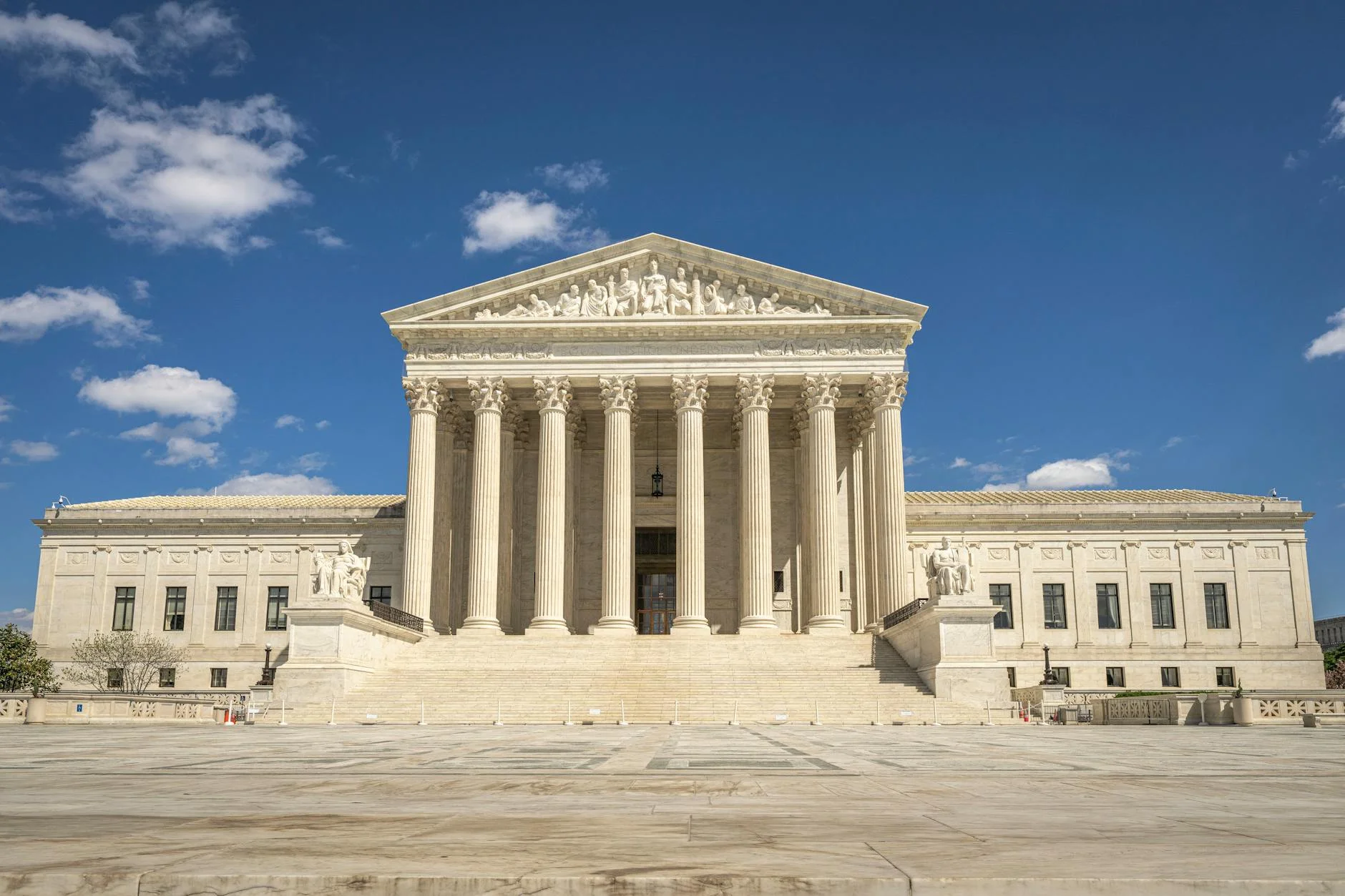
The U.S. Supreme Court heard arguments Monday in a case that will determine whether tens of thousands of cancer lawsuits against Bayer over its Roundup herbicide survive or die. The outcome hinges on a narrow legal question—whether federal pesticide regulation preempts state-level failure-to-warn claims—but the political stakes are anything but narrow. The Trump administration has formally backed Bayer, reversing the Biden administration's position, while the Make America Healthy Again movement that helped elect Trump now openly accuses him of betrayal [1].
Dispatch
WASHINGTON, D.C., APRIL 26–27, 2026 — The New York Times reported that the Supreme Court heard oral arguments in Durnell v. Monsanto, a case centered on John Durnell, a St. Louis gardener who contracted non-Hodgkin lymphoma after 20 years of Roundup exposure and won a jury verdict awarding him over $1 million in damages [1]. The central legal dispute involves federal preemption doctrine: whether EPA approval of Roundup's label—which does not warn of cancer risk—bars state juries from imposing additional warnings based on Missouri law [1].
The Environmental Protection Agency considers the herbicide to be safe. The E.P.A. is responsible for pesticide labeling nationwide, and Bayer argues that the federal agency's decision overrides state-level legal claims, effectively insulating it from lawsuits. The federal government faces an Oct. 1 deadline to re-examine the effects of glyphosate. [1]
The New York Times, April 26, 2026
Bayer's legal team, represented by former Solicitor General Paul Clement, argued for a uniform national standard. According to NPR's reporting on the oral arguments, Clement told the justices: It's probably the most like studied herbicide in the history of man and they've all reached the conclusion, based on more data and the kind of expert analysis they can do, that there isn't a risk here. You shouldn't let a single Missouri jury second guess that judgment.[2]
The Trump administration's Deputy Solicitor General Sarah Harris echoed that position, arguing that Missouri thus requires adding cancer warnings but federal law requires EPA to approve new warnings and tasks EPA with deciding what label changes would mitigate any health risks. State law must give way.[2]
A contrasting perspective emerged from the bench itself. NPR reported that Chief Justice John Roberts raised a structural concern: what happens if the federal government moves slowly while states want to act quickly on new health information? [2] Several justices, including Brett Kavanaugh, appeared sympathetic to Bayer's uniformity argument, but the court did not signal a clear consensus.
A different reading comes from CNBC, which framed the case as a direct collision between Trump's executive branch strategy and his political base [3]:
The Supreme Court arguments and the farm bill put MAHA squarely at odds with Trump and the majority of Republicans in Congress. It comes just months after a prior blowup when Trump signed an executive order to boost domestic production of glyphosate, a break that caused Kennedy to step in and do damage control. And with the 2026 midterm election less than seven months away and Trump's approval rating down in polls, keeping the coalition intact could be critical for Republicans who are racing to maintain their slim majorities in both chambers of Congress. [3]
CNBC, April 27, 2026
CNBC also quoted Kelly Ryerson, a MAHA advocate known as the Glyphosate Girl: The combination of the executive order and going to bat for Bayer at the Supreme Court are really inexcusable. And I think it showed a deep disconnect between what the administration thinks that MAHA cares about and what is actually true.[3]
What's Really Happening

The Real Stakes
For Bayer: A win eliminates the litigation cloud that has haunted the company since Monsanto's 2018 acquisition. Confirmed: Bayer has already paid over $10 billion in Roundup settlements since 2020 [3]. A Supreme Court preemption ruling would prevent future state-court juries from imposing liability, effectively capping exposure. The company's stock price reflects this: Bayer has been trading at a discount partly due to litigation uncertainty. A ruling for Bayer would remove that uncertainty premium.
For the Trump administration: A win on preemption doctrine signals strength on deregulation and business-friendly jurisprudence. The administration's argument—that a patchwork of 50 state standards is unworkable—aligns with its broader regulatory philosophy. However, Projected: the political cost is real. MAHA advocates will cite this as evidence that Trump has abandoned his anti-corporate platform. Kennedy, as HHS Secretary, is already in an awkward position: his own movement opposes the administration's position on the very issue his agency will oversee (pesticide health impacts) [3].
For state tort law: This case is a bellwether for preemption doctrine more broadly. If Bayer wins, it sets a template for pharmaceutical and chemical manufacturers to argue that FDA approval preempts state failure-to-warn claims. The tobacco industry used similar preemption arguments (unsuccessfully) in the 1990s, but the legal landscape has shifted. A loss here for plaintiffs' attorneys would represent a significant narrowing of state-court remedies for product liability.
For the midterm election: One scenario: If the Court rules for Bayer in June or July 2026, MAHA activists mobilize against Republican candidates in swing districts, suppressing turnout among a coalition that delivered 5–10% of Trump's 2024 margin in key states. Another scenario: Kennedy publicly breaks with the administration on glyphosate, further signaling that MAHA is not a reliable Trump constituency. This would hand Democrats a messaging opportunity in rural and suburban districts where health-conscious voters overlap with swing voters.
Geopolitical Dimension
The case has a muted but real international dimension. The European Union has restricted glyphosate use more aggressively than the EPA, and several member states have banned it outright [1]. A U.S. Supreme Court ruling that prioritizes EPA judgment over state-level caution sends a signal to trading partners: American regulatory standards are stable and business-friendly. Conversely, if the Court sided with plaintiffs, it would suggest that U.S. product liability is unpredictable—a concern for multinational manufacturers. The Trump administration's amicus brief explicitly invokes uniformity as a competitive advantage: a patchwork of 50 state standards would disadvantage U.S. manufacturers competing globally [3]. However, this geopolitical dimension is secondary to the domestic political stakes.

Impact Radar
Watch For
1. The Court's decision timeline and language: The Court typically releases decisions in June or early July. Watch for whether the majority opinion emphasizes uniformity (Bayer-friendly) or leaves room for state-level warnings in cases of new scientific evidence (plaintiff-friendly). A narrow 5–4 decision would signal less consensus than a 6–3 ruling.
2. Kennedy's public response: HHS Secretary Robert F. Kennedy Jr. has been silent on the Supreme Court arguments, but his movement has not. If Kennedy makes a public statement distancing himself from the administration's position, it signals internal fracture. Alternatively, if he endorses the administration's preemption argument, it suggests MAHA is subordinating its anti-chemical platform to executive loyalty.
3. MAHA mobilization in swing districts: Between now and November 2026, monitor whether MAHA-aligned activists (Ryerson and others) organize voter suppression campaigns or primary challenges against Republican incumbents in districts where MAHA has organizational footprint (rural and suburban areas in Michigan, Pennsylvania, Wisconsin, Arizona). This is a leading indicator of coalition durability.
4. EPA's October 1 glyphosate re-examination deadline: The EPA faces a statutory deadline to re-examine glyphosate's safety by October 1, 2026 [1]. If the EPA delays or finds new evidence of risk, it could undercut the uniformity argument that the Trump administration is making to the Court (i.e., "the EPA has already decided"). Watch for whether the EPA's decision is influenced by internal pressure from Kennedy's HHS team.
Bottom Line
The Trump administration is betting that federal preemption doctrine will insulate Bayer from mass tort liability—a win for business and regulatory predictability. But the bet requires fracturing the Make America Healthy Again coalition that delivered his margin of victory in 2024. If the Court rules for Bayer in June or July, MAHA activists will have six months to punish Republican candidates in swing districts before the midterm election. The administration's legal strategy is sound; its political arithmetic is fragile.