On Day 33 of the US-Israeli air campaign against Iran, President Donald Trump told reporters the war could end in two to three weeks and that Tehran does not need to strike a deal for him to withdraw [1]. Hours later, Iran's Foreign Minister Abbas Araghchi told Al Jazeera that Tehran has zero trust in Washington and that no negotiations are underway [1]. Between those two statements sits the entire architecture of a conflict that has killed more than 2,000 Iranians, driven Brent crude past $119 a barrel, and stranded nearly 20,000 merchant sailors in the Persian Gulf [1][4][8].
Dispatch
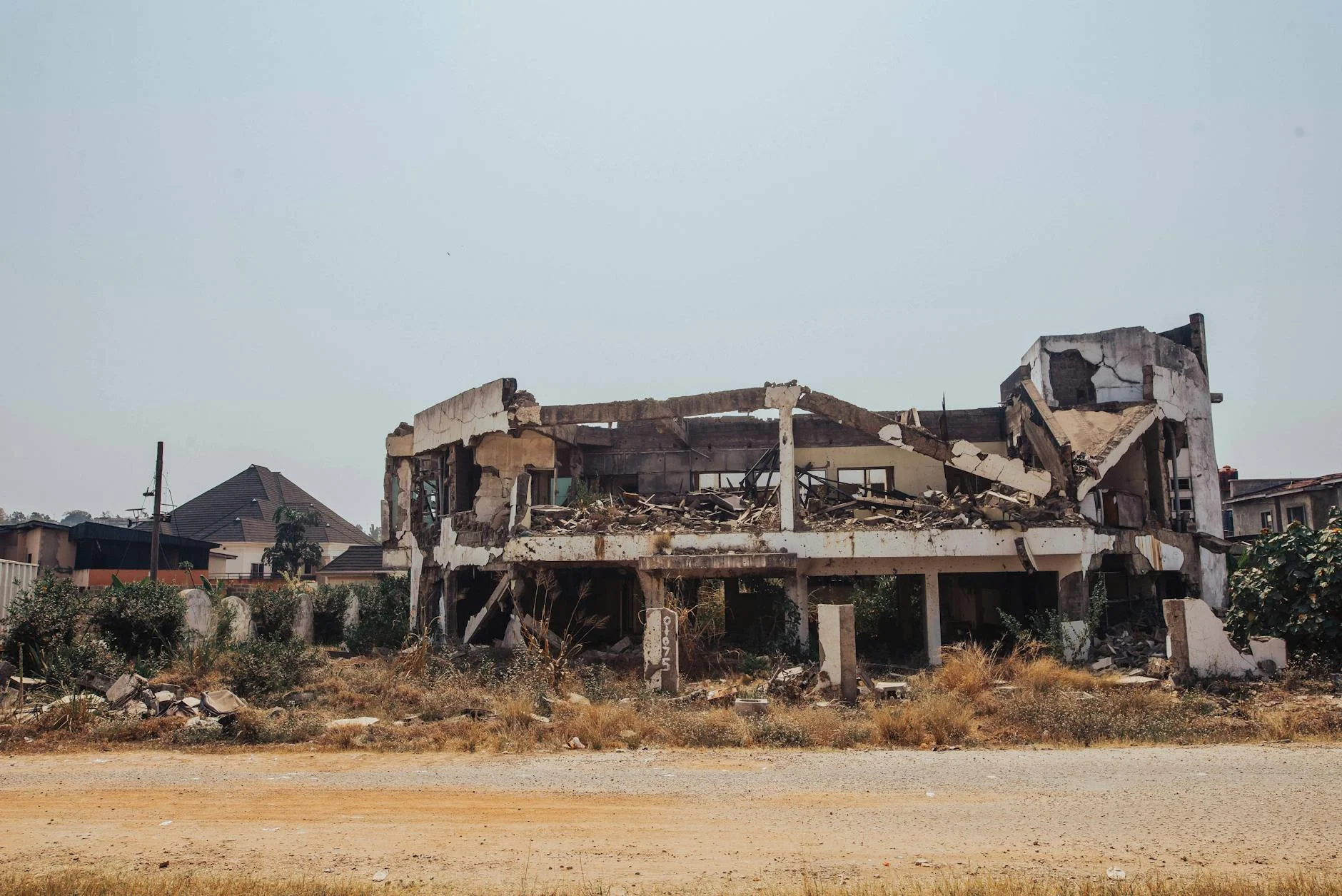
DOHA, 1 April 2026 — Al Jazeera's Elizabeth Melimopoulos filed the day's most comprehensive battlefield accounting, cataloguing strikes across at least six Iranian cities and a deepening humanitarian toll:
United States President Donald Trump has said Tehran does not have to make a deal for him to end the war, adding that the conflict could end in two to three weeks, but Iran's Foreign Minister Abbas Araghchi said he has no faith in talks with Washington. US-Israeli attacks continue across Iran, with pharmaceutical companies and steel plants in Isfahan and Farokhshahr among the sites hit, according to Iranian media and officials.
Al Jazeera, 1 April 2026 [1]
Al Jazeera further reported that the Tofigh Daru pharmaceutical plant in Tehran — one of Iran's largest domestic producers of hospital medications and raw materials for cancer drugs — was destroyed, with Iranian officials calling it a blow to the national medical supply chain [1]. A desalination plant on Qeshm Island in the Strait of Hormuz was knocked offline. The Shahid Haqqani passenger pier in Bandar Abbas, a civilian port facility, took direct hits from fighter jets [1].
A sharply different framing came from the New York Times (US, 1 April 2026), which reported on the Pentagon's perspective and the Israeli military's justification for striking the pharmaceutical plant:
The United States has achieved such unchallenged control of Iran's skies that it is flying B-52 bombers directly over Iranian territory for the first time since the war began, Defense Secretary Pete Hegseth told reporters at a Pentagon briefing on Tuesday. [...] The Israeli military said in a statement late in the day that it had struck the Tofigh Daru factory, claiming the facility was secretly supplying a potentially deadly drug to the Organization of Defensive Innovation and Research of Iran, which Israel says is responsible for developing chemical weapons.
New York Times, 1 April 2026 [9][12]
The BBC offered yet another lens — not battlefield, but kitchen table — reporting from London that Brent crude briefly hit $119 a barrel on Tuesday and that UK petrol reached 152.8p per litre, its highest in two years [4]. The BBC's separate supply-chain analysis warned that the Strait of Hormuz closure threatens not just energy but fertiliser shipments — roughly a third of the global total — at the worst possible time, during the northern hemisphere's planting season [6].
The South China Morning Post (Hong Kong, 1 April 2026) added a structural observation that few Western outlets have explored:
Iran's chokehold on the Strait of Hormuz has thrown the global economic system into turmoil, yet Israel, which launched attacks on Tehran alongside the United States, has emerged as a rare exception. [...] Natural gas, all of which comes from those three fields, now accounts for 70 per cent of Israel's electricity generation and 45 per cent of its total energy supply, according to the International Energy Agency.
South China Morning Post, 1 April 2026 [2]
What's Really Happening
The Real Stakes
The economic damage is no longer theoretical. Brent crude at $119 per barrel marks the highest sustained price environment since the early months of Russia's invasion of Ukraine in 2022 [4]. US petrol has crossed the $4-per-gallon threshold that historically triggers consumer sentiment shifts and political backlash [4][12]. UK energy bills face a projected £288 annual increase from July [4]. But the second-order effects may prove more damaging: the Kiel Institute estimates a full Hormuz closure could push global wheat prices up 4.2% and fruit and vegetable prices up 5.2%, with the worst impact falling on Zambia (31% food price increase), Sri Lanka (15%), Taiwan (12%), and Pakistan (11%) [6].
Lars Jensen, shipping expert and former director at Maersk, delivered perhaps the starkest assessment. Jensen warned that the impact of the US-Israeli war on Iran could be substantially larger than the oil crisis of the 1970s [5]. He pointed to the fertiliser dimension: You've got 20 to 30% of the seaborne fertiliser in the world originating from the Gulf. This will mean rapidly escalating food prices, especially in poorer countries [5]. Even an immediate ceasefire would not reverse the damage to the current planting season. A Kiel Institute analysis concluded: A relatively brief closure could disrupt an entire growing season, with food security consequences that persist long after the strait reopens [6].
The winners are few and specific. Israel's Mediterranean gas fields — producing 70% of its electricity and 45% of its total energy supply through long-term, fixed-price contracts — have insulated it from the energy shock it helped create [2]. Russia, as analyst Kirill Dmitriev (Putin's special envoy) noted, stands well positioned to fill the global fertiliser gap, handing Moscow leverage it did not have six months ago [6]. Everyone else — from Filipino seafarers stranded on tankers counting food supplies through April [8] to Egyptian shops ordered to close early to conserve energy [4] — absorbs the cost.
Geopolitical Dimension
The war has reorganised the Middle East's diplomatic geometry with startling speed. Three distinct blocs have emerged in 33 days.
The fracturing Western alliance: Spain, France, and Italy have broken with Washington on operational support, closing airspace and denying base access [1]. House Democrats — 27 members of the Armed Services Committee — wrote to Chairman Mike Rogers demanding dedicated war oversight hearings, warning of ever-shifting strategic and operational objectives and a lack of clarity on ground troop deployment [10]. The 29 April hearing date creates a hard political deadline that may matter more than any battlefield development.
The Chinese-led alternative: Beijing and Islamabad proposed a five-point plan including a ceasefire and reopening the Strait of Hormuz [1]. China's intervention is not altruistic — it is the world's largest oil importer and its economy bleeds with every dollar added to the barrel price. But the plan gives Middle Eastern states a diplomatic track that does not run through Washington, a structural shift in regional order.
The Gulf's impossible position: Qatar, the UAE, Kuwait, Saudi Arabia, and Bahrain find themselves simultaneously targeted by Iranian retaliation and dependent on a US security umbrella that their own populations increasingly question. Qatar's Ras Laffan LNG terminal — the world's largest — took Iranian missile strikes [8]. Kuwait's airport remains shuttered. An unknown projectile damaged a tanker north of Doha [1]. The Iraqi armed group Kata'ib Sayyid al-Shuhada warned that any US ground invasion launched from Kuwaiti territory would trigger all-out war [1]. The Gulf states face a threat matrix with no safe quadrant.
Lebanon, meanwhile, endures its own catastrophe within the catastrophe. Israeli operations have killed more than 1,200 people and displaced 1.2 million since 2 March [1]. Israeli Defense Minister Israel Katz declared that homes in southern Lebanon would be demolished and hundreds of thousands of displaced Lebanese would not be allowed to return [1]. Three UN peacekeepers from Indonesia have been killed in the past 48 hours, prompting an emergency Security Council session [11]. Indonesia's ambassador told the Council the fallen peacekeepers were in their twenties — These peacekeepers fell and wounded while carrying out a mandate entrusted to them by this very Council [11].
Impact Radar
Watch For
1. The 29 April hearing. Defense Secretary Pete Hegseth testifies before the House Armed Services Committee on Day 60 — the War Powers Resolution deadline. If Republicans do not introduce an authorisation for the use of military force by that date, the legal basis for continued operations enters contested territory [10]. Watch whether any Republican committee members break ranks.
2. Hormuz reopening signals. Analyst Trita Parsi assessed that Iran will continue to control and attack the waterway regardless of ceasefire rhetoric [1]. The metric that matters is ship traffic: BBC Verify reported vessels through the Strait dropped from over 100 per day to just a handful [6]. Any sustained uptick above 20 daily transits would signal a genuine de-escalation, not a rhetorical one.
3. Fertiliser-driven food price spikes in Q3. The Kiel Institute warned that missing the northern hemisphere's March–April planting window creates food security consequences that persist long after the strait reopens [6]. Wheat and fresh produce prices in import-dependent nations (Zambia, Sri Lanka, Pakistan, Taiwan) serve as the canary. If fertiliser shipments do not resume by mid-April, the 2026 harvest is already compromised.
Bottom Line
Trump's two to three weeks timeline is a political construct timed to the War Powers Resolution clock, not a military assessment. The war's economic damage — $119 oil, broken fertiliser supply chains, stranded shipping — has already locked in consequences that will outlast any ceasefire. The question is no longer whether this conflict reshapes the global order, but how many governments fall trying to absorb the cost.