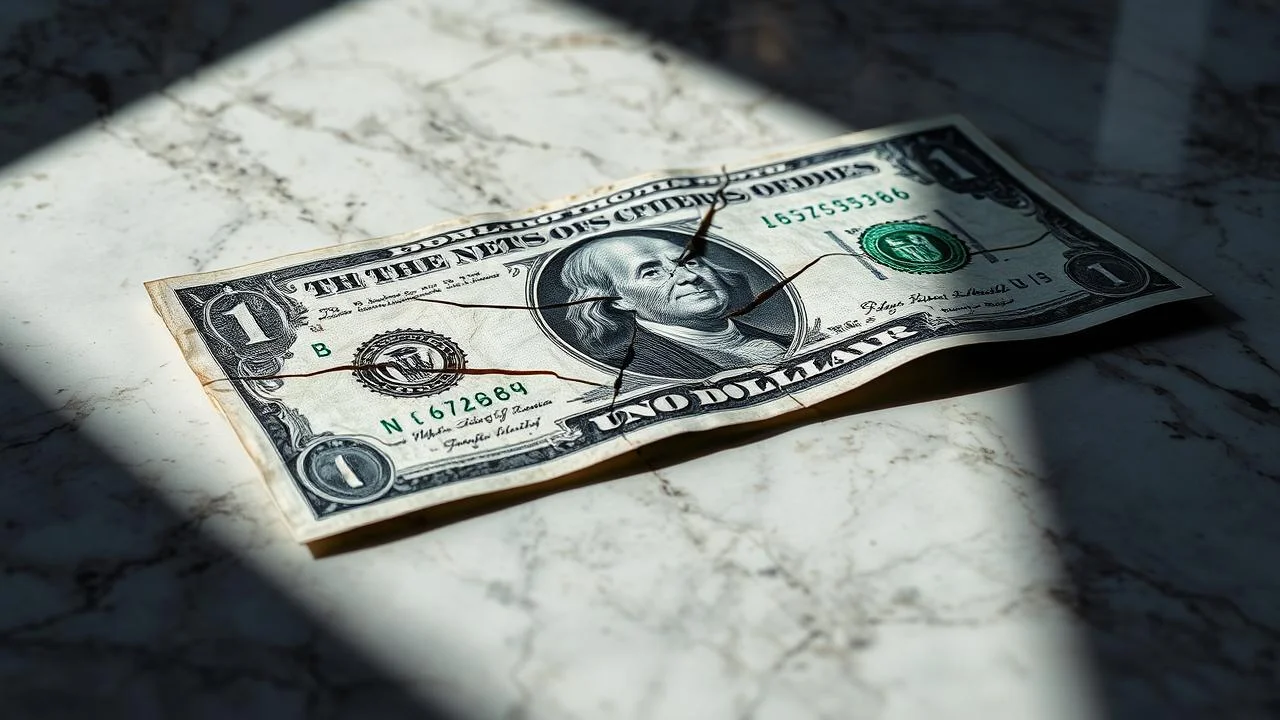
Kenneth Rogoff, Harvard economist and former IMF chief economist, has warned that the US dollar faces a crisis of legitimacy as its dominance in global finance erodes. Speaking to the South China Morning Post, Rogoff elaborated on themes from his 2024 book Our Dollar, Your Problem, arguing that the euro and Chinese yuan could eventually challenge dollar hegemony — though he stops short of predicting imminent collapse.
Dispatch
Hong Kong, January 2025 — The South China Morning Post published an interview with Kenneth Rogoff in which he outlined his thesis on dollar vulnerability. The article, drawn from the RSS feed, provides limited direct quotation from Rogoff himself, making this a constrained source. Here is what the outlet reported:
Professor Kenneth Rogoff of Harvard University has repeatedly warned that the US dollar is approaching a crisis of legitimacy. Having written extensively on the global recession in the late 2000s, Rogoff has turned his focus to the US currency's increasingly unstable place at the top of the world's financial hierarchy. A former chief economist at the International Monetary Fund and a chess grandmaster, he published Our Dollar, Your Problem in May last year. In this interview, Rogoff elaborates..
South China Morning Post, January 2025 [1]
Limitation on sourcing: The RSS summary provided does not include the full interview transcript or Rogoff's specific statements beyond the framing paragraph. The SCMP article title — Euro, Chinese yuan to end US dollar dominance, top economist says — attributes a specific prediction to Rogoff, but the extracted text does not contain his direct words on this claim. This is a critical gap: we have the headline's assertion, but not the supporting quotation from the source.
No contrasting mainstream analysis was available in the materials provided for this dispatch.
---
What's Really Happening
---
The Real Stakes
Confirmed: The dollar's share of global foreign exchange reserves has declined modestly over 20 years — from roughly 71% in 2000 to approximately 60% today [2]. This reflects deliberate central bank diversification, not panic selling.
Projected: If the euro stabilizes politically and the eurozone deepens fiscal integration, it could capture a larger share of reserve holdings over the next 10–15 years. The International Monetary Fund has signaled openness to a multi-polar reserve system [3].
One scenario: Should the US fiscal deficit continue to widen (currently 6% of GDP) and US Treasury yields remain elevated, foreign central banks may accelerate diversification into euros, yuan, and other assets — not because they distrust the dollar, but because alternative returns improve. This would be a market-driven shift, not a geopolitical rupture.
What changes if this accelerates: The US would face higher borrowing costs over time; the Federal Reserve's ability to set global monetary conditions would diminish; emerging markets with dollar debts would face pressure if the dollar weakens sharply. For ordinary people, this translates to potential volatility in currency markets, import prices, and long-term interest rates — not a sudden shock.
Named perspective: Rogoff, as a former IMF official, is acutely aware that reserve currency transitions are slow and messy. His 2024 book likely argues for policy adjustments to manage this transition, not a prediction of imminent dollar collapse. The SCMP headline inverts this: it treats a warning about risks as a forecast of outcomes.
---
Geopolitical Dimension
The dollar's role as reserve currency is inseparable from US geopolitical power — it finances US deficits, gives American banks competitive advantage, and allows the US Treasury to impose sanctions through the financial system [4]. China and the eurozone have every incentive to develop alternatives; the US has every incentive to preserve the status quo.
China's angle: The yuan's internationalization serves Beijing's dual purpose — reducing reliance on dollar-denominated trade and positioning China as a financial power. However, capital controls and the lack of deep, liquid yuan-denominated asset markets (comparable to US Treasuries) limit the currency's appeal to foreign central banks and investors. Beijing is not rushing; it is patient [5].
Europe's angle: The EU has strategic interest in euro strength and independence from US monetary policy. However, eurozone fragmentation — political divisions between north and south, fiscal constraints on member states — prevents the euro from becoming a genuine alternative reserve currency without deeper political union [6].
The US position: Washington does not fear competition; it fears irrelevance. A multi-polar reserve system in which the dollar remains the largest but not dominant player is manageable. A rapid loss of dollar status would be disruptive.
---
Impact Radar
---
Watch For
1. IMF Special Drawing Rights (SDR) usage trends. If SDR-denominated assets grow as a share of central bank reserves (currently ~5%), it signals acceptance of a basket-based alternative to single-currency dominance [8]. The IMF publishes quarterly reserve composition data; watch for SDR share to exceed 7% by end-2026.
2. Eurozone fiscal union progress. If the EU establishes a common fiscal authority or joint debt issuance mechanism (discussed since 2022), the euro's credibility as a reserve currency strengthens materially. The European Commission's 2025 budget review will signal intent.
3. Chinese capital account liberalization. Convertibility of the yuan remains restricted. If Beijing opens the capital account (no announced timeline; speculation only), yuan adoption would accelerate. Watch for any moves toward full convertibility in 2025–2026.
4. US Treasury yield levels. If 10-year Treasury yields exceed 5% sustainably and remain elevated relative to eurozone yields, central banks will face genuine incentive to diversify. Currently, Treasuries remain the safest, most liquid asset globally — a structural advantage the dollar retains.
---
Bottom Line
Rogoff's warning is serious but not alarmist. The dollar faces long-term competitive pressure from the euro and yuan, but structural barriers — eurozone fragmentation, Chinese capital controls, and the absence of viable alternatives — mean dollar dominance persists through the 2030s. The real story is not end of dollar dominance but gradual shift toward a multi-currency system — a process already underway and unlikely to accelerate dramatically without major geopolitical shock or policy error.
---