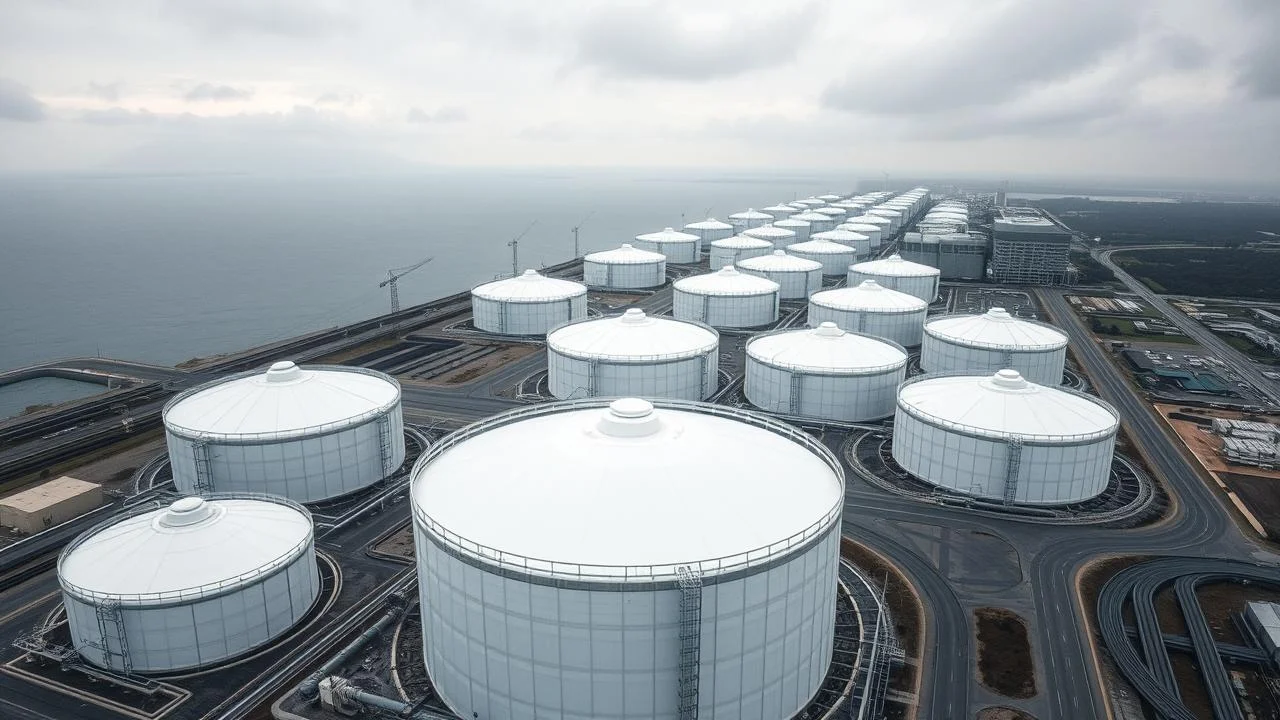
Japan's government began releasing its national petroleum stockpile on 26 March 2026, deploying reserves across eleven storage facilities nationwide. This marks the largest coordinated drawdown in Japanese history, executed alongside mandatory private-sector reserves to stabilise domestic supply chains [1]. The timing is not coincidental: the release follows days of escalating tensions around the Strait of Hormuz, where communication disruptions have already begun affecting vessel transit [1].
Dispatch
TOKYO, 26 March 2026 — Japan's Ministry of Economy, Trade and Industry announced the reserve release through state broadcaster NHK, which reported:
The government is releasing the nation's 「national petroleum reserves starting from the 26th. Combined with private reserves that the government mandates private enterprises to maintain, the country will release record-scale petroleum and aims to ensure stable supply.」[1]
NHK World, 26 March 2026
The announcement came amid visible strain on global energy corridors. On the same day, NHK reported that researchers had detected communication jamming near the Hormuz Strait itself [1]. The Japanese Shipowners' Association issued a statement the previous evening: We must find some thread of passage through the Strait of Hormuz, signalling acute concern about transit disruptions [1].
The Philippines had already declared a national energy emergency on 25 March [1], and Thailand and Vietnam faced similar pressures [1]. These cascading announcements across Asia suggest coordinated concern rather than isolated incidents—each government reading the same deteriorating calculus in Middle Eastern geopolitics.
What's Really Happening
The Real Stakes
For Japan's economy: Gasoline prices had fallen for six consecutive weeks before this announcement [1], suggesting some relief in the market. But reserve releases are a short-term tool—they typically last weeks, not months. If the Strait remains disrupted beyond April, Japan faces industrial shutdowns. The chemical industry has publicly stated it can sustain production for only one more month without fresh crude [1].
For energy markets: A sustained Hormuz closure would immediately spike global crude prices. Japan's willingness to drain strategic reserves signals that officials believe prices will rise sharply—otherwise, there is no urgency. Releasing reserves now is a bet that prices will spike higher if they do not act. This is a market signal worth watching: it tells traders that Tokyo's risk assessment has shifted.
For geopolitical hierarchy: Japan is not waiting for Washington or the IEA to coordinate a response. This reflects a structural shift in Asian energy diplomacy. Tokyo is signalling to Seoul, Bangkok, and Manila that each nation must secure its own supply. This is the opposite of post-1973 OPEC-crisis coordination, when Western nations moved in lockstep. Today, Asia moves alone.
For Iran policy: The timing matters. If Japan is releasing reserves to cushion against Iranian supply disruption, it tacitly accepts that Western sanctions or Iranian retaliation could tighten supply. This is not a statement of confidence in current diplomatic channels. It is a hedge against their failure.
Geopolitical Dimension
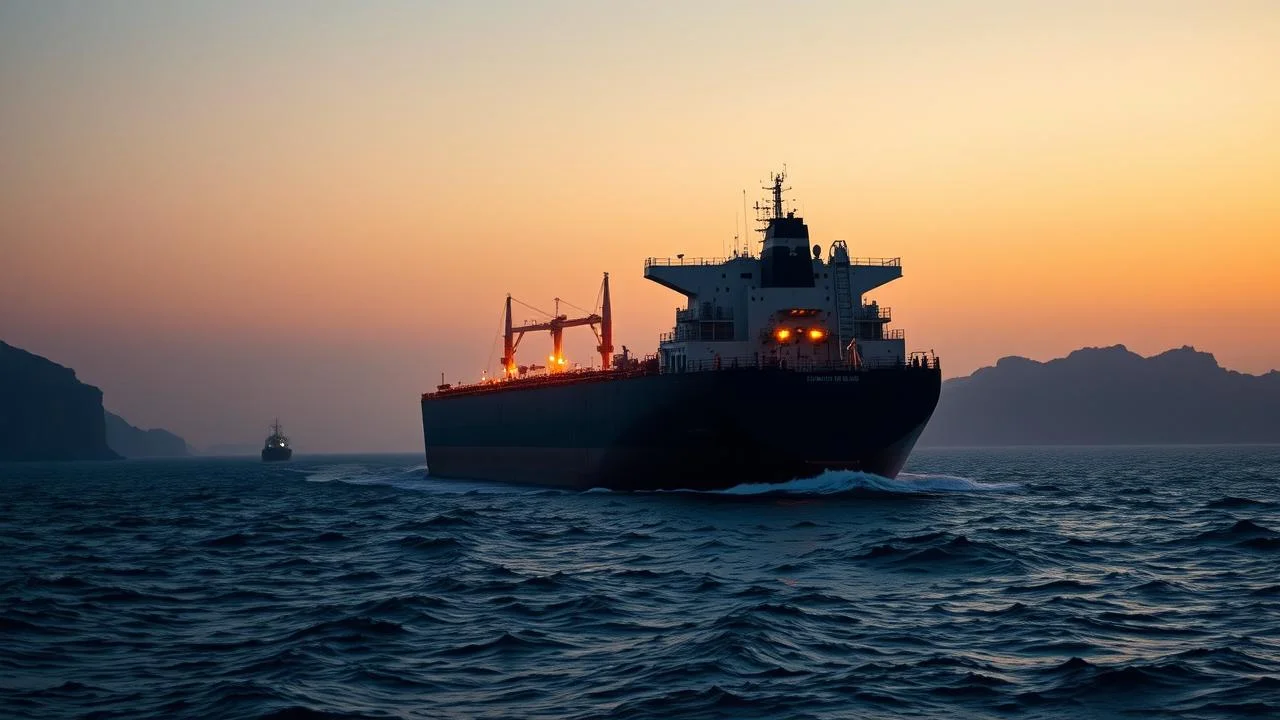
The Strait of Hormuz remains the physical linchpin. NHK reported that researchers have detected communication jamming in the strait's vicinity [1], and the Japanese Shipowners' Association expressed concern about passage continuity [1]. This is not theoretical—vessels are already experiencing navigation and communication interference.
Japan's release strategy differs markedly from past crises. In 1973, after OPEC embargoes, Japan coordinated with Europe and the United States through the International Energy Agency framework. In 2022, after Russia's invasion of Ukraine, Japan participated in coordinated IEA releases. Today, Japan acts unilaterally, suggesting either (a) it does not believe multilateral coordination will materialise quickly enough, or (b) it has low confidence in IEA consensus given fractured Western-China relations.
The Philippines' energy emergency (25 March) and Japan's reserve release (26 March) indicate that Asian governments have converged on a shared threat assessment: Middle Eastern supply disruption is imminent or already occurring. Neither nation waited for Washington or the IEA to act.
Industry Context
Japan's refining sector is highly integrated with petrochemicals manufacturing. The chemical industry federation stated publicly that production can continue for only one month without fresh crude supplies [1]. This is not speculation—it is an industry-issued constraint. If the Strait remains disrupted beyond April, chemical exports (a $100+ billion annual sector) face immediate pressure.
Gasoline prices had been declining [1], which normally would not trigger reserve releases. The fact that Tokyo is acting despite falling prices indicates officials expect prices to spike—not gradually, but sharply. This suggests their threat model includes a sudden supply shock, not a slow tightening.
Impact Radar
Watch For
1. Strait transit data: Monitor vessel passage counts through Hormuz. If daily transit volumes drop below 50% of normal levels for more than 48 hours, it signals a de facto closure, not just jamming. AIS (Automatic Identification System) tracking via MarineTraffic will show this in real time.
2. IEA coordination announcement: If the IEA issues a formal coordinated reserve release statement within the next 7 days, it signals Western governments have aligned on a common response. Absence of such a statement by 2 April suggests Tokyo acted ahead of consensus—a significant diplomatic signal.
3. Japanese reserve depletion rate: Monitor official Ministry of Economy announcements on reserve drawdown volumes. If Japan releases more than 10% of its strategic reserves within the first two weeks (by 9 April), it indicates officials expect the crisis to be severe and prolonged.
4. South Korean response: If Seoul announces its own reserve release within 5 days of Tokyo's announcement, it confirms that Asian governments have converged on threat assessment independently of Western coordination.
Bottom Line
Japan has moved from energy consumer to energy strategist. By releasing reserves unilaterally, Tokyo signals that it no longer assumes Western coordination will materialise fast enough to protect Asian supply chains. The Strait of Hormuz is no longer a theoretical chokepoint—it is now a live operational constraint. If the strait remains disrupted beyond April, Japan's chemical sector faces shutdown; if it clears, the release will have been a costly but prudent hedge. Either way, the era of Asian energy security resting on Western-led coordination has ended.
---