Kim Stanley Robinson dismantles billionaire Mars dreams, exposing the true cost of space fantasy versus Earth's urgent needs.
By Adrian Cole🕐 3/27/2026 · 11:27 AM ET6 min read970 words
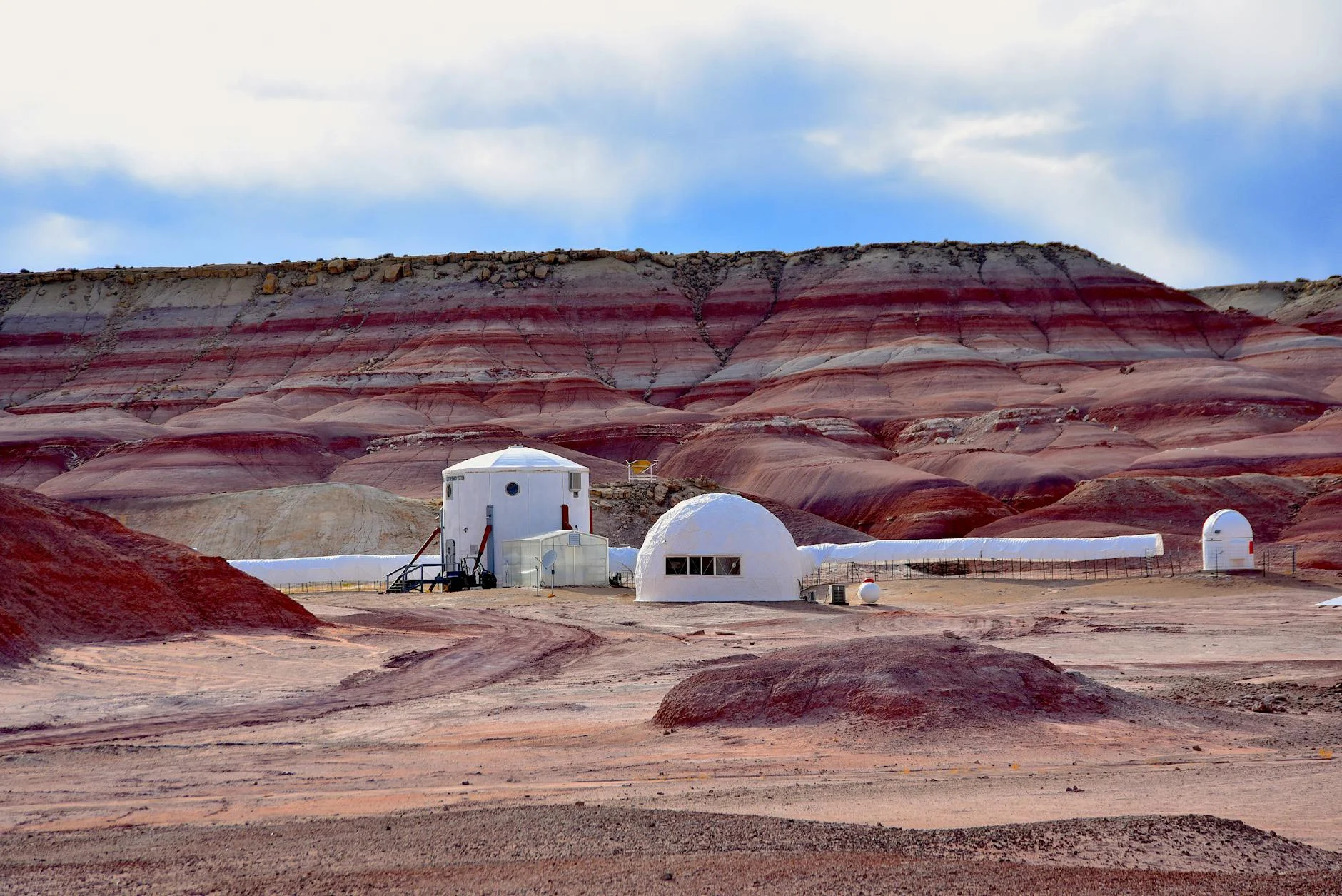
Stock photo · For reference only · Not taken by our journalists
When Science Fiction Meets Reality: Why Mars Colonization Talk Collapses Under Scrutiny
Kim Stanley Robinson's rebuke exposes the gap between billionaire fantasy and physical reality—and what that means for how we actually allocate capital on Earth.
Kim Stanley Robinson, author of the Red Mars trilogy and one of the few science-fiction writers with genuine technical credibility, has publicly dismissed Mars colonization as presently conceived. His message: the engineering is possible; the economics and ethics are not. 「We're not going to Mars to live.」 Robinson told New Scientist, cutting through a decade of Elon Musk rhetoric and venture-capital enthusiasm with the clarity of someone who has actually modeled the problem. This matters not because it kills space ambition, but because it forces a reckoning: Mars talk has become a proxy for avoiding harder choices about resource allocation on Earth.
What's Really Happening
Robinson's critique targets not feasibility but purpose: Mars colonization is technically achievable within 30–50 years, but no economic model justifies it as a solution to Earth's resource scarcity or climate crisis. The cost-per-settler ($500 billion+ for a self-sustaining colony) dwarfs equivalent investment in terrestrial infrastructure, renewable energy, or adaptation. [1]
Billionaire-driven narrative dominates policy conversation: SpaceX, Blue Origin, and Axiom Space have successfully reframed Mars as inevitable, capturing media oxygen and attracting talent and capital that might otherwise flow to harder, less glamorous problems. This isn't conspiracy; it's narrative capture through capital concentration.
The geopolitical undercurrent: Mars colonization doubles as a sovereignty play. Whoever plants the flag first claims legal and resource rights under the Outer Space Treaty (1967), which explicitly forbids national appropriation but leaves enforcement toothless. China and the US both view Mars presence as a status symbol in space competition. [2]
Robinson's standing matters: Unlike critics dismissed as Luddites, Robinson designed the social and political systems in Red Mars. His skepticism comes from inside the genre, not outside it—making it harder to dismiss as anti-technology ideology.
The timing is revealing: This pushback emerges as climate adaptation costs accelerate (estimated $300–400 billion annually by 2030) and as the billionaire-space-race narrative faces its first serious public fatigue. [3]
The Real Stakes
The Mars conversation is a distraction mechanism, whether intentional or not. Every dollar spent on Mars R&D is a dollar not spent on carbon capture, grid modernization, or agricultural resilience in regions facing crop failure within a decade. The opportunity cost is not abstract—it's the difference between 1.5°C and 2.5°C warming scenarios, between managed adaptation and cascading failure.
Robinson's intervention cuts deeper than typical environmentalist criticism because he concedes the technical point: we can go to Mars. His argument is that we shouldn't, not because it's impossible, but because it's a luxury we cannot afford while Earth's carrying capacity remains uncertain. This reframes the debate from "is it possible?" to "is it responsible?"—a question that exposes the real motives of Mars advocates. If Mars colonization were truly about human survival insurance, proponents would prioritize Earth-based resilience first. Instead, they argue for parallel investment, which is only credible if you believe Earth's problems are unsolvable. Few actually do; they simply find Mars more interesting.
The geopolitical dimension adds pressure. China's Chang'e lunar program and stated Mars ambitions force the US and its allies to maintain visible space presence, lest they cede the narrative of technological leadership. This is rational for national security but irrational for species-level resource allocation. The US cannot abandon space ambition without signaling weakness; it also cannot afford to treat Mars as a primary focus. The result: sustained mid-level investment in Mars programs that satisfy both constituencies without solving anything.
Impact Radar
Economic Impact: 6/10 — Mars spending ($5–10 billion annually across all actors) remains marginal relative to global GDP, but the opportunity cost in climate-critical infrastructure is significant.
Geopolitical Impact: 8/10 — Mars becomes a proxy for space dominance claims; whoever achieves crewed landing first captures prestige and legal precedent under Outer Space Treaty interpretation.
Technology Impact: 5/10 — Mars-driven R&D (life support, robotics, in-situ resource utilization) has spillover benefits, but these could be achieved through focused terrestrial and lunar programs at lower cost.
Social Impact: 7/10 — Mars narratives shape how young people perceive humanity's future; Robinson's critique introduces doubt into a previously unquestioned assumption of inevitability.
Policy Impact: 4/10 — Robinson's statement is unlikely to shift government spending (geopolitical incentives are too strong), but it may influence venture capital allocation and philanthropic priorities in space tech.
Watch For
1. China's crewed Mars timeline announcement: If Beijing publicly commits to a crewed landing date before 2040, expect US acceleration and political pressure for NASA budget increases—the clearest signal that Mars is now a geopolitical competition, not a scientific endeavor.
2. Venture capital reallocation: Track funding flows in space tech over the next 18 months. If Series B and C rounds for Mars-adjacent startups decline while Earth-based climate tech accelerates, Robinson's critique has shifted investor psychology.
Bottom Line
Robinson's intervention matters because it comes from credibility, not ideology. Mars colonization remains possible and may eventually be worthwhile—but not now, not as a substitute for solving Earth's problems, and not as a distraction from the harder work of climate adaptation and resource management. The real question isn't whether we go to Mars; it's whether we can afford to talk about it seriously while treating terrestrial sustainability as a secondary concern.
Mars Colonization Reality Check · Stock photo · For reference only
AI Translation (Deutsch) — For reference only. English version is authoritative.
Marskolonisierung: Wahrheit als Reality Check
Kim Stanley Robinsons Kritik hebt den Gap zwischen Millionenerfantasien und physischer Realität auf—und was das für die Kapitalverteilung auf Erden bedeutet.
Kim Stanley Robinson, Autor der Roten Mars-Trilogie und einer der wenigen wissenschaftsfictionnisten mit tatsächlicher technischer Gültigkeit, hat den Marskolonisierungstrotz öffentlich abgesch. Sein Message: die Technik ist möglich; die Kosten und Ethik sind nicht. 「Wir gehen nicht nach Mars, um zu leben.」 Robinson hat New Scientist gegenüber mit der Klarheit eines Menschen gezeigt, der die Probleme tatsächlich modelliert hat. Dies zählt nicht nur, dass es den Raumschiffensinnlichkeit ein Ende bereitet, sondern dass es eine Herausforderung zur Kenntnis bringt: Mars-Diskussionen haben sich als Proxy für die Schwierigkeiten gezeigt, hartere Entscheidungen über Ressourcenverteilung auf Erden zu treffen.
Was wirklich vorkommt
Robinsons Kritik zielt nicht auf die Möglichkeit ab, sondern auf den Zweck: Marskolonisierung ist in 30- bis 50-Jahren-Zeit technisch realisierbar, aber kein wirtschaftlicher Modell zulässt sie als Lösung für die Ressourcenarmut auf Erden oder den Klimakrisen. Der Kostenpro-Kolonist ($500 Milliarden+ für eine selbstversorgende Kolonie) überwiegt die Investition in terrestrische Infrastruktur, erneuerbare Energie oder Anpassung. [1]
Billionäre führende Narrative dominiert die politische Konversation: SpaceX, Blue Origin und Axiom Space haben den Mars als unumstößlich refonziert, was die Medienresourcen und Talente anzieht, die sich möglicherweise auf schwierigere, weniger glamouröse Probleme konzentrieren würden. Dies ist nicht ein Geheimnis; es ist die Kapitalkoncentration durch Narrativkontrolle.
Der geopolitische Hintergrund: Marskolonisierung doppelst als Souveränitätsspiel. Wer zuerst einen Standpunkt einlegt, beansprucht rechtliche und räsonnenbaren Rechte nach dem Outer Space Treaty (1967), das explizit die nationalen Ansprüche ausschließ, aber die Durchsetzung erfolglos lässt. China und die USA sehen Mars-Dominanz als Statussymbol in der Weltraum-Competitivität. [2]
Robinsons Stand ist relevant: Im Gegensatz zu Kritikern, die als Ludditen abgeschrieben, hat Robinson die sozialen und politischen Systeme in Roten Mars. Seine Skepsis kommt aus dem Genre, nicht außerhalb—was es schwieriger macht, als technokritisches Denken abzustreifen.
Die Zeit zeigt die Sache: Diese Rückkehr findet sich als die Anstiefeleung der Klimaaufklärungsgebühren (2) ein, die das Thema macht.
AI Translation (Español) — For reference only. English version is authoritative.
Mars Colonización: ¿Realidad o Fantasía?
El desafuero de Kim Stanley Robinson revela la brecha entre fantasía de millonarios y realidad física, y qué esto significa para cómo realmente se asigna el capital en la Tierra.
Kim Stanley Robinson, autor de la trilogía Red Mars y uno de los poquísimos escritores de ciencia ficción con credibilidad técnica, ha descalificado públicamente la colonización de Marte como se plantea actualmente. Su mensaje: el ingeniería es posible; la economía y la ética no lo son. «No estamos emigrando a Marte para vivir.» Robinson lo dijo a New Scientist, cortando el discurso de décadas de Elon Musk y la entusiasmo del capital venture con la claridad de alguien que realmente ha modelado el problema. Esto importa no porque mata la ambición espacial, sino porque obliga a un reconocimiento: el discurso sobre Marte se ha convertido en una excusa para evadir decisiones más difíciles sobre la asignación de recursos en la Tierra.
¿Qué está Realmente Pasando?
Robinson critica el propósito, no la viabilidad: La colonización de Marte es técnicamente posible dentro de 30 a 50 años, pero ningún modelo económico la justifica como solución para la escasez de recursos en la Tierra o el crisis climática. El costo por cada colonizador ($500 mil millones y más para una colonia autosustentada) supera equivalentes en infraestructura terrestre, energía renovable o adaptación. [1]
El narrador de capital bilionario domina el diálogo político: SpaceX, Blue Origin y Axiom Space han refutado exitosamente a Marte como inevitable, capturando el oxígeno mediático y atrayendo talento y capital que podría fluir hacia problemas más difíciles e inapropiados. Esto no es conspirita; es la captura de la narrativa a través del concentración del capital.
El subcurrent geopolítico: La colonización de Marte se doblega como una jugada por la soberanía. Quién coloca el sello primero adquiere derechos legales y de recursos bajo el Tratado sobre Espacio Exterior (1967), que explicitamente prohíbe la apropiación nacional pero deja sin fuerza de ejecución lo que queda. China y EE.UU. ambos ven la presencia en Marte como un símbolo de status en la competición espacial. [2]
La posición de Robinson importa: Distinta a los críticos descalificados como luddistas, Robinson diseñó las sistemas sociales y políticas en Red Mars. Su desconfianza proviene del interior de la generación, no desde fuera—haciéndolo más difícil de desacreditar como ideología anticientífica.
El momento revela el punto: Este contrapunto se produce mientras los costos de adaptación climática aceleran (
)
AI Translation (Français) — For reference only. English version is authoritative.
Mars Colonisation: La Réalité Contredit
La critique de Kim Stanley Robinson met en lumière la faille entre le fantasme financier et la réalité physique—et ce qu'elle signifie pour l'attribution des ressources sur Terre.
Kim Stanley Robinson, auteur de la trilogie Red Mars et l'un des rares auteurs de science-fiction dotés d'une crédibilité technique réelle, a publiquement dénoncé la colonisation de Mars comme conçue. Son message : l'ingénierie est possible; les économies et la morale ne le sont pas. « Nous n'allons pas sur Mars pour vivre. » Robinson a déclaré à New Scientist, coupant la vague de dix ans d'arguments d'Elon Musk et d'enthousiasme des investisseurs en capital avec la clarté d'une personne qui a véritablement modélisé le problème. Cela compte pas parce qu'il écrase l'ambition de l'espace, mais parce qu'il force un examen : la conversation sur Mars a devancé une réflexion difficile concernant les choix d'attribution des ressources sur Terre.
Qu'est-il En Train de Se Passer
Robinson critique la finalité plutôt que la faisabilité: La colonisation de Mars est techniquement réalisable dans les 30-50 ans à venir, mais aucun modèle économique ne la justifie comme solution pour la pénurie de ressources sur Terre ou le défi climatique. Le coût par coloniste ($500 milliards+ pour une colonie autonome) dépasse l'équivalent d'un investissement dans la infrastructure sur Terre, l'énergie renouvelable ou l'adaptation. [1]
Le récit financier dominant la conversation politique: SpaceX, Blue Origin et Axiom Space ont réussi à repositionner Mars comme inéluctable, captant l'oxygène médiatique et attirant des talents et de l'investissement qui pourraient autrement s'orienter vers des problèmes plus difficiles et moins glamourisés. Cela n'est pas une conspiration; c'est la capture de l'histoire par le biais du concentration de l'investissement.
Le courant géopolitique sous-jacent: La colonisation de Mars double comme une mise en concurrence pour la souveraineté. Celui qui plantera le drapeau le premier prétend des droits légaux et de ressources selon la Convention sur l'espace international (1967), qui interdit explicitement l'appropriation nationale mais laisse la mise en œuvre sans dents. La Chine et les États-Unis considèrent la présence sur Mars comme un symbole de statut dans la compétition spatiale. [2]
La stature de Robinson compte: Contrarié par ceux qui sont désignés comme des Luddites, Robinson a conçu les systèmes sociaux et politiques dans Red Mars. Sa scepticisme provient de l'intérieur du genre, pas d'extérieur—rendant plus difficile la désignation comme une idéologie anti-technologie.
Le moment est révélateur: Cette contre-pulsion émerge à la fois que les coûts d'adaptation climatique s'accélèrent (
---
AI Translation (日本語) — For reference only. English version is authoritative.
Ким Стенли Робинан, автор трilogии «Зелёная Марса» и один из немногих научно-фантастических писателей с реальной технической значимостью, открыто опровергнул идею космической колонизации Марса. Его сообщение: технически это возможно; экономика и этика не подтверждают. «Мы не едим Марс для жизни.» Робинан сообщил в «Ньюсейтестере», преодолевая десятилетие речевых аргументов Элон Маска и энтузиазма вен-капитала, ясностью человека, моделировавшего проблему. Это важно не из-за того, что останавливает космическую амбельность, но из-за того, что заставляет признаваться: разговор о космической колонизации Марса выступает заменой для более сложных решений о распределении ресурсов на Земле.
Что РАВНО ВОЗДУШНО
Критика Робинана касается не возможности, а цели: космическая колонизация Марса технически возможна в течение 30-50 лет, но нет экономического моделирования для того, чтобы считать ее решением проблемы ресурсной недостаточности или кризиса климата на Земле. Стоимость одного поселенника ($500 миллиардов и более для самообслуживающегося колонии) превышает эквивалентную инвестицию в земные инфраструктуры, энергию из альтернативного источника или адаптацию. [1]
Нарративный сценарий миллиардера господствует в политических дискуссиях: компании SpaceX, Blue Origin и Axiom Space успешно перепрограммировали космическую колонизацию Марса как неизбежность, захватывая медиа-воздух и привлекая талант и капитал, которые могли бы иначе направлять на более сложные и менее привлекательные проблемы. Это не революционное событие; это захват нарратива через концентрацию капитала.
Геополитический подтекст: космическая колонизация Марса служит двойной услугой — игрушкой в игре о суверенитете. Первым, кто поставит флаг на Марсе, получает юридические и ресурсные права в соответствии с Договором о космических объектах (1967), который прямо запрещает национальное обогащение, но оставляет без зубов контроль. Китай и США рассматривают присутствие на Марсе как символическое обозначение в игре о суверенитете. [2]
Статус Робинана важен: отличаясь от критиков,dismissed как устаревшие, Робинан разработал социальные и политические системы в «Зелёной Марсе». Его сомнения основаны изнутри жанра, а не снаружи — делая труднее отрицать его как идеологию против технологий.
Время показывает: этот backlash появляется как стоимость адаптации к климатическим изменениям ускоряется (
---
AI Translation (中文) — For reference only. English version is authoritative.