World Models Race: Chinese IP Theft Threatens Western Robotics Lead
AI physics prediction technology accelerates, but China's IP theft threatens Western advantage in robotics.
By Adrian Cole🕐 4/28/2026 · 7:45 AM ET6 min read1992 words
Stock photo · For reference only · Not taken by our journalists
Nature published a feature on 28 April 2026 examining "world models"—AI systems trained on video and physics simulations to predict and simulate 3D environments interactively. The technology is attracting $1 billion+ in venture funding and corporate investment from Google, Nvidia, and European startups, but a parallel White House memo reveals industrial-scale intellectual property theft by Chinese firms, raising questions about whose advantage this technological leap will actually serve.
---
Dispatch
LONDON, 28 April 2026 — Nature's feature introduces a fundamental shift in AI capability. Rather than training systems on text or images in isolation, researchers are building "world models" that embed interactive 3D environments—systems that understand gravity, collision, and causality well enough to simulate what happens when an object falls off a table.
Some researchers, including the computer scientist and AI pioneer Yann LeCun, who founded the firm Advanced Machine Intelligence (AMI) Labs in Paris, have turned their attention to a different type of AI tool, developing systems known as 'world models' that are trained on real-world data and can embody virtual, interactive and 3D environments.
The approach is attracting huge investment and business interest. AMI Labs — which is taking a radical approach to world models — has raised more than US$1 billion, a record initial infusion of money for a European company. Technology giants such as Google and Nvidia are also developing world models, as are several other start-up companies.
Nature, 28 April 2026
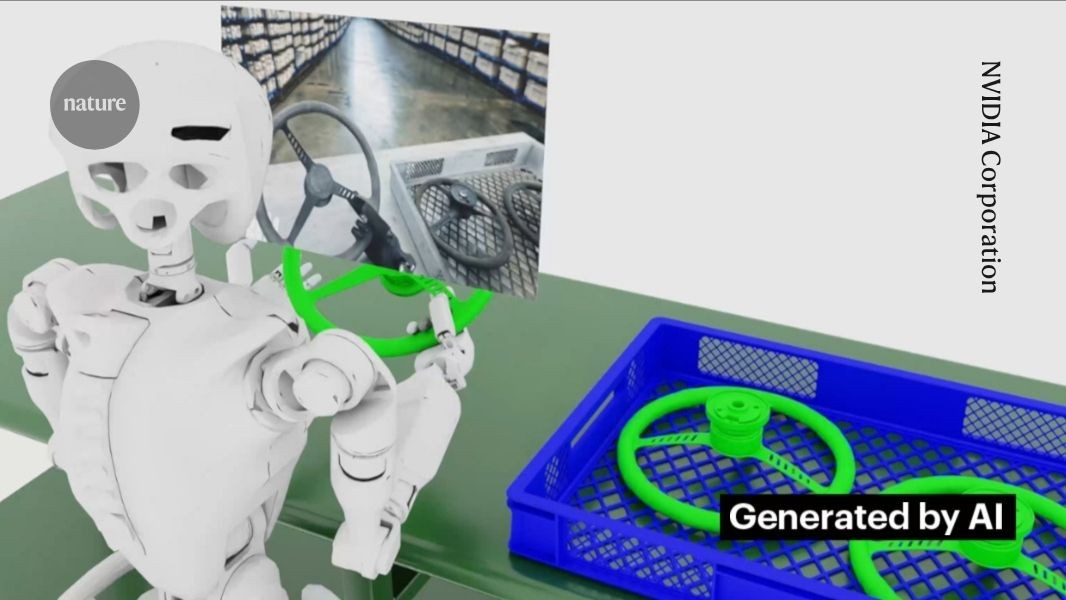
📷 Image via Nature News · Reproduced for editorial reference under fair use📷 Image via Nature News · Reproduced for editorial reference under fair use
The practical application is immediate: instead of robots learning through trial-and-error in the physical world (slow, expensive, dangerous), they can train in simulated environments powered by world models (fast, cheap, safe). Google DeepMind's Genie 3, released August 2025, generates photorealistic environments from text prompts that can be explored in real time. Runway's GWM-1 (December 2025) offers similar capability.
A fundamentally different reading emerges from White House policy channels. On the same week Nature published its feature, Michael Kratsios, the White House Director of Science and Technology Policy, circulated an internal memo revealing systematic IP theft:
The White House has said it will work more closely with US artificial intelligence (AI) firms to combat "industrial-scale campaigns" by foreign actors to steal advances in the technology.
Michael Kratsios, Director of Science and Technology Policy, wrote in an internal memo that the administration had new information indicating "foreign entities, principally based in China" were exploiting American firms.
Through a process called "distilling", such firms are essentially copying AI technology developed by US companies, he said.
BBC Business, reporting on White House memo (date: implied late April 2026)
The memo names three Chinese AI labs explicitly conducting distillation: DeepSeek, Moonshot, and MiniMax. Distillation works by running thousands of dummy accounts against a target AI system to extract its internal logic, then applying that logic to build a rival system. Kratsios stated the aim was to "systematically undermine American research and development and access proprietary information." [1]
---
What's Really Happening
Confirmed fact: World models represent a genuine capability leap. They move AI from pattern-matching (what LLMs do) to causal prediction (what robotics and autonomous systems require). [2] This is not hype—it is a necessary precondition for physical-world deployment at scale.
Confirmed fact: The investment scale is unprecedented for European AI. AMI Labs' $1 billion seed round is the largest ever for a European AI startup, signalling that world models are treated as foundational infrastructure, not incremental research. [2]
Structural mechanism: World models require massive training datasets—thousands of hours of video plus physics simulations. This creates a data moat. Companies that control high-quality, diverse video datasets (robotics labs, autonomous vehicle fleets, manufacturing floors) will build superior models. Google and Nvidia have these; most startups do not.
Analyst projection: Industry observers expect world models to accelerate robotics deployment in manufacturing and logistics within 18–36 months. [2] The simulation-to-physical transfer problem remains unsolved, but the gap is narrowing. Runway's co-founder Anastasis Germanidis argued that world models allow AI to learn "much faster than letting robots learn by interacting with physical objects." [2]
One thing other outlets are missing: The IP theft memo reveals that the real competition is not between companies—it is between national ecosystems. China's distillation strategy is not building world models; it is copying them. If Chinese firms can extract and replicate the logic of Google's or Nvidia's models, they bypass the five-year R&D cycle and the $1 billion funding requirement. The White House memo does not detail specific countermeasures, only that the administration will "explore" holding foreign actors accountable. [1] That is bureaucratic language for: we do not know what to do yet.
---
Stock photo · For illustration onlyStock photo · For illustration only
The Real Stakes
Who wins: Nvidia, Google, and any company that controls proprietary training data (robotics integrators, autonomous vehicle fleets, smart factory operators). Yann LeCun's AMI Labs will become a Tier 1 research institution if it delivers a world model that outperforms Google's Genie 3. [2]
Who loses: Open-source AI researchers and smaller robotics companies. World models require $500 million to $2 billion in compute and data infrastructure. A startup cannot build one. This is winner-take-most territory. Established players (Tesla's robotics division, Boston Dynamics, Sanctuary AI) will either acquire access to world models or fall behind in physical-world capability. [2]
What changes: If world models mature as projected, the timeline for autonomous systems in manufacturing and logistics compresses dramatically. Factories that today employ 50 humans for assembly could operate with 10 humans and 40 robotic units within five years, not ten. Warehouse automation, already accelerating, becomes irreversible. The labor displacement will be concentrated in logistics, manufacturing, and warehousing—sectors that already face wage pressure and geographic concentration.
The geopolitical asymmetry: The White House memo reveals a critical vulnerability. Chinese firms are not innovating; they are extracting. If distillation works at scale, China can field competitive world models without the R&D cost, but with a lag of 12–24 months. This means:
1. US firms maintain a technological lead but cannot monetise it (Chinese clones undercut pricing).
2. Chinese firms can deploy world models in Chinese factories and export markets faster than Western competitors can.
3. The US loses the economic rent from the innovation and the geopolitical leverage of being the sole supplier of cutting-edge robotics AI to allied nations.
Michael Kratsios' memo signals that the White House understands this but has no immediate solution. The four stated countermeasures—information-sharing, coordination, best practices, and accountability—are defensive, not offensive. No mention of export controls, sanctions, or forced licensing arrangements. [1]
---
Geopolitical Dimension
The US-China AI competition is shifting from training to deployment. For the past three years, the US maintained an edge through superior compute access and talent concentration. World models invert that advantage: they require volume data (which China can generate from its manufacturing base) and fast iteration (which China's state-coordinated industrial policy enables). Distillation is China's workaround to the talent gap.
Europe's position is precarious. AMI Labs' $1 billion funding is a statement of ambition, but European startups lack the data moat that US giants possess and lack the state backing that China deploys. Yann LeCun's lab will produce good research, but it will not control the market. Within three years, expect either acquisition by a US tech giant or partnership with a Chinese firm seeking European legitimacy. [2]
The real prize is manufacturing. Whoever deploys world-model-powered robotics in high-volume manufacturing first will set the standard for the next decade. China's advantage: it controls 28% of global manufacturing output and can mandate adoption of domestic robotics systems in state-owned enterprises. US advantage: it controls the underlying AI research and can restrict export of training data or compute to Chinese firms. The EU has neither advantage and will likely become a customer of either US or Chinese systems.
---
Stock photo · For illustration onlyStock photo · For illustration only
Industry Context
The world models story sits at the intersection of three accelerating trends:
1. Robotics deployment is hardware-limited, not software-limited. For years, the constraint was algorithm quality. World models remove that constraint. Now the bottleneck is manufacturing capacity, capital, and labor retraining. Companies like Tesla, Boston Dynamics, and Sanctuary AI will compete on execution, not innovation.
2. Data becomes the new oil—but only if you can defend it. Google's Genie 3 is trained on Google's video corpus and Google's simulations. That data is proprietary. Distillation attacks exploit the model's outputs, not the data itself. But if China can reverse-engineer the model's logic, it can generate synthetic training data that mimics Google's approach. The IP theft is not about stealing data; it is about stealing the method.
3. Regulatory frameworks are non-existent. The White House memo reveals no legal basis for punishing distillation. It is not hacking (no system breach). It is not patent infringement (world models are not patentable as "algorithms"). It is competitive intelligence at scale. The administration's stated approach—"best practices" and "accountability"—suggests they will attempt voluntary industry standards, not regulation. This will fail.
---
Impact Radar
Economic Impact: 8/10 — World models will accelerate robotics deployment across manufacturing and logistics, potentially displacing 2–5 million workers globally within a decade. [2] The productivity gains are real, but concentrated among capital holders and tech companies.
Geopolitical Impact: 7/10 — The US-China competition over world models will determine who controls the robotics supply chain for the next 15 years. Europe is a secondary actor. [1]
Technology Impact: 9/10 — This is a fundamental capability leap. Causal prediction is the missing piece in physical-world AI. Once solved, autonomous systems become deployable at scale. [2]
Social Impact: 6/10 — Labor displacement is real but gradual. Manufacturing employment has been declining for 20 years; world models accelerate a trend already underway. The political impact depends on whether governments implement retraining programs (unlikely in the US, uncertain in Europe).
Policy Impact: 4/10 — Current policy response (White House memo, information-sharing, "best practices") is reactive and toothless. No export controls, no sanctions, no forced licensing. Expect policy to lag technology by 3–5 years. [1]
---
Watch For
1. Distillation effectiveness data. If Chinese labs (DeepSeek, Moonshot, MiniMax) release world models in Q3 2026 that match or exceed Google's Genie 3 in benchmark tests, it will confirm that distillation works at scale. This would be a watershed moment—proof that IP theft can compress the innovation cycle by 12+ months. Nature and arXiv are the publication channels to monitor. [2]
2. Export control announcements from the US Department of Commerce. The White House memo signals awareness of the threat but offers no enforcement mechanism. If the administration moves to restrict export of training data, compute, or pre-trained models to Chinese entities within Q2–Q3 2026, it will signal escalation. The Federal Register and Commerce Department press releases are the official channels.
3. Manufacturing robotics deployment announcements from Tesla, Boston Dynamics, or Sanctuary AI. If any of these firms announces a world-model-powered robotics system entering production before Q4 2026, it will validate the timeline in Nature's reporting. Press releases and earnings calls are the signal.
---
Bottom Line
World models are real and will reshape robotics deployment within 18–36 months. But the geopolitical advantage is already shifting. The White House knows Chinese firms are copying US technology at scale and has no credible countermeasure beyond information-sharing and industry coordination—both of which will fail. By 2028, expect world-model-powered robotics to be commoditised, with China as the low-cost producer and the US as the innovation leader fighting for margin. Europe will be a customer, not a competitor.
---
AI Translation (Deutsch) — For reference only. English version is authoritative.
Wettkampf der Weltmodelle: Chinesischer Diebstahl geistigen Eigentums gefährdet westliche Robotik-Führungsposition
Die Technologie, die es KI ermöglicht, Physik vorherzusagen, beschleunigt sich, aber der Datenvorteil gehört drei Ländern – und China kopiert schneller, als der Westen innovieren kann.
Nature veröffentlichte am 28. April 2026 einen Artikel über „Weltmodelle" – KI-Systeme, die auf Videos und Physik-Simulationen trainiert werden, um 3D-Umgebungen interaktiv vorherzusagen und zu simulieren. Die Technologie zieht Investitionen von über 1 Milliarde US-Dollar an und weckt das Interesse von Google, Nvidia und europäischen Startups. Ein paralleles Memorandum des Weißen Hauses offenbart jedoch Diebstahl geistigen Eigentums im industriellen Maßstab durch chinesische Firmen und wirft Fragen darauf auf, wem dieser technologische Sprung letztendlich nutzen wird.
---
Bericht
LONDON, 28. April 2026 — Der Nature-Artikel stellt eine grundlegende Verschiebung in der KI-Leistungsfähigkeit vor. Anstatt Systeme isoliert auf Text oder Bilder zu trainieren, entwickeln Forscher „Weltmodelle", die interaktive 3D-Umgebungen einbetten – Systeme, die Schwerkraft, Kollision und Kausalität so gut verstehen, dass sie simulieren können, was passiert, wenn ein Objekt vom Tisch fällt.
Einige Forscher, darunter der Informatiker und KI-Pionier Yann LeCun, der das Unternehmen Advanced Machine Intelligence (AMI) Labs in Paris gegründet hat, haben ihre Aufmerksamkeit auf eine andere Art von KI-Tool gerichtet und entwickeln Systeme, die als „Weltmodelle" bekannt sind und auf realen Daten trainiert werden sowie virtuelle, interaktive und 3D-Umgebungen verkörpern können.
Der Ansatz zieht enorme Investitionen und geschäftliches Interesse an. AMI Labs – das einen radikalen Ansatz zu Weltmodellen verfolgt – hat mehr als 1 Milliarde US-Dollar aufgebracht, eine Rekordfinanzierungssumme für ein europäisches Unternehmen. Technologiegiganten wie Google und Nvidia entwickeln ebenfalls Weltmodelle, ebenso wie mehrere andere Startup-Unternehmen.
Nature, 28. April 2026
Die praktische Anwendung ist unmittelbar: Anstatt dass Roboter durch Versuch und Irrtum in der physischen Welt lernen (langsam, teuer, gefährlich), können sie in simulierten Umgebungen trainieren, die von Weltmodellen angetrieben werden (schnell, günstig, sicher). Google DeepMind's Genie 3, veröffentlicht im August 2025, generiert fotorealistische Umgebungen aus Textaufforderungen, die in Echtzeit erkundet werden können. Runway's GWM-1 (Dezember 2025) bietet ähnliche Funktionalität.
Eine grundlegend andere Lesart ergibt sich aus den politischen Kanälen des Weißen Hauses. In derselben Woche, in der Nature seinen Artikel veröffentlichte, verbreitete Michael Kratsios, der Direktor für Wissenschafts- und Technologiepolitik des Weißen Hauses, ein internes Memorandum, das systematischen Diebstahl geistigen Eigentums offenbarte:
Das Weiße Haus hat erklärt, dass es enger mit US-amerikanischen Künstliche-Intelligenz-(KI)-Firmen zusammenarbeiten wird, um „Kampagnen im industriellen Maßstab" von ausländischen Akteuren zum Diebstahl von Technologiefortschritten zu bekämpfen.
Michael Kratsios, Direktor für Wissenschafts- und Technologiepolitik, schrieb in einem internen Memorandum, dass die Regierung neue Informationen habe, die darauf hindeuten, dass „ausländische Entitäten, hauptsächlich mit Sitz in China" amerikanische Firmen ausnutzten.
Durch einen Prozess namens „Destillation" kopieren solche Firmen im Wesentlichen KI-Technologie, die von US-Unternehmen entwickelt wurde, sagte er.
BBC Business, Bericht über Memorandum des Weißen Hauses (Datum: vermutlich Ende April 2026)
Das Memorandum nennt drei chinesische KI-Labs, die explizit Destillation durchführen: DeepSeek, Moonshot und MiniMax. Destillation funktioniert, indem Tausende von Dummy-Konten gegen ein Ziel-KI-System ausgeführt werden, um seine interne Logik zu extrahieren, und diese Logik dann angewendet wird, um ein konkurrierendes System zu bauen. Kratsios erklärte, dass das Ziel darin bestand, „systematisch amerikanische Forschung und Entwicklung zu untergraben und auf proprietäre Informationen zuzugreifen." [1]
---
Was wirklich passiert
Bestätigte Tatsache: Weltmodelle stellen einen echten Leistungssprung dar. Sie verlagern KI vom Mustererkennung (was LLMs tun) zur Kausalvorhersage (was Robotik und autonome Systeme benötigen). [2] Dies ist kein Hype – es ist eine notwendige Voraussetzung für die Bereitstellung in der physischen Welt in großem Maßstab.
Bestätigte Tatsache: Die Investitionsskala ist für europäische KI beispiellos. Die Seed-Finanzierung von 1 Milliarde Dollar für AMI Labs ist die größte je für ein europäisches KI-Startup, was signalisiert, dass Weltmodelle als grundlegende Infrastruktur und nicht als inkrementelle Forschung behandelt werden. [2]
Struktureller Mechanismus: Weltmodelle erfordern massive Trainingsdatensätze – Tausende Stunden Video plus Physik-Simulationen. Dies schafft einen Datenvorteil. Unternehmen, die hochwertige, vielfältige Videodatensätze kontrollieren (Robotiklabore, autonome Fahrzeugflotten, Fabrikböden), werden überlegene Modelle bauen. Google und Nvidia haben diese; die meisten Startups nicht.
Analyst-Projektion: Branchenbeobachter erwarten, dass Weltmodelle die Robotik-Bereitstellung in Fertigung und Logistik innerhalb von 18–36 Monaten beschleunigen werden. [2] Das Simulations-zu-Physik-Transferproblem bleibt ungelöst, aber die Lücke wird kleiner. Der Mitbegründer von Runway, Anastasis Germanidis, argumentierte, dass Weltmodelle KI ermöglichen, „viel schneller zu lernen, als Roboter durch Interaktion mit physischen Objekten zu lernen." [2]
Ein Aspekt, den andere Outlets übersehen: Das IP-Diebstahl-Memorandum offenbart, dass der echte Wettbewerb nicht zwischen Unternehmen stattfindet – er findet zwischen nationalen Ökosystemen statt. Chinas Destillationsstrategie baut keine Weltmodelle; sie kopiert sie. Wenn chinesische Firmen die Logik von Googles oder Nvidias Modellen extrahieren und replizieren können, umgehen sie den fünfjährigen F&E-Zyklus und die Finanzierungsanforderung von 1 Milliarde Dollar. Das Memorandum des Weißen Hauses beschreibt keine spezifischen Gegenmaßnahmen, nur dass die Regierung „erkunden" wird, wie ausländische Akteure zur Rechenschaft gezogen werden. [1] Das ist Behördensprache für: Wir wissen noch nicht, was wir tun sollen.
---
Die echten Einsätze
Wer gewinnt: Nvidia, Google und jedes Unternehmen, das proprietäre Trainingsdaten kontrolliert (Robotik-Integratoren, autonome Fahrzeugflotten, intelligente Fabrikbetreiber). Yann LeCuns AMI Labs wird zu einer Tier-1-Forschungsinstitution, wenn es ein Weltmodell liefert, das Googles Genie 3 übertrifft. [2]
Wer verliert: Open-Source-KI-Forscher und kleinere Robotik-Unternehmen. Weltmodelle erfordern 500 Millionen bis 2 Milliarden Dollar in Rechen- und Dateninfrastruktur. Ein Startup kann keine bauen. Dies ist Winner-Takes-Most-Territorium. Etablierte Akteure (Teslas Robotik-Abteilung, Boston Dynamics, Sanctuary AI) werden entweder Zugang zu Weltmodellen erwerben oder in physischer Leistungsfähigkeit zurückfallen. [2]
Was sich ändert: Wenn Weltmodelle wie projiziert reifen, wird die Timeline für autonome Systeme in Fertigung und Logistik dramatisch verkürzt. Fabriken, die heute 50 Menschen für die Montage beschäftigen, könnten mit 10 Menschen und 40 Robotereinheiten innerhalb von fünf Jahren statt zehn betrieben werden. Lagerautomation, die bereits beschleunigt wird, wird unumkehrbar. Die Arbeitsplatzverlagerung wird in Logistik, Fertigung und Lagerhaltung konzentriert sein – Sektoren, die bereits mit Lohndruck und geografischer Konzentration konfrontiert sind.
Die geopolitische Asymmetrie: Das Memorandum des Weißen Hauses offenbart eine kritische Verwundbarkeit. Chinesische Firmen innovieren nicht; sie extrahieren. Wenn Destillation in großem Maßstab funktioniert, kann China wettbewerbsfähige Weltmodelle ohne die F&E-Kosten, aber mit einer Verzögerung von 12–24 Monaten bereitstellen. Das bedeutet:
1. US-Firmen behalten einen technologischen Vorsprung, können ihn aber nicht monetarisieren (chinesische Klone unterbieten die Preisgestaltung).
2. Chinesische Firmen können Weltmodelle in chinesischen Fabriken und Exportmärkten schneller bereitstellen als westliche Konkurrenten.
3. Die USA verlieren die wirtschaftliche Rente aus der Innovation und den geopolitischen Hebel, der einzige Lieferant von hochmoderner Robotik-KI für verbündete Nationen zu sein.
Michael Kratsios' Memorandum signalisiert, dass das Weiße Haus dies versteht, aber keine unmittelbare Lösung hat. Die vier genannten Gegenmaßnahmen – Informationsaustausch, Koordination, Best Practices und Rechenschaftspflicht – sind defensiv, nicht offensiv. Keine Erwähnung von Exportkontrollen, Sanktionen oder erzwungenen Lizenzierungsvereinbarungen. [1]
---
Geopolitische Dimension
Der US-China-KI-Wettbewerb verlagert sich vom Training zur Bereitstellung. In den letzten drei Jahren bewahrte die USA einen Vorsprung durch überlegenen Zugang zu Rechenressourcen und Talentkonzentration. Weltmodelle kehren diesen Vorteil um: Sie erfordern Volumendaten (die China aus seiner Fertigungsbasis generieren kann) und schnelle Iteration (die Chinas staatlich koordinierte Industriepolitik ermöglicht). Destillation ist Chinas Umgehung der Talentlücke.
Europas Position ist prekär. Die Finanzierung von 1 Milliarde Dollar für AMI Labs ist eine Ambitationserklärung, aber europäische Startups fehlt der Datenvorteil, den US-Giganten besitzen, und ihnen fehlt die staatliche Unterstützung, die China einsetzt. Yann LeCuns Labor wird gute Forschung produzieren, aber es wird den Markt nicht kontrollieren. Innerhalb von drei Jahren ist zu erwarten, dass entweder eine Übernahme durch einen US-Technologiegiganten oder eine Partnerschaft mit einer chinesischen Firma, die europäische Legitimität anstrebt, erfolgt. [2]
Der echte Preis ist Fertigung. Wer Robotik mit Weltmodellen in der Hochvolumen-Fertigung zuerst bereitstellt, wird den Standard für das nächste Jahrzehnt setzen. Chinas Vorteil: Es kontrolliert 28 % der globalen Fertigungsleistung und kann die Übernahme von inländischen Robotik-Systemen in staatseigenen Unternehmen vorschreiben. US-Vorteil: Es kontrolliert die zugrunde liegende KI-Forschung und kann den Export von Trainingsdaten oder Rechenressourcen an chinesische Firmen einschränken. Die EU hat weder den einen noch den anderen Vorteil und wird wahrscheinlich Kunde von entweder US- oder chinesischen Systemen.
---
Branchenkontext
Die Weltmodelle-Geschichte sitzt an der Schnittstelle von drei beschleunigenden Trends:
1. Robotik-Bereitstellung ist hardwarebegrenzt, nicht softwarebegrenzt. Jahrelang war die Einschränkung die Algorithmus-Qualität. Weltmodelle heben diese Einschränkung auf. Jetzt ist der Engpass Fertigungskapazität, Kapital und Umschulung der Arbeitskräfte. Unternehmen wie Tesla, Boston Dynamics und Sanctuary AI werden auf Ausführung konkurrieren, nicht auf Innovation.
2. Daten werden das neue Öl – aber nur, wenn man es verteidigen kann. Googles Genie 3 wird auf Googles Video-Korpus und Googles Simulationen trainiert. Diese Daten sind proprietär. Destillationsangriffe nutzen die Ausgaben des Modells aus, nicht die Daten selbst. Aber wenn China die Logik des Modells zurückentwickeln kann, kann es synthetische Trainingsdaten generieren, die Googles Ansatz nachahmen. Der IP-Diebstahl handelt nicht vom Diebstahl von Daten; es handelt vom Diebstahl der Methode.
3. Regulatorische Rahmen existieren nicht. Das Memorandum des Weißen Hauses offenbart keine rechtliche Grundlage für die Bestrafung von Destillation. Es ist kein Hacking (kein Systembruch). Es ist keine Patentverletzung (Weltmodelle sind nicht als „Algorithmen" patentierbar). Es ist Wettbewerbsintelligenz in großem Maßstab. Der erklärte Ansatz der Regierung – „Best Practices" und „Rechenschaftspflicht" – deutet darauf hin, dass sie versuchen werden, freiwillige Industriestandards zu etablieren, nicht Regulierung. Dies wird fehlschlagen.
---
Impact-Radar
Wirtschaftliche Auswirkung: 8/10 — Weltmodelle werden die Bereitstellung von Robotik in Fertigung und Logistik beschleunigen und könnten 2–5 Millionen Arbeitnehmer weltweit innerhalb eines Jahrzehnts verdrängen. [2] Die Produktivitätsgewinne sind real, aber unter Kapitalhaltern und Technologieunternehmen konzentriert.
Geopolitische Auswirkung: 7/10 — Der US-China-Wettbewerb um Weltmodelle wird bestimmen, wer die Robotik-Lieferkette für die nächsten 15 Jahre kontrolliert. Europa ist ein sekundärer Akteur. [1]
Technologische Auswirkung: 9/10 — Dies ist ein grundlegender Leistungssprung. Kausalvorhersage ist das fehlende Stück in der KI der physischen Welt. Einmal gelöst, werden autonome Systeme in großem Maßstab einsetzbar. [2]
Soziale Auswirkung: 6/10 — Arbeitsplatzverlagerung ist real, aber allmählich. Die Fertigungsbeschäftigung ist seit 20 Jahren rückläufig; Weltmodelle beschleunigen einen bereits laufenden Trend. Die politische Auswirkung hängt davon ab, ob Regierungen Umschulungsprogramme implementieren (unwahrscheinlich in den USA, unsicher in Europa).
Politische Auswirkung: 4/10 — Die aktuelle politische Reaktion (Memorandum des Weißen Hauses, Informationsaustausch, „Best Practices") ist reaktiv und zahnlos. Keine Exportkontrollen, keine Sanktionen, keine erzwungenen Lizenzierungen. Erwarten Sie, dass die Politik der Technologie um 3–5 Jahre hinterherhinkt. [1]
---
Beobachten Sie
1. Destillations-Effektivitätsdaten. Wenn chinesische Labs (DeepSeek, Moonshot, MiniMax) Weltmodelle im Q3 2026 veröffentlichen, die Googles Genie 3 in Benchmark-Tests entsprechen oder übertreffen, wird dies bestätigen, dass Destillation in großem Maßstab funktioniert. Dies wäre ein Wendepunkt – ein Beweis, dass IP-Diebstahl den Innovationszyklus um 12+ Monate verkürzen kann. Nature und arXiv sind die zu überwachenden Veröffentlichungskanäle. [2]
2. Ankündigungen von Exportkontrollen des US-Handelsministeriums. Das Memorandum des Weißen Hauses signalisiert Bewusstsein für die Bedrohung, bietet aber keinen Durchsetzungsmechanismus. Wenn die Regierung innerhalb von Q2–Q3 2026 Maßnahmen ergreift, um den Export von Trainingsdaten, Rechenressourcen oder vortrainierten Modellen an chinesische Entitäten einzuschränken, wird dies eine Eskalation signalisieren. Das Federal Register und Pressemitteilungen des Handelsministeriums sind die offiziellen Kanäle.
3. Ankündigungen zur Bereitstellung von Fertigungsrobotern von Tesla, Boston Dynamics oder Sanctuary AI. Wenn eines dieser Unternehmen vor Q4 2026 ein Weltmodell-gestütztes Robotik-System ankündigt, das in die Produktion geht, wird dies die Timeline in Natures Bericht validieren. Pressemitteilungen und Gewinnaufrufe sind das Signal.
---
Fazit
Weltmodelle sind real und werden die Robotik-Bereitstellung innerhalb von 18–36 Monaten umgestalten. Aber der geopolitische Vorteil verschiebt sich bereits. Das Weiße Haus weiß, dass chinesische Firmen US-Technologie in großem Maßstab kopieren, und hat kein glaubwürdiges Gegenmittel über Informationsaustausch und Branchenkoordination hinaus – beides wird fehlschlagen. Bis 2028 erwarten Sie, dass Weltmodell-gestützte Robotik zur Ware wird, mit China als Niedrigkostenproduzent und den USA als Innovationsführer, der um Margen kämpft. Europa wird ein Kunde sein, kein Konkurrent.
---
Referenzen
[1] BBC Business — „White House memo claims mass AI theft by Chinese firms" (April 2026). URL: https://www.bbc.com/news/articles/cpqxgxx9nrqo?at_medium=RSS&at_campaign=rss
[2] Nature — „World models are AI's latest sensation: what are they and what can they do?" (28. April 2026). URL: https://www.nature.com/articles/d41586-026-00820-5
AI Translation (Español) — For reference only. English version is authoritative.
La Carrera de Modelos Mundiales: El Robo de Propiedad Intelectual Chino Amenaza el Liderazgo de la Robótica Occidental
La tecnología que permite a la IA predecir la física se acelera, pero el foso de datos pertenece a tres países—y China copia más rápido de lo que Occidente puede innovar.
Nature publicó un artículo de análisis el 28 de abril de 2026 examinando los "modelos mundiales"—sistemas de IA entrenados en vídeos y simulaciones de física para predecir y simular entornos 3D de forma interactiva. La tecnología está atrayendo más de $1 mil millones en financiación de capital riesgo e inversión corporativa de Google, Nvidia y empresas emergentes europeas, pero un memorándum paralelo de la Casa Blanca revela el robo de propiedad intelectual a escala industrial por firmas chinas, planteando preguntas sobre a quién beneficiará realmente este salto tecnológico.
---
Despacho
LONDRES, 28 de abril de 2026 — El artículo de Nature introduce un cambio fundamental en la capacidad de la IA. En lugar de entrenar sistemas en texto o imágenes de forma aislada, investigadores están construyendo "modelos mundiales" que integran entornos 3D interactivos—sistemas que entienden la gravedad, colisión y causalidad lo suficientemente bien como para simular qué sucede cuando un objeto cae de una mesa.
Algunos investigadores, incluyendo el informático y pionero de la IA Yann LeCun, quien fundó la firma Advanced Machine Intelligence (AMI) Labs en París, han dirigido su atención a un tipo diferente de herramienta de IA, desarrollando sistemas conocidos como "modelos mundiales" que se entrenan con datos del mundo real y pueden incorporar entornos virtuales, interactivos y 3D.
El enfoque está atrayendo una inversión y un interés empresarial enormes. AMI Labs—que está adoptando un enfoque radical para los modelos mundiales—ha recaudado más de $1 mil millones, la infusión de dinero inicial más grande jamás registrada para una empresa europea. Gigantes tecnológicos como Google y Nvidia también están desarrollando modelos mundiales, al igual que varias otras empresas emergentes.
Nature, 28 de abril de 2026
La aplicación práctica es inmediata: en lugar de que los robots aprendan mediante prueba y error en el mundo físico (lento, costoso, peligroso), pueden entrenar en entornos simulados impulsados por modelos mundiales (rápido, barato, seguro). Genie 3 de Google DeepMind, lanzado en agosto de 2025, genera entornos fotorrealistas a partir de indicaciones de texto que pueden explorarse en tiempo real. GWM-1 de Runway (diciembre de 2025) ofrece capacidad similar.
Una lectura fundamentalmente diferente emerge de los canales de política de la Casa Blanca. En la misma semana que Nature publicó su artículo, Michael Kratsios, Director de Política Científica y Tecnológica de la Casa Blanca, circuló un memorándum interno revelando robo sistemático de propiedad intelectual:
La Casa Blanca ha dicho que trabajará más estrechamente con firmas estadounidenses de inteligencia artificial (IA) para combatir "campañas a escala industrial" por actores extranjeros para robar avances en la tecnología.
Michael Kratsios, Director de Política Científica y Tecnológica, escribió en un memorándum interno que la administración tenía información nueva indicando que "entidades extranjeras, principalmente con sede en China" estaban explotando firmas estadounidenses.
A través de un proceso llamado "destilación", tales firmas esencialmente están copiando tecnología de IA desarrollada por empresas estadounidenses, dijo.
BBC Business, reportaje sobre memorándum de la Casa Blanca (fecha: finales de abril de 2026)
El memorándum nombra explícitamente tres laboratorios de IA chinos realizando destilación: DeepSeek, Moonshot y MiniMax. La destilación funciona ejecutando miles de cuentas ficticias contra un sistema de IA objetivo para extraer su lógica interna, luego aplicando esa lógica para construir un sistema rival. Kratsios afirmó que el objetivo era "socavar sistemáticamente la investigación y desarrollo estadounidense y acceder a información propietaria." [1]
---
Qué Está Sucediendo Realmente
Hecho confirmado: Los modelos mundiales representan un salto genuino en capacidad. Mueven la IA del reconocimiento de patrones (lo que hacen los LLM) a la predicción causal (lo que requieren la robótica y los sistemas autónomos). [2] Esto no es exageración—es una precondición necesaria para el despliegue a escala en el mundo físico.
Hecho confirmado: La escala de inversión es sin precedentes para la IA europea. La ronda de semilla de $1 mil millones de AMI Labs es la más grande jamás registrada para una empresa emergente de IA europea, señalizando que los modelos mundiales se tratan como infraestructura fundamental, no como investigación incremental. [2]
Mecanismo estructural: Los modelos mundiales requieren conjuntos de datos de entrenamiento masivos—miles de horas de vídeo más simulaciones de física. Esto crea un foso de datos. Las empresas que controlan conjuntos de datos de vídeo de alta calidad y diversos (laboratorios de robótica, flotas de vehículos autónomos, pisos de manufactura) construirán modelos superiores. Google y Nvidia tienen estos; la mayoría de las empresas emergentes no.
Proyección de analista: Los observadores de la industria esperan que los modelos mundiales aceleren el despliegue de robótica en manufactura y logística dentro de 18–36 meses. [2] El problema de transferencia de simulación a física permanece sin resolver, pero la brecha se está cerrando. Anastasis Germanidis, cofundador de Runway, argumentó que los modelos mundiales permiten a la IA aprender "mucho más rápido que permitir que los robots aprendan interactuando con objetos físicos." [2]
Una cosa que otros medios están pasando por alto: El memorándum de robo de propiedad intelectual revela que la competencia real no es entre empresas—es entre ecosistemas nacionales. La estrategia de destilación de China no está construyendo modelos mundiales; está copiándolos. Si firmas chinas pueden extraer y replicar la lógica de los modelos de Google o Nvidia, ellas evitan el ciclo de I+D de cinco años y el requisito de financiación de $1 mil millones. El memorándum de la Casa Blanca no detalla contramedidas específicas, solo que la administración "explorará" responsabilizar a actores extranjeros. [1] Ese es lenguaje burocrático para: aún no sabemos qué hacer.
---
Las Apuestas Reales
Quién gana: Nvidia, Google y cualquier empresa que controle datos de entrenamiento propietarios (integradores de robótica, flotas de vehículos autónomos, operadores de fábricas inteligentes). El laboratorio AMI de Yann LeCun se convertirá en una institución de investigación de Nivel 1 si entrega un modelo mundial que supera a Genie 3 de Google. [2]
Quién pierde: Investigadores de IA de código abierto y empresas de robótica más pequeñas. Los modelos mundiales requieren $500 millones a $2 mil millones en infraestructura de cómputo y datos. Una empresa emergente no puede construir uno. Este es territorio de ganador se lleva todo. Los jugadores establecidos (división de robótica de Tesla, Boston Dynamics, Sanctuary AI) o adquirirán acceso a modelos mundiales o se quedarán atrás en capacidad de mundo físico. [2]
Qué cambia: Si los modelos mundiales maduran según lo proyectado, el cronograma para sistemas autónomos en manufactura y logística se comprime dramáticamente. Fábricas que hoy emplean 50 humanos para ensamblaje podrían operar con 10 humanos y 40 unidades robóticas dentro de cinco años, no diez. La automatización de almacenes, ya acelerada, se vuelve irreversible. El desplazamiento laboral estará concentrado en logística, manufactura y almacenaje—sectores que ya enfrentan presión salarial y concentración geográfica.
La asimetría geopolítica: El memorándum de la Casa Blanca revela una vulnerabilidad crítica. Las firmas chinas no están innovando; están extrayendo. Si la destilación funciona a escala, China puede desplegar modelos mundiales competitivos sin el costo de I+D, pero con un retraso de 12–24 meses. Esto significa:
1. Las firmas estadounidenses mantienen un liderazgo tecnológico pero no pueden monetizarlo (clones chinos socavan precios).
2. Las firmas chinas pueden desplegar modelos mundiales en fábricas chinas y mercados de exportación más rápido que los competidores occidentales pueden.
3. Los EE.UU. pierden la renta económica de la innovación y la ventaja geopolítica de ser el único proveedor de IA de robótica de vanguardia a naciones aliadas.
El memorándum de Michael Kratsios señala que la Casa Blanca entiende esto pero no tiene solución inmediata. Las cuatro contramedidas indicadas—intercambio de información, coordinación, mejores prácticas y responsabilidad—son defensivas, no ofensivas. Sin mención de controles de exportación, sanciones o arreglos de licencia forzada. [1]
---
Dimensión Geopolítica
La competencia IA entre EE.UU. y China está pasando del entrenamiento al despliegue. Durante los últimos tres años, los EE.UU. mantuvieron una ventaja a través de acceso de cómputo superior y concentración de talento. Los modelos mundiales invierten esa ventaja: requieren datos de volumen (que China puede generar de su base manufacturera) e iteración rápida (que la política industrial coordinada por el estado de China permite). La destilación es el workaround de China a la brecha de talento.
La posición de Europa es precaria. La financiación de $1 mil millones de AMI Labs es una declaración de ambición, pero las empresas emergentes europeas carecen del foso de datos que poseen los gigantes estadounidenses y carecen del respaldo estatal que China despliega. El laboratorio de Yann LeCun producirá buena investigación, pero no controlará el mercado. Dentro de tres años, espere adquisición por un gigante tecnológico estadounidense o asociación con una firma china buscando legitimidad europea. [2]
El verdadero premio es la manufactura. Quienquiera que despliegue primero robótica impulsada por modelos mundiales en manufactura de alto volumen establecerá el estándar para la próxima década. Ventaja de China: controla el 28% de la producción manufacturera global y puede mandatar la adopción de sistemas de robótica domésticos en empresas estatales. Ventaja estadounidense: controla la investigación de IA subyacente y puede restringir la exportación de datos de entrenamiento o cómputo a firmas chinas. La UE no tiene ninguna ventaja y probablemente se convertirá en cliente de sistemas estadounidenses o chinos.
---
Contexto de la Industria
La historia de modelos mundiales se sitúa en la intersección de tres tendencias aceleradas:
1. El despliegue de robótica está limitado por hardware, no por software. Durante años, la restricción fue la calidad del algoritmo. Los modelos mundiales eliminan esa restricción. Ahora el cuello de botella es capacidad de manufactura, capital y reentrenamiento laboral. Empresas como Tesla, Boston Dynamics y Sanctuary AI competirán en ejecución, no en innovación.
2. Los datos se convierten en el nuevo petróleo—pero solo si puedes defenderlo. Genie 3 de Google se entrena en el corpus de vídeo de Google y las simulaciones de Google. Esos datos son propietarios. Los ataques de destilación explotan las salidas del modelo, no los datos en sí. Pero si China puede hacer ingeniería inversa de la lógica del modelo, puede generar datos de entrenamiento sintéticos que imiten el enfoque de Google. El robo de propiedad intelectual no es sobre robar datos; es sobre robar el método.
3. Los marcos regulatorios no existen. El memorándum de la Casa Blanca no revela base legal para castigar la destilación. No es piratería (sin violación del sistema). No es infracción de patentes (los modelos mundiales no son patentables como "algoritmos"). Es inteligencia competitiva a escala. El enfoque indicado por la administración—"mejores prácticas" y "responsabilidad"—sugiere que intentarán estándares de industria voluntarios, no regulación. Esto fracasará.
---
Radar de Impacto
Impacto Económico: 8/10 — Los modelos mundiales acelerarán el despliegue de robótica en manufactura y logística, potencialmente desplazando 2–5 millones de trabajadores globalmente dentro de una década. [2] Las ganancias de productividad son reales, pero concentradas entre tenedores de capital y empresas tecnológicas.
Impacto Geopolítico: 7/10 — La competencia EE.UU.-China sobre modelos mundiales determinará quién controla la cadena de suministro de robótica para los próximos 15 años. Europa es un actor secundario. [1]
Impacto Tecnológico: 9/10 — Este es un salto de capacidad fundamental. La predicción causal es la pieza faltante en la IA de mundo físico. Una vez resuelta, los sistemas autónomos se vuelven desplegables a escala. [2]
Impacto Social: 6/10 — El desplazamiento laboral es real pero gradual. El empleo manufacturero ha estado en declive durante 20 años; los modelos mundiales aceleran una tendencia ya en marcha. El impacto político depende de si los gobiernos implementan programas de reentrenamiento (improbable en los EE.UU., incierto en Europa).
Impacto de Política: 4/10 — La respuesta de política actual (memorándum de la Casa Blanca, intercambio de información, "mejores prácticas") es reactiva e inefectiva. Sin controles de exportación, sin sanciones, sin licencia forzada. Espere que la política se quede atrás de la tecnología por 3–5 años. [1]
---
Observe
1. Datos de efectividad de destilación. Si laboratorios chinos (DeepSeek, Moonshot, MiniMax) liberan modelos mundiales en Q3 2026 que igualen o superen a Genie 3 de Google en pruebas de referencia, confirmará que la destilación funciona a escala. Este sería un momento decisivo—prueba de que el robo de propiedad intelectual puede comprimir el ciclo de innovación por 12+ meses. Nature y arXiv son los canales de publicación a monitorear. [2]
2. Anuncios de control de exportación del Departamento de Comercio de los EE.UU. El memorándum de la Casa Blanca señala conciencia de la amenaza pero ofrece sin mecanismo de ejecución. Si la administración se mueve para restringir la exportación de datos de entrenamiento, cómputo o modelos pre-entrenados a entidades chinas dentro de Q2–Q3 2026, señalizará escalada. El Registro Federal y comunicados de prensa del Departamento de Comercio son los canales oficiales.
3. Anuncios de despliegue de robótica de manufactura de Tesla, Boston Dynamics o Sanctuary AI. Si cualquiera de estas firmas anuncia un sistema de robótica impulsado por modelos mundiales entrando en producción antes de Q4 2026, validará el cronograma en el reportaje de Nature. Los comunicados de prensa y llamadas de ganancias son la señal.
---
Conclusión
Los modelos mundiales son reales y remodelarán el despliegue de robótica dentro de 18–36 meses. Pero la ventaja geopolítica ya está cambiando. La Casa Blanca sabe que firmas chinas están copiando tecnología estadounidense a escala e no tiene contramedida creíble más allá de intercambio de información y coordinación de industria—ambas fracasarán. Para 2028, espere que la robótica impulsada por modelos mundiales sea commoditizada, con China como productor de bajo costo y los EE.UU. como líder de innovación luchando por margen. Europa será cliente, no competidor.
---
Referencias
[1] BBC Business — "White House memo claims mass AI theft by Chinese firms" (abril de 2026). URL: https://www.bbc.com/news/articles/cpqxgxx9nrqo?at_medium=RSS&at_campaign=rss
[2] Nature — "World models are AI's latest sensation: what are they and what can they do?" (28 de abril de 2026). URL: https://www.nature.com/articles/d41586-026-00820-5
AI Translation (Français) — For reference only. English version is authoritative.
La Course aux Modèles Mondiaux : Le Vol de Propriété Intellectuelle Chinoise Menace la Suprématie Occidentale en Robotique
La technologie qui permet à l'IA de prédire la physique s'accélère, mais l'avantage concurrentiel appartient à trois pays—et la Chine copie plus vite que l'Occident n'innove.
Nature a publié un dossier le 28 avril 2026 examinant les « modèles mondiaux »—des systèmes d'IA entraînés sur des vidéos et des simulations de physique pour prédire et simuler des environnements 3D de manière interactive. La technologie attire plus d'un milliard de dollars en financement de capital-risque et d'investissements d'entreprises comme Google, Nvidia et des startups européennes, mais un mémorandum parallèle de la Maison-Blanche révèle un vol de propriété intellectuelle à l'échelle industrielle par des entreprises chinoises, soulevant des questions sur l'avantage que ce bond technologique servira réellement.
---
Dépêche
LONDRES, 28 avril 2026 — Le dossier de Nature introduit un changement fondamental dans les capacités de l'IA. Plutôt que d'entraîner des systèmes sur du texte ou des images isolément, les chercheurs construisent des « modèles mondiaux » qui intègrent des environnements 3D interactifs—des systèmes qui comprennent la gravité, les collisions et la causalité suffisamment bien pour simuler ce qui se passe quand un objet tombe d'une table.
Certains chercheurs, notamment l'informaticien et pionnier de l'IA Yann LeCun, qui a fondé l'entreprise Advanced Machine Intelligence (AMI) Labs à Paris, ont porté leur attention sur un type différent d'outil d'IA, développant des systèmes connus sous le nom de « modèles mondiaux » entraînés sur des données du monde réel et pouvant incarner des environnements virtuels, interactifs et 3D.
Cette approche attire d'énormes investissements et un intérêt commercial. AMI Labs—qui adopte une approche radicale des modèles mondiaux—a levé plus d'un milliard de dollars américains, une infusion d'argent initiale record pour une entreprise européenne. Des géants de la technologie comme Google et Nvidia développent également des modèles mondiaux, tout comme plusieurs autres entreprises en démarrage.
Nature, 28 avril 2026
L'application pratique est immédiate : au lieu que les robots apprennent par essais et erreurs dans le monde physique (lent, coûteux, dangereux), ils peuvent s'entraîner dans des environnements simulés alimentés par des modèles mondiaux (rapide, bon marché, sûr). Genie 3 de Google DeepMind, lancé en août 2025, génère des environnements photoréalistes à partir d'invites textuelles qui peuvent être explorés en temps réel. GWM-1 de Runway (décembre 2025) offre une capacité similaire.
Une lecture fondamentalement différente émerge des canaux politiques de la Maison-Blanche. La même semaine où Nature a publié son dossier, Michael Kratsios, directeur de la politique scientifique et technologique de la Maison-Blanche, a diffusé un mémorandum interne révélant un vol systématique de propriété intellectuelle :
La Maison-Blanche a déclaré qu'elle travaillerait plus étroitement avec les entreprises américaines d'intelligence artificielle (IA) pour combattre les « campagnes à l'échelle industrielle » menées par des acteurs étrangers pour voler les avancées technologiques.
Michael Kratsios, directeur de la politique scientifique et technologique, a écrit dans un mémorandum interne que l'administration disposait de nouvelles informations indiquant que des « entités étrangères, principalement basées en Chine » exploitaient les entreprises américaines.
Par un processus appelé « distillation », ces entreprises copient essentiellement la technologie d'IA développée par les entreprises américaines, a-t-il déclaré.
BBC Business, rapportant sur le mémorandum de la Maison-Blanche (date : fin avril 2026 supposée)
Le mémorandum nomme explicitement trois laboratoires d'IA chinois conduisant la distillation : DeepSeek, Moonshot et MiniMax. La distillation fonctionne en exécutant des milliers de comptes fictifs contre un système d'IA cible pour extraire sa logique interne, puis en appliquant cette logique pour construire un système rival. Kratsios a déclaré que l'objectif était de « saper systématiquement la recherche et le développement américains et d'accéder à des informations propriétaires ». [1]
---
Ce Qui Se Passe Réellement
Fait confirmé : Les modèles mondiaux représentent un véritable bond en capacité. Ils font passer l'IA de la reconnaissance de motifs (ce que font les LLM) à la prédiction causale (ce que requièrent la robotique et les systèmes autonomes). [2] Ce n'est pas du battage publicitaire—c'est une condition préalable nécessaire au déploiement à grande échelle dans le monde physique.
Fait confirmé : L'échelle d'investissement est sans précédent pour l'IA européenne. La levée de fonds de démarrage d'un milliard de dollars d'AMI Labs est la plus grande jamais réalisée pour une startup d'IA européenne, signalant que les modèles mondiaux sont traités comme une infrastructure fondamentale, pas comme une recherche supplémentaire. [2]
Mécanisme structurel : Les modèles mondiaux nécessitent d'énormes ensembles de données d'entraînement—des milliers d'heures de vidéo plus des simulations de physique. Cela crée un avantage concurrentiel basé sur les données. Les entreprises qui contrôlent des ensembles de données vidéo de haute qualité et diversifiés (laboratoires de robotique, flottes de véhicules autonomes, planchers de fabrication) construiront des modèles supérieurs. Google et Nvidia en possèdent ; la plupart des startups non.
Projection d'analyste : Les observateurs du secteur s'attendent à ce que les modèles mondiaux accélèrent le déploiement de la robotique dans la fabrication et la logistique dans les 18 à 36 mois. [2] Le problème du transfert de la simulation au monde physique reste non résolu, mais l'écart se rétrécit. Anastasis Germanidis, co-fondateur de Runway, a soutenu que les modèles mondiaux permettent à l'IA d'apprendre « beaucoup plus rapidement qu'en laissant les robots apprendre en interagissant avec des objets physiques ». [2]
Une chose que les autres médias oublient : Le mémorandum sur le vol de PI révèle que la véritable concurrence n'est pas entre entreprises—c'est entre écosystèmes nationaux. La stratégie de distillation chinoise ne construit pas des modèles mondiaux ; elle les copie. Si les entreprises chinoises peuvent extraire et répliquer la logique des modèles de Google ou de Nvidia, elles contournent le cycle de R&D de cinq ans et l'exigence de financement d'un milliard de dollars. Le mémorandum de la Maison-Blanche ne détaille pas les contre-mesures spécifiques, seulement que l'administration va « explorer » la tenue des acteurs étrangers responsables. [1] C'est un langage bureaucratique pour : nous ne savons pas encore quoi faire.
---
Les Vrais Enjeux
Qui gagne : Nvidia, Google et toute entreprise qui contrôle des données d'entraînement propriétaires (intégrateurs de robotique, flottes de véhicules autonomes, opérateurs d'usines intelligentes). Le laboratoire AMI de Yann LeCun deviendra une institution de recherche de niveau 1 s'il livre un modèle mondial surpassant Genie 3 de Google. [2]
Qui perd : Les chercheurs en IA open-source et les petites entreprises de robotique. Les modèles mondiaux nécessitent 500 millions à 2 milliards de dollars en infrastructure de calcul et de données. Une startup ne peut pas en construire un. C'est un territoire où le gagnant remporte tout. Les acteurs établis (division robotique de Tesla, Boston Dynamics, Sanctuary AI) devront soit acquérir l'accès à des modèles mondiaux, soit prendre du retard en capacité du monde physique. [2]
Ce qui change : Si les modèles mondiaux arrivent à maturité comme prévu, le calendrier des systèmes autonomes dans la fabrication et la logistique se compresse dramatiquement. Les usines qui emploient aujourd'hui 50 humains pour l'assemblage pourraient fonctionner avec 10 humains et 40 unités robotiques dans cinq ans, pas dix. L'automatisation des entrepôts, déjà en accélération, devient irréversible. Le déplacement de main-d'œuvre sera concentré dans la logistique, la fabrication et l'entreposage—des secteurs qui font déjà face à une pression salariale et à une concentration géographique.
L'asymétrie géopolitique : Le mémorandum de la Maison-Blanche révèle une vulnérabilité critique. Les entreprises chinoises n'innovent pas ; elles extraient. Si la distillation fonctionne à grande échelle, la Chine peut déployer des modèles mondiaux compétitifs sans le coût de R&D, mais avec un retard de 12 à 24 mois. Cela signifie :
1. Les entreprises américaines maintiennent une avance technologique mais ne peuvent pas la monétiser (les clones chinois réduisent les prix).
2. Les entreprises chinoises peuvent déployer des modèles mondiaux dans les usines chinoises et les marchés d'exportation plus rapidement que les concurrents occidentaux.
3. Les États-Unis perdent la rente économique de l'innovation et l'effet de levier géopolitique d'être le seul fournisseur d'IA robotique de pointe aux nations alliées.
Le mémorandum de Michael Kratsios signale que la Maison-Blanche comprend cela mais n'a pas de solution immédiate. Les quatre contre-mesures énoncées—partage d'informations, coordination, bonnes pratiques et responsabilité—sont défensives, pas offensives. Aucune mention de contrôles à l'exportation, de sanctions ou d'arrangements de licences forcées. [1]
---
Dimension Géopolitique
La concurrence IA États-Unis-Chine passe de la formation au déploiement. Au cours des trois dernières années, les États-Unis ont maintenu un avantage grâce à un accès de calcul supérieur et à une concentration de talents. Les modèles mondiaux inversent cet avantage : ils nécessitent des données en volume (que la Chine peut générer à partir de sa base manufacturière) et une itération rapide (que la politique industrielle coordonnée par l'État chinois permet). La distillation est la solution de contournement chinoise à l'écart de talents.
La position européenne est précaire. Le financement d'un milliard de dollars d'AMI Labs est une déclaration d'ambition, mais les startups européennes manquent de l'avantage concurrentiel basé sur les données que possèdent les géants américains et manquent du soutien d'État que déploie la Chine. Le laboratoire de Yann LeCun produira une bonne recherche, mais ne contrôlera pas le marché. Dans trois ans, attendez-vous à une acquisition par un géant technologique américain ou un partenariat avec une entreprise chinoise cherchant la légitimité européenne. [2]
Le vrai prix est la fabrication. Celui qui déploiera d'abord la robotique alimentée par des modèles mondiaux dans la fabrication à haut volume établira la norme pour la prochaine décennie. Avantage chinois : elle contrôle 28 % de la production manufacturière mondiale et peut mandater l'adoption de systèmes robotiques domestiques dans les entreprises d'État. Avantage américain : il contrôle la recherche en IA sous-jacente et peut restreindre l'exportation de données d'entraînement ou de calcul aux entreprises chinoises. L'UE n'a aucun avantage et deviendra probablement une cliente de systèmes américains ou chinois.
---
Contexte Industriel
L'histoire des modèles mondiaux se situe à l'intersection de trois tendances qui s'accélèrent :
1. Le déploiement de la robotique est limité par le matériel, pas par le logiciel. Pendant des années, la contrainte était la qualité de l'algorithme. Les modèles mondiaux suppriment cette contrainte. Maintenant, le goulot d'étranglement est la capacité de fabrication, le capital et la reconversion de la main-d'œuvre. Les entreprises comme Tesla, Boston Dynamics et Sanctuary AI concourront sur l'exécution, pas sur l'innovation.
2. Les données deviennent le nouvel or—mais seulement si vous pouvez les défendre. Genie 3 de Google est entraîné sur le corpus vidéo de Google et les simulations de Google. Ces données sont propriétaires. Les attaques par distillation exploitent les résultats du modèle, pas les données elles-mêmes. Mais si la Chine peut rétro-concevoir la logique du modèle, elle peut générer des données d'entraînement synthétiques qui imitent l'approche de Google. Le vol de PI n'est pas sur le vol de données ; c'est sur le vol de la méthode.
3. Les cadres réglementaires n'existent pas. Le mémorandum de la Maison-Blanche ne révèle aucune base juridique pour punir la distillation. Ce n'est pas du piratage (aucune violation de système). Ce n'est pas une violation de brevet (les modèles mondiaux ne sont pas brevetables en tant qu'« algorithmes »). C'est de l'intelligence concurrentielle à grande échelle. L'approche déclarée de l'administration—« bonnes pratiques » et « responsabilité »—suggère qu'elle tentera des normes industrielles volontaires, pas de réglementation. Cela échouera.
---
Radar d'Impact
Impact Économique : 8/10 — Les modèles mondiaux accélèreront le déploiement de la robotique dans la fabrication et la logistique, déplaçant potentiellement 2 à 5 millions de travailleurs mondialement dans une décennie. [2] Les gains de productivité sont réels, mais concentrés parmi les détenteurs de capital et les entreprises technologiques.
Impact Géopolitique : 7/10 — La concurrence États-Unis-Chine sur les modèles mondiaux déterminera qui contrôle la chaîne d'approvisionnement de la robotique pour les 15 prochaines années. L'Europe est un acteur secondaire. [1]
Impact Technologique : 9/10 — C'est un bond en capacité fondamental. La prédiction causale est la pièce manquante dans l'IA du monde physique. Une fois résolue, les systèmes autonomes deviennent déployables à grande échelle. [2]
Impact Social : 6/10 — Le déplacement de main-d'œuvre est réel mais progressif. L'emploi manufacturier décline depuis 20 ans ; les modèles mondiaux accélèrent une tendance déjà en cours. L'impact politique dépend du fait que les gouvernements mettent en œuvre des programmes de reconversion (peu probable aux États-Unis, incertain en Europe).
Impact Politique : 4/10 — La réponse politique actuelle (mémorandum de la Maison-Blanche, partage d'informations, « bonnes pratiques ») est réactive et sans dents. Aucun contrôle à l'exportation, aucune sanction, aucune licence forcée. Attendez-vous à ce que la politique accuse un retard sur la technologie de 3 à 5 ans. [1]
---
À Surveiller
1. Données d'efficacité de la distillation. Si les laboratoires chinois (DeepSeek, Moonshot, MiniMax) libèrent des modèles mondiaux au Q3 2026 qui correspondent ou dépassent Genie 3 de Google dans les tests de référence, cela confirmera que la distillation fonctionne à grande échelle. Ce serait un moment décisif—la preuve que le vol de PI peut compresser le cycle d'innovation de 12+ mois. Nature et arXiv sont les canaux de publication à surveiller. [2]
2. Annonces de contrôle à l'exportation du Département du Commerce américain. Le mémorandum de la Maison-Blanche signale la conscience de la menace mais n'offre aucun mécanisme d'application. Si l'administration se déplace pour restreindre l'exportation de données d'entraînement, de calcul ou de modèles pré-entraînés vers les entités chinoises au Q2-Q3 2026, cela signalera une escalade. Le Registre fédéral et les communiqués de presse du Département du Commerce sont les canaux officiels.
3. Annonces de déploiement de robotique manufacturière de Tesla, Boston Dynamics ou Sanctuary AI. Si l'une de ces entreprises annonce un système de robotique alimenté par un modèle mondial entrant en production avant le Q4 2026, cela validera le calendrier du rapport de Nature. Les communiqués de presse et les appels aux résultats sont le signal.
---
En Résumé
Les modèles mondiaux sont réels et remodèleront le déploiement de la robotique dans les 18 à 36 mois. Mais l'avantage géopolitique se déplace déjà. La Maison-Blanche sait que les entreprises chinoises copient la technologie américaine à grande échelle et n'a pas de contre-mesure crédible au-delà du partage d'informations et de la coordination industrielle—deux mesures qui échoueront. D'ici 2028, attendez-vous à ce que la robotique alimentée par des modèles mondiaux soit commoditisée, avec la Chine comme producteur à bas coût et les États-Unis comme leader en innovation luttant pour la marge. L'Europe sera une cliente, pas une concurrente.
---
Références
[1] BBC Business — « White House memo claims mass AI theft by Chinese firms » (avril 2026). URL : https://www.bbc.com/news/articles/cpqxgxx9nrqo?at_medium=RSS&at_campaign=rss
[2] Nature — « World models are AI's latest sensation: what are they and what can they do? » (28 avril 2026). URL : https://www.nature.com/articles/d41586-026-00820-5
AI Translation (日本語) — For reference only. English version is authoritative.
AI Translation (Русский) — For reference only. English version is authoritative.
Гонка мировых моделей: кража интеллектуальной собственности Китаем угрожает лидерству Запада в робототехнике
Технология, позволяющая ИИ предсказывать физику, ускоряется, но данные защищены тремя странами—и Китай копирует быстрее, чем Запад может инновировать.
Nature опубликовал статью 28 апреля 2026 года, посвящённую «мировым моделям»—системам ИИ, обученным на видео и физических симуляциях для предсказания и моделирования трёхмерных окружений в интерактивном режиме. Технология привлекает более 1 миллиарда долларов венчурного финансирования и корпоративных инвестиций от Google, Nvidia и европейских стартапов, но параллельный меморандум Белого дома разоблачает масштабную кражу интеллектуальной собственности китайскими компаниями, что вызывает вопросы о том, чьим преимуществом на самом деле станет этот технологический скачок.
---
Расследование
ЛОНДОН, 28 апреля 2026 — Статья Nature описывает фундаментальный сдвиг в возможностях ИИ. Вместо обучения систем на текстах или изображениях в отдельности исследователи разрабатывают «мировые модели», которые встраивают интерактивные трёхмерные окружения—системы, понимающие гравитацию, столкновение и причинность достаточно хорошо, чтобы симулировать то, что происходит, когда предмет падает со стола.
Некоторые исследователи, включая учёного-информатика и пионера ИИ Янна ЛеКуна, основавшего компанию Advanced Machine Intelligence (AMI) Labs в Париже, обратили внимание на другой тип инструмента ИИ, разрабатывая системы, известные как «мировые модели», обученные на данных реального мира и способные воплощать виртуальные, интерактивные и трёхмерные окружения.
Этот подход привлекает огромные инвестиции и деловой интерес. AMI Labs—компания, применяющая радикальный подход к мировым моделям—привлекла более 1 миллиарда долларов США, рекордный начальный объём финансирования для европейской компании. Технологические гиганты, такие как Google и Nvidia, также разрабатывают мировые модели, как и несколько других стартапов.
Nature, 28 апреля 2026
Практическое применение немедленно: вместо того чтобы роботы учились методом проб и ошибок в физическом мире (медленно, дорого, опасно), они могут тренироваться в симулированных окружениях, питаемых мировыми моделями (быстро, дёшево, безопасно). Genie 3 компании Google DeepMind, выпущенная в августе 2025 года, генерирует фотореалистичные окружения из текстовых подсказок, которые можно исследовать в реальном времени. GWM-1 компании Runway (декабрь 2025) предлагает аналогичную функциональность.
Принципиально иное прочтение вытекает из каналов политики Белого дома. На той же неделе, когда Nature опубликовал свою статью, Майкл Крациос, директор Белого дома по политике в области науки и технологий, распространил внутренний меморандум, разоблачающий систематическую кражу ИС:
Белый дом заявил, что будет работать в более тесном сотрудничестве с американскими компаниями в области искусственного интеллекта для борьбы с «кампаниями в промышленном масштабе» иностранных субъектов по краже технологических достижений.
Майкл Крациос, директор по политике в области науки и технологий, написал во внутреннем меморандуме, что администрация располагает новой информацией, указывающей на то, что «иностранные субъекты, в основном базирующиеся в Китае», эксплуатируют американские компании.
Посредством процесса, называемого «дистилляцией», такие компании по сути копируют технологию ИИ, разработанную американскими компаниями, сказал он.
BBC Business, сообщение о меморандуме Белого дома (дата: предположительно конец апреля 2026)
Меморандум называет три китайские лаборатории ИИ, явно проводящие дистилляцию: DeepSeek, Moonshot и MiniMax. Дистилляция работает путём запуска тысяч фиктивных аккаунтов против целевой системы ИИ для извлечения её внутренней логики, а затем применения этой логики для создания конкурирующей системы. Крациос заявил, что цель состояла в том, чтобы «систематически подорвать американские исследования и разработки и получить доступ к конфиденциальной информации». [1]
---
Что на самом деле происходит
Подтверждённый факт: Мировые модели представляют подлинный скачок в возможностях. Они переводят ИИ от выявления закономерностей (то, что делают LLM) к причинному предсказанию (то, что требуется робототехнике и автономным системам). [2] Это не шумиха—это необходимое предусловие для развёртывания физического мира в масштабе.
Подтверждённый факт: Масштаб инвестиций беспрецедентен для европейского ИИ. Раунд посева AMI Labs в 1 миллиард долларов—крупнейший в истории для европейского стартапа в области ИИ, что свидетельствует о том, что мировые модели рассматриваются как базовая инфраструктура, а не как дополнительные исследования. [2]
Структурный механизм: Мировые модели требуют массивных наборов данных для обучения—тысячи часов видео плюс физические симуляции. Это создаёт защиту данных. Компании, контролирующие высококачественные, разнообразные наборы видеоданных (лаборатории робототехники, автопарки автономных транспортных средств, производственные цеха), будут создавать превосходные модели. Google и Nvidia имеют их; большинство стартапов—нет.
Прогноз аналитиков: Наблюдатели отрасли ожидают ускорения развёртывания робототехники с использованием мировых моделей в производстве и логистике в течение 18–36 месяцев. [2] Проблема передачи симуляции в физический мир остаётся нерешённой, но разрыв сокращается. Сооснователь Runway Анастасис Германидис утверждал, что мировые модели позволяют ИИ учиться «намного быстрее, чем если бы роботы учились, взаимодействуя с физическими объектами». [2]
То, что упускают другие издания: Меморандум о краже ИС раскрывает, что реальная конкуренция ведётся не между компаниями—она ведётся между национальными экосистемами. Стратегия дистилляции Китая не строит мировые модели; она их копирует. Если китайские компании смогут извлечь и воспроизвести логику моделей Google или Nvidia, они обойдут пятилетний цикл НИОКР и требование финансирования в 1 миллиард долларов. Меморандум Белого дома не детализирует конкретные контрмеры, только то, что администрация будет «изучать» привлечение иностранных субъектов к ответственности. [1] Это бюрократический язык, означающий: мы пока не знаем, что делать.
---
Реальные ставки
Кто выигрывает: Nvidia, Google и любая компания, контролирующая собственные данные для обучения (интеграторы робототехники, автопарки автономных транспортных средств, операторы умных заводов). Лаборатория AMI Labs Янна ЛеКуна станет учреждением Tier 1 в области исследований, если она создаст мировую модель, превосходящую Genie 3 компании Google. [2]
Кто проигрывает: Исследователи открытого исходного кода в области ИИ и небольшие компании робототехники. Мировые модели требуют 500 миллионов–2 миллиардов долларов вычислительной и информационной инфраструктуры. Стартап не может создать одну. Это территория «победитель получает всё». Уже сложившиеся игроки (подразделение робототехники Tesla, Boston Dynamics, Sanctuary AI) либо получат доступ к мировым моделям, либо отстанут в возможностях физического мира. [2]
Что изменится: Если мировые модели созреют, как прогнозируется, временная шкала автономных систем в производстве и логистике резко сократится. Заводы, в которых сегодня работают 50 человек на сборке, смогут работать с 10 человеками и 40 роботизированными блоками в течение пяти лет, а не десяти. Автоматизация складов, уже ускоряющаяся, становится необратимой. Вытеснение рабочей силы будет сосредоточено в логистике, производстве и складском хозяйстве—секторах, которые уже испытывают давление на заработную плату и географическую концентрацию.
Геополитическая асимметрия: Меморандум Белого дома раскрывает критическую уязвимость. Китайские компании не инновируют; они извлекают. Если дистилляция работает в масштабе, Китай может развернуть конкурентоспособные мировые модели без затрат на НИОКР, но с отставанием в 12–24 месяца. Это означает:
1. Американские компании сохраняют технологическое преимущество, но не могут его монетизировать (китайские клоны подрывают цены).
2. Китайские компании могут развернуть мировые модели на китайских заводах и экспортных рынках быстрее, чем западные конкуренты.
3. США теряют экономическую ренту от инноваций и геополитический рычаг, связанный с тем, что являются единственным поставщиком передовых ИИ робототехники союзным странам.
Меморандум Майкла Крациоса свидетельствует о том, что Белый дом понимает это, но не имеет немедленного решения. Четыре указанные контрмеры—обмен информацией, координация, передовая практика и ответственность—носят оборонительный, а не наступательный характер. Никакого упоминания экспортных ограничений, санкций или принудительного лицензирования. [1]
---
Геополитическое измерение
Конкуренция США и Китая в области ИИ переходит от обучения к развёртыванию. В течение последних трёх лет США сохраняли преимущество благодаря превосходному доступу к вычислительным ресурсам и концентрации талантов. Мировые модели инвертируют это преимущество: они требуют объёмных данных (которые Китай может генерировать из своей производственной базы) и быстрой итерации (которую обеспечивает государственная скоординированная промышленная политика Китая). Дистилляция—это обход Китаем разрыва в талантах.
Положение Европы шатко. Финансирование AMI Labs в 1 миллиард долларов—это заявление об амбициях, но европейские стартапы не имеют защиты данных, которой обладают американские гиганты, и не имеют государственной поддержки, которую развёртывает Китай. Лаборатория Янна ЛеКуна будет производить качественные исследования, но не будет контролировать рынок. В течение трёх лет ожидайте либо приобретения американским технологическим гигантом, либо партнёрства с китайской компанией, ищущей европейской легитимности. [2]
Реальный приз—производство. Кто первым развернёт робототехнику, питаемую мировыми моделями, в высокообъёмном производстве, установит стандарт на следующее десятилетие. Преимущество Китая: он контролирует 28% мирового производства и может мандировать принятие отечественных систем робототехники на государственных предприятиях. Преимущество США: оно контролирует базовые исследования ИИ и может ограничить экспорт данных для обучения или вычислительных ресурсов китайским компаниям. ЕС не имеет ни одного преимущества и, вероятно, станет заказчиком либо американских, либо китайских систем.
---
Контекст отрасли
История мировых моделей находится на пересечении трёх ускоряющихся тенденций:
1. Развёртывание робототехники ограничено аппаратным обеспечением, а не программным обеспечением. Долгие годы ограничением было качество алгоритма. Мировые модели устраняют это ограничение. Теперь узким местом является производственная мощность, капитал и переподготовка рабочей силы. Компании, такие как Tesla, Boston Dynamics и Sanctuary AI, будут конкурировать на исполнение, а не на инновации.
2. Данные становятся новой нефтью—но только если вы можете их защитить. Genie 3 компании Google обучена на видеокорпусе Google и симуляциях Google. Эти данные являются собственностью. Атаки дистилляции эксплуатируют выходные данные модели, а не сами данные. Но если Китай сможет реконструировать логику модели, он сможет генерировать синтетические данные для обучения, которые имитируют подход Google. Кража ИС—это не кража данных; это кража метода.
3. Нормативно-правовые базы отсутствуют. Меморандум Белого дома не раскрывает правовых оснований для наказания дистилляции. Это не хакерство (нет нарушения системы). Это не нарушение патента (мировые модели не патентуются как «алгоритмы»). Это конкурентная разведка в масштабе. Заявленный подход администрации—«передовая практика» и «ответственность»—предполагает, что они будут пытаться установить добровольные отраслевые стандарты, а не нормативные акты. Это не сработает.
---
Радар воздействия
Экономическое воздействие: 8/10 — Мировые модели ускорят развёртывание робототехники в производстве и логистике, потенциально вытеснив 2–5 миллионов рабочих во всём мире в течение десятилетия. [2] Прирост производительности реален, но сосредоточен среди владельцев капитала и технологических компаний.
Геополитическое воздействие: 7/10 — Конкуренция США и Китая за мировые модели определит, кто контролирует цепь поставок робототехники в течение следующих 15 лет. Европа—вторичный игрок. [1]
Технологическое воздействие: 9/10 — Это фундаментальный скачок в возможностях. Причинное предсказание—недостающий элемент в ИИ физического мира. Один раз решённый, автономные системы становятся развёртываемыми в масштабе. [2]
Социальное воздействие: 6/10 — Вытеснение рабочей силы реально, но постепенно. Занятость в производстве снижается в течение 20 лет; мировые модели ускоряют уже происходящую тенденцию. Политическое воздействие зависит от того, будут ли правительства внедрять программы переподготовки (маловероятно в США, неопределённо в Европе).
Политическое воздействие: 4/10 — Текущий политический ответ (меморандум Белого дома, обмен информацией, «передовая практика») носит реактивный и беззубый характер. Никаких экспортных ограничений, санкций, принудительного лицензирования. Ожидайте, что политика отстанет от технологии на 3–5 лет. [1]
---
За чем следить
1. Данные об эффективности дистилляции. Если китайские лаборатории (DeepSeek, Moonshot, MiniMax) выпустят мировые модели в Q3 2026, которые соответствуют или превосходят Genie 3 компании Google в тестах на производительность, это подтвердит, что дистилляция работает в масштабе. Это был бы поворотный момент—доказательство того, что кража ИС может сжать цикл инноваций на 12+ месяцев. Nature и arXiv—каналы публикации для мониторинга. [2]
2. Объявления об экспортных ограничениях от Министерства торговли США. Меморандум Белого дома сигнализирует об осознании угрозы, но не предлагает механизм принуждения. Если администрация перейдёт к ограничению экспорта данных для обучения, вычислительных ресурсов или предварительно обученных моделей китайским субъектам в течение Q2–Q3 2026, это будет сигнализировать об эскалации. Федеральный реестр и пресс-релизы Министерства торговли—официальные каналы.
3. Объявления о развёртывании производственной робототехники от Tesla, Boston Dynamics или Sanctuary AI. Если любая из этих компаний объявит о системе робототехники, питаемой мировыми моделями, поступающей в производство до Q4 2026, это подтвердит временную шкалу в отчётах Nature. Пресс-релизы и звонки с инвесторами—сигнал.
---
Итоговый вывод
Мировые модели реальны и переформатируют развёртывание робототехники в течение 18–36 месяцев. Но геополитическое преимущество уже смещается. Белый дом знает, что китайские компании копируют американские технологии в масштабе, и не имеет достоверной контрмеры, выходящей за рамки обмена информацией и координации отрасли—обе из которых потерпят неудачу. К 2028 году ожидайте, что робототехника, питаемая мировыми моделями, будет товаризирована, с Китаем как производителем с низкими затратами и США как лидером инноваций, борющимся за маржу. Европа будет заказчиком, а не конкурентом.
---
Ссылки
[1] BBC Business — «Меморандум Белого дома утверждает о массовой краже ИИ китайскими компаниями» (апрель 2026). URL: https://www.bbc.com/news/articles/cpqxgxx9nrqo?at_medium=RSS&at_campaign=rss
[2] Nature — «Мировые модели—последняя сенсация ИИ: что они такое и на что они способны?» (28 апреля 2026). URL: https://www.nature.com/articles/d41586-026-00820-5
AI Translation (中文) — For reference only. English version is authoritative.