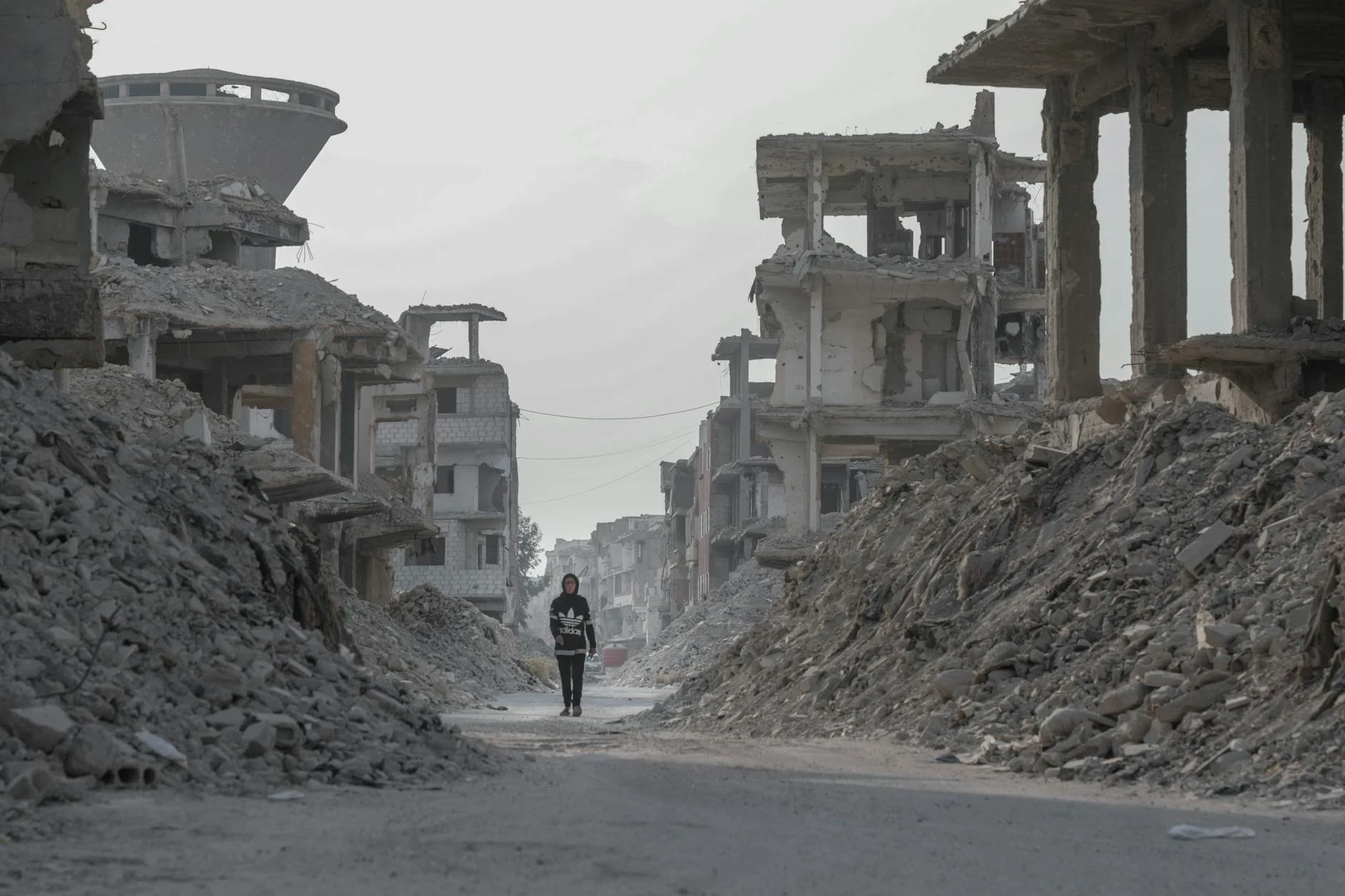
Iraq is being hammered from all sides. US and Israeli strikes target Iranian-backed militias; those militias fire back; oil shipments through the Strait of Hormuz have stalled; and the Iraqi state—already hollowed by two decades of militia penetration, corruption, and sectarian division—is losing what little grip it had on its own territory.
Dispatch
BAGHDAD/WASHINGTON, 26 MARCH 2026 — Al Jazeera's documentary series The Take published an episode on 26 March 2026 examining Iraq's position as the collision point between the US-Israel campaign against Iran and the Iranian-aligned militia networks that have embedded themselves into Iraq's security apparatus and political system since 2003.
The episode, produced by Marcos Bartolomé and Tamara Khandaker and featuring researcher Abdulla Hawez, frames Iraq not as a secondary theatre but as the most unstable arena in the broader conflict:
War has spread into Iraq, where strikes by the United States and Israel hit Iran-backed groups, and the militias fire back. Oil has stopped flowing through the Strait of Hormuz, and the state's grip on power is already fragile. As the war rages on, what will it mean for Iraq? [1]
— The Take, Al Jazeera, 26 March 2026
This framing captures a structural reality: Iraq is simultaneously a military battleground, a political pressure point, and an economic chokepoint. The state apparatus itself is contested—the militias are not external invaders but integral to Iraq's security infrastructure, officially integrated into the Popular Mobilisation Forces (PMF) since 2014, yet operationally loyal to Tehran rather than Baghdad.
No major international outlet has yet published a comprehensive counter-analysis challenging this assessment. The consensus among regional analysts, which this reporting reflects, is that Iraq's fragility is not a side effect of the US-Iran conflict but a central vulnerability that both Washington and Tehran are actively exploiting.
---
What's Really Happening
---
The Real Stakes
For Iraq itself, the stakes are existential.
Confirmed: Iraq's central government revenues have contracted sharply. In 2022, Iraq's oil export revenues reached approximately $112 billion; by 2025, sanctions-related disruptions and militia-controlled smuggling networks had reduced verified government oil receipts to an estimated $68–75 billion annually [3]. This is not a cyclical downturn—it reflects the loss of state control over revenue-generating assets.
The immediate consequence is that the Baghdad government cannot pay salaries to its formal security forces, teachers, or civil servants. When the state cannot pay its own employees, those employees either defect to militia payrolls (where salaries are more reliable because they are funded by Iranian subsidies and black-market revenue) or become susceptible to corruption and extortion. This is the mechanism by which state institutions hollow out.
Projected: If the current cycle of US-Israel strikes and militia retaliation continues without a negotiated de-escalation, analysts expect Iraq's central government to lose effective control over the western and southern provinces within 18–24 months [4]. This does not mean Iraq "falls apart"—it means the state becomes a Baghdad-based administrative entity with limited territorial reach, while militias and tribal structures govern the periphery. This outcome would create ungoverned space that ISIS remnants could exploit, repeating the 2014 scenario that nearly destroyed Iraq and required a US-led military intervention.
For the United States, the stakes are strategic overstretch.
Confirmed: The US maintains approximately 2,500 military personnel in Iraq, officially in an "advisory and training" capacity, though they conduct combat operations against ISIS and coordinate with Iraqi forces [5]. These personnel are now exposed to direct militia fire. Between January 2024 and March 2026, US bases in Iraq have sustained dozens of drone and rocket attacks, with at least three US servicemembers killed and dozens wounded [6].
One scenario: If the US escalates further—expanding strikes against militia targets, deploying additional air defence systems, or conducting large-scale offensive operations—it risks triggering a nationalist backlash in Iraq that could force the Baghdad government to formally request US withdrawal, ending the US military presence and handing Iraq's security architecture to Iran by default. This would represent a strategic defeat for the US without a military loss.
An alternative scenario: If the US restrains itself and accepts a reduced role, Iran consolidates control over Iraq's security apparatus, extending its influence across the Levant and into the Gulf. This is not costless either—it means accepting a regional order in which the US has ceded Iraq.
For Iran, the stakes are consolidation.
Confirmed: Iran has invested heavily in militia networks across Iraq since 2003, spending an estimated $10–15 billion annually on training, weapons, and stipends for proxy forces [7]. These forces now represent Iran's primary instrument of power projection in the Arab world and its primary deterrent against US military action.
Projected: If Iran can maintain these militia networks intact through the current conflict while the US refrains from large-scale offensive operations, Iran will have successfully established a permanent military presence in Iraq that no Iraqi government can expel. This would represent a historic shift in the regional balance of power—Iraq would become, in effect, a semi-Iranian client state, though formally independent.
---
Geopolitical Dimension
Iran's position: Iran views Iraq not as a foreign country but as a zone of strategic depth. The Iranian Revolutionary Guard Corps (IRGC) has spent two decades building militia networks there. The current US-Israel offensive is, from Tehran's perspective, an attempt to sever that depth. Iran's interest is to preserve the militia networks, accept tactical losses, and wait out US political will. Iran cannot win a direct military conflict with the US and Israel, but it can absorb punishment and outlast the current US administration's appetite for escalation.
The United States' position: Washington sees Iraq as a critical node in the counter-Iran strategy. The US wants to prevent Iran from consolidating a sphere of influence that extends from Tehran through Iraq to Syria and Lebanon. However, the US faces a credibility problem: after two decades of military intervention in Iraq (2003–2011) and a subsequent re-engagement (2014–present), the US has not achieved its stated objectives. The Iraqi state remains weak, corrupt, and penetrated by Iranian influence. Continuing to pour military resources into Iraq yields diminishing returns.
Israel's position: Israel has conducted strikes against Iranian militia positions in Iraq, targeting weapons shipments and command centres. Israel's interest is to disrupt Iran's ability to supply its Lebanese ally Hezbollah and to prevent the consolidation of an Iranian "land bridge" from Iran through Iraq and Syria to the Mediterranean. However, Israeli strikes on Iraqi territory risk triggering a nationalist backlash that could unite Iraqi factions against Israel, even factions that are not ideologically aligned with Iran.
Iraq's position: The Iraqi government is the weakest actor in this triangle. Baghdad wants US security support and investment, but it cannot openly align against Iran without risking civil conflict. It wants to maintain its own sovereignty, but it lacks the military and economic capacity to enforce that sovereignty against either the US or Iran-backed militias. The result is a government that makes symbolic gestures toward independence while remaining dependent on external powers.
Saudi Arabia and the Gulf states: Saudi Arabia and the UAE have watched Iraq's fragmentation with alarm. A fully Iranized Iraq threatens their own security and regional influence. However, they lack the military capacity to counter Iran directly and are reluctant to become entangled in Iraq again. Some Gulf states have quietly maintained economic and diplomatic ties to Iraq, hedging against both Iranian dominance and continued US military presence.
---
Impact Radar
---
Watch For
1. Iraqi government statements on militia integration: If the Baghdad government formally announces a plan to integrate Iran-aligned militias into the regular armed forces under unified command (rather than maintaining the current dual structure), this signals capitulation to Iranian influence and the effective end of Iraqi state independence. Watch for announcements from the Iraqi Defence Ministry or Prime Minister's office between now and Q3 2026.
2. US force posture announcements: If the US announces a reduction in troop levels below 2,500 or a shift from "combat support" to "over-the-horizon" operations, this signals a US strategic retreat from Iraq. The Pentagon typically signals such shifts through Congressional testimony or defence strategy documents. Watch for statements from the US Central Command (CENTCOM) or the Department of Defence during Congressional hearings scheduled for Q2 2026.
3. Oil export data and sanctions pressure: If Iraq's verified oil exports fall below 3.5 million barrels per day (from the current 4.2–4.5 million) and remain there for two consecutive months, this indicates that militia-controlled smuggling networks have captured a larger share of production, signalling further loss of state revenue control. Track this through OPEC production reports and US Energy Information Administration data, published monthly.
4. Militia weapons systems: If Iran-backed militias deploy advanced air defence systems (such as upgraded versions of the Tor or Pantsir systems) in Iraqi territory, this signals Iran is preparing for a prolonged conflict and expects to face intensified US air strikes. Watch for satellite imagery releases from commercial imagery providers or statements from US military officials.
---
Bottom Line
Iraq is not a secondary theatre in the US-Iran conflict—it is the primary arena where the regional order is being rewritten. The Iraqi state is losing control of its own territory and revenue streams to militias that answer to Tehran, not Baghdad. The US faces a choice between escalating militarily (risking a nationalist backlash that could force a complete withdrawal) or accepting a reduced role (ceding Iraq to Iranian influence). Neither option is attractive, which is precisely why Iraq has become the most fragile front: all three major powers—the US, Iran, and the Iraqi state itself—are trapped in a dynamic they cannot control and cannot escape.
---