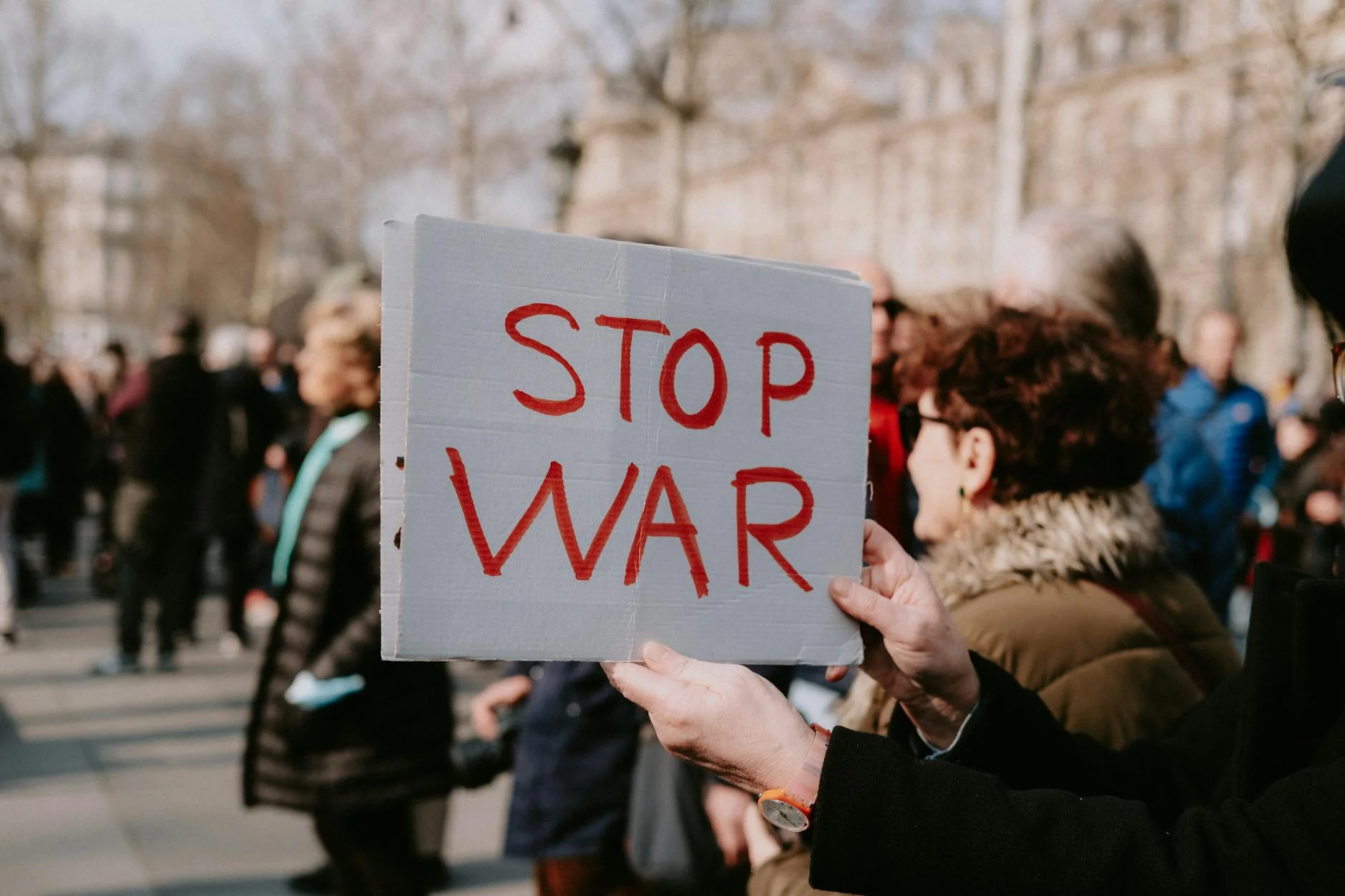
Thirty days into the US-Israel war on Iran, NATO's European members have mounted the most coordinated act of military non-cooperation with Washington since the alliance's founding in 1949. Spain has closed its airspace. Italy has denied basing rights. France has blocked weapons transit. Poland has refused to redeploy air defences. And the United Kingdom — America's most reliable military partner for eight decades — has told its own public, through its prime minister's mouth, that this is not our war[1]. President Donald Trump responded on 1 April by telling The Telegraph he was beyond reconsideration of pulling the United States out of NATO entirely [5].
---
Dispatch
LONDON / DOHA, 1 APRIL 2026 — Al Jazeera's staff report, published on 1 April 2026, assembled the most comprehensive catalogue yet of allied refusals. The piece documented a cascading series of denials from NATO members, each calibrated differently — Spain blunt, Italy diplomatic, France procedural, the UK conditional — but all pointing in the same direction: away from Washington.
Spain, the most vocal European opponent of the war, said on Monday that the country's airspace is closed to US military planes involved in the conflict. "I think everyone knows Spain's position. It's very clear," Defence Minister Margarita Robles said. Spain said last month that the US could not use jointly operated military bases in the war, which Spanish Prime Minister Pedro Sanchez has described as "unjustifiable" and "dangerous". In response to that, Trump threatened to cut trade with Madrid.
Al Jazeera, 1 April 2026 [1]

The United Kingdom has allowed US bombers to use military bases on its territory but only for defensive missions, such as striking Iranian military sites involved in attacks on British interests. On Wednesday, British Prime Minister Keir Starmer said in an address to the nation: "This is not our war. We will not be drawn into the conflict. That is not in our national interest."
Al Jazeera, 1 April 2026 [1]
A different reading comes from the South China Morning Post (Hong Kong, 1 April 2026), which looked past the immediate European fracture to ask a harder question — what this episode means for American alliance credibility in the Indo-Pacific:
The United States attacked Iran without consulting its European allies. President Donald Trump assumed the operation would be a quick win, over before anyone had to take a position. Instead, Washington answered a question Western governments had long avoided. After years of pushing Nato towards confrontation with China, would the transatlantic alliance fight a war it had not chosen together? The answer was no.
South China Morning Post, 1 April 2026 [2]
The Guardian (London, 1 April 2026) captured the British strategic pivot that followed Trump's attacks on Starmer. The prime minister used a Downing Street address not just to distance Britain from the war, but to announce a wholesale reorientation towards Europe:
"Brexit did deep damage to our economy, and the opportunities to strengthen our security and cut the cost of living are simply too big to ignore," he said, before turning to the forthcoming meeting with the EU. "At that summit, the UK will not just ratify existing commitments made at last year's summit. We want to be more ambitious, closer economic cooperation, closer security cooperation, a partnership that recognises our shared values, our shared interest and our shared future."
The Guardian, 1 April 2026 [8]
The New York Times (1 April 2026) added critical context on the military and diplomatic trajectory, reporting that Trump signalled the war would wind down within two to three weeks while simultaneously berating allies for failing to secure the Strait of Hormuz:
In a social media post on Tuesday, Mr. Trump had again denigrated U.S. allies, chiefly Britain, for not heeding his call for help in securing the strait, a conduit for much of the global oil supply, and said that the United States would not come to their aid in the future. An Iranian official emphasized on Wednesday that the United States would not regain access to the waterway, saying in a social media post: "The Strait of Hormuz will certainly reopen, but not for you."
New York Times, 1 April 2026 [4]
---
What's Really Happening
---
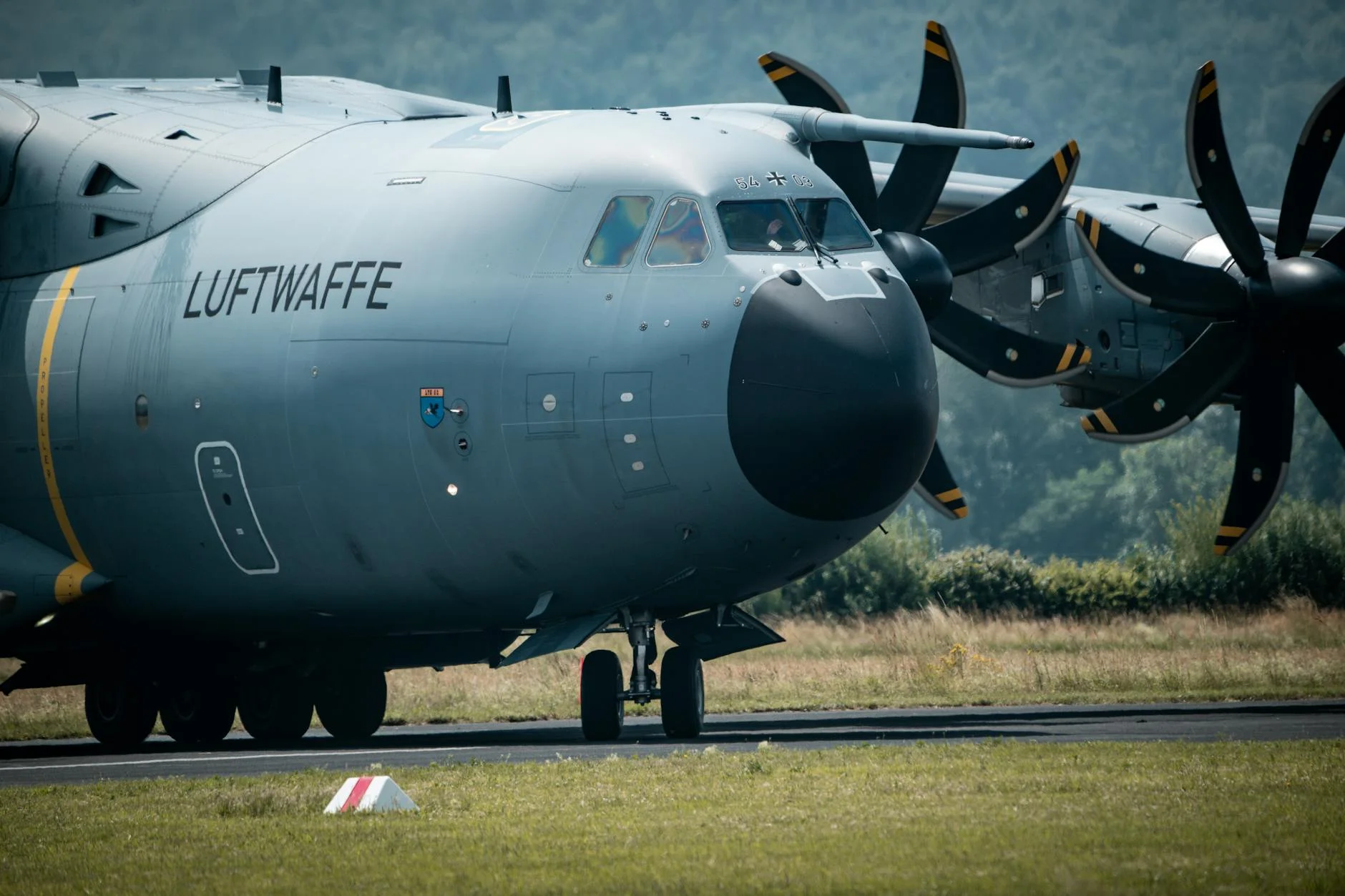
The Real Stakes
The immediate economic damage is quantifiable and severe. The near-total closure of the Strait of Hormuz — through which roughly one-fifth of global oil and gas exports transit — has driven energy prices up by as much as 60 percent in some markets [1]. Shipping companies refuse to send vessels through for fear of Iranian attacks. Even if the waterway reopens tomorrow, trade and shipping experts warn that supply chain disruptions will persist for months as vessels are cleared to transit en masse [1]. France has begun discussions with approximately 35 countries about a post-war mission to reopen the strait — a telling admission that nobody expects a quick resolution [1].
Samir Puri, visiting lecturer on war studies at King's College London, warned that the rhetoric from Washington carries its own escalatory momentum: These things can accumulate momentum in Trump's mind within the MAGA community, he told Al Jazeera, describing visceral anger voiced by Trump towards the UK and other European allies but also by [Defense Secretary] Pete Hegseth [1]. The risk is that Trump's domestic political incentives — looking tough, punishing ingrates — override strategic calculation. As a result, Puri concluded, the bond of NATO weakens further [1].
Confirmed: Britain is using the crisis to accelerate a strategic pivot toward Europe. Starmer's 1 April address explicitly linked the Iran war to the need for closer EU ties, calling for more ambitious economic and security cooperation at an upcoming summit [8]. This is the most significant post-Brexit reorientation a British prime minister has announced, and it happened not because of trade policy or migration, but because an American president called the Royal Navy old and broken on social media [5]. Projected: if Washington follows through on NATO withdrawal threats — or even takes concrete steps to downgrade its commitment — the EU defence integration timeline, which most analysts had pegged to the 2030s, accelerates dramatically.
---
Geopolitical Dimension
The United States has isolated itself from its own alliance system. Trump's demand for retroactive support in a war he launched without consultation violates the basic logic of collective security. NATO's Article 5 was designed for defensive wars agreed upon collectively — not for expeditionary campaigns chosen unilaterally. By threatening to leave NATO over this refusal, Trump conflates two separate things: allied obligation (which requires prior consultation) and allied loyalty (which he defines as unconditional obedience) [1][7].
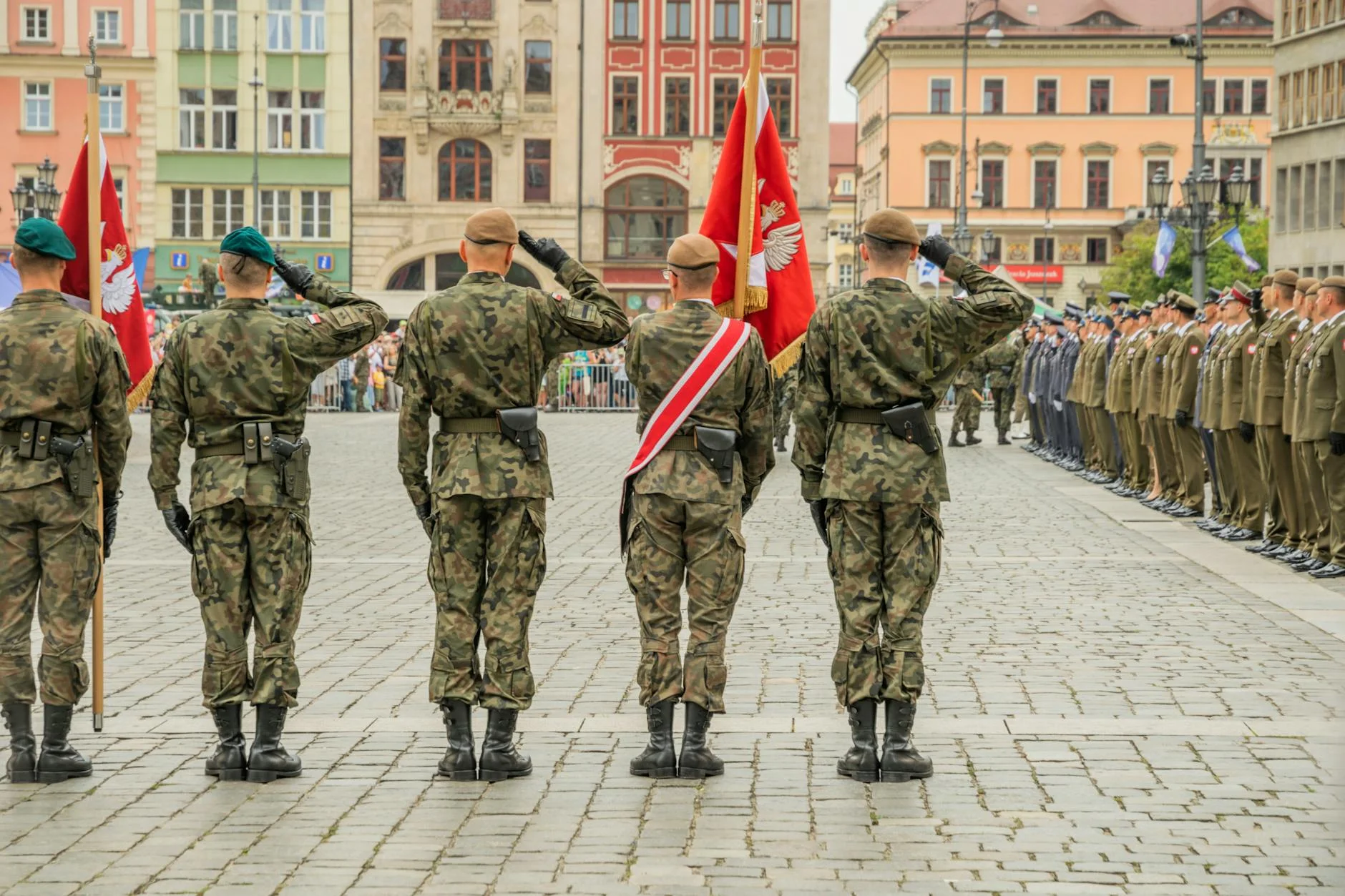
The European NATO members — Spain, Italy, France, the UK, Germany, Poland, Bulgaria — have each calibrated their refusal differently, but the aggregate effect is unanimous. Spain is the most confrontational, with Prime Minister Sánchez calling the war unjustifiable [1]. Italy is the most diplomatic, insisting on case-by-case review [1]. The UK occupies the most awkward position: permitting defensive basing while its prime minister declares the war illegal [8][9]. Poland's refusal to relocate Patriot systems to the Middle East reflects the obvious — NATO's eastern flank cannot be stripped to support a war in the Persian Gulf while Russia remains in Ukraine [1].
The Gulf states present the sharpest contrast to Europe. Saudi Arabia, the UAE, Kuwait, and Bahrain are not just tolerating the war; they are lobbying for its extension and, according to one diplomat, pushing for a ground invasion of Tehran [6]. Their calculus is existential: a weakened Iran removes their primary regional threat. But their enthusiasm creates a dangerous asymmetry — the countries closest to the conflict want escalation, while the countries with the largest militaries want de-escalation.
China stands to gain on multiple fronts. The SCMP analysis explicitly drew the line from Iran to Taiwan: if NATO will not fight a war it did not choose in the Middle East, it certainly will not fight one in the Taiwan Strait [2]. Meanwhile, a bipartisan US House committee reported that China's imports of sanctioned oil from Russia, Iran, and Venezuela surged to 2.6 million barrels per day in 2025 — roughly one-quarter of its total seaborne oil imports [10]. The war has simultaneously damaged American alliance credibility in Asia and concentrated discounted energy supplies in Beijing's hands.
Iran retains its most powerful card: the Strait of Hormuz. Despite a month of bombardment, B-52 overflights, and claimed air superiority, the US has not reopened the waterway [4]. An Iranian official's taunt — The Strait of Hormuz will certainly reopen, but not for you — captures a strategic reality that no amount of aerial bombing has changed [4]. Tehran is also pressuring the Houthis to prepare a renewed Red Sea shipping campaign, which would open a second front in the global energy chokepoint war [11].
---
Impact Radar
---
Watch For
1. Trump's national address scheduled for 9 PM Eastern on 1 April [4]. White House press secretary Karoline Leavitt described it as an important update on Iran. If Trump announces a withdrawal timeline, the Strait of Hormuz question — who secures it after — becomes the defining geopolitical negotiation of Q2 2026.
2. The UK Foreign Secretary's meeting later this week on unblocking the Strait of Hormuz [8]. Starmer announced that military planners would convene afterward to assess how to marshal capabilities and make the strait accessible and safe after the fighting has stopped. This is the embryo of a post-American security architecture for the Gulf — watch who attends and who does not.
3. Houthi decision on Red Sea shipping attacks [11]. European officials report that Iran is pressuring the group to prepare a renewed campaign, though internal divisions exist. If the Houthis open a second chokepoint — the Bab el-Mandeb Strait alongside the Strait of Hormuz — the global energy crisis escalates from severe to systemic.
4. The US House committee's push for sanctions on Chinese port operators handling sanctioned oil [10]. With Chinese imports of Iranian, Russian, and Venezuelan crude at 2.6 million barrels per day, any enforcement crackdown adds a US-China dimension to an already sprawling conflict.
---
Bottom Line
Donald Trump launched a war without his allies, demanded they join it after the fact, and now threatens to destroy the alliance because they declined. The result is not just a transatlantic rift — it is a live demonstration, watched carefully in Beijing, Moscow, and Taipei, that American alliance commitments are conditional on obedience rather than consultation. The Strait of Hormuz remains closed, over 3,000 people are dead, and the country that started this war is telling everyone else to finish it.
---