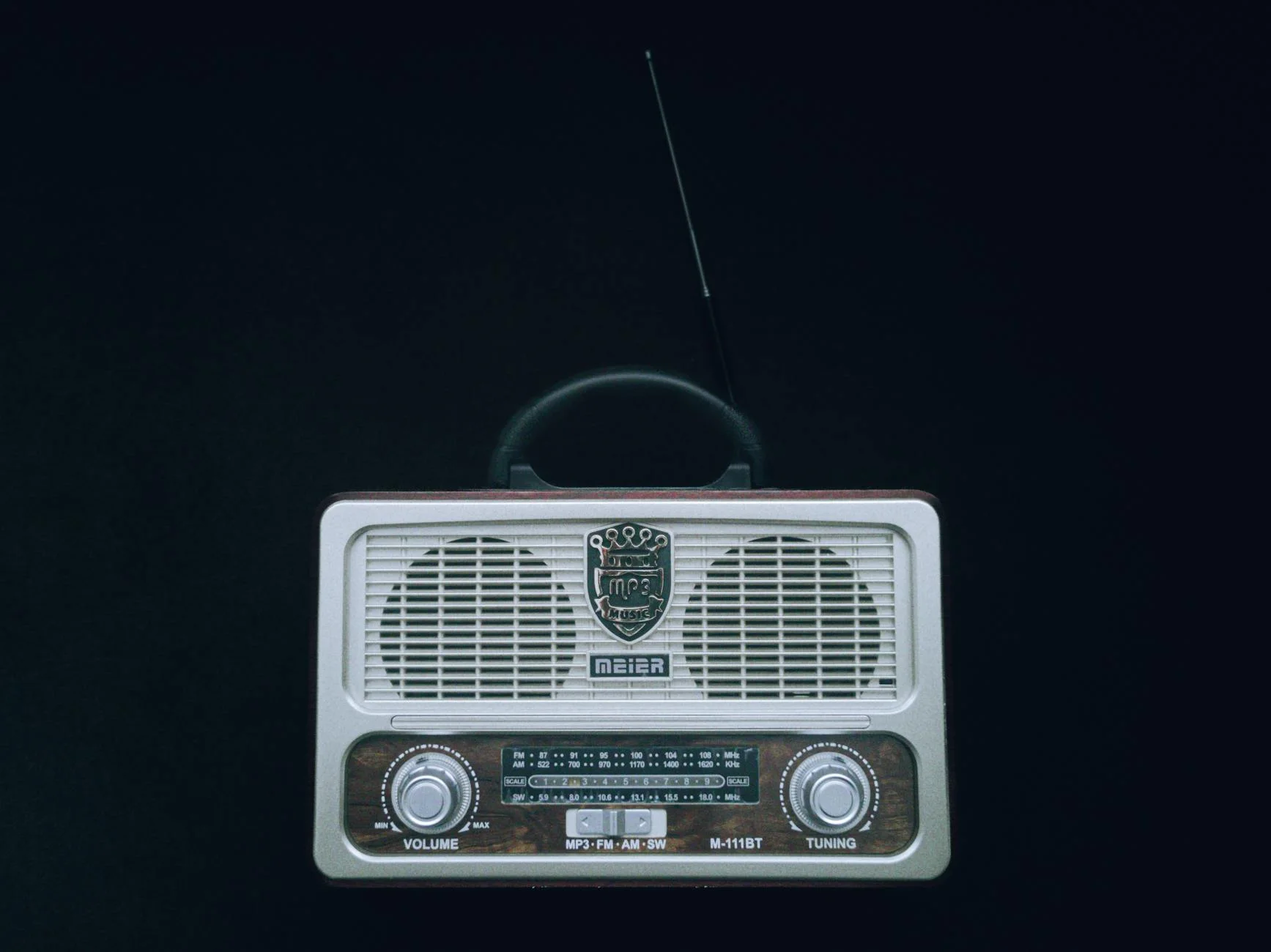
A shortwave radio station broadcasting strings of numbers in Persian has operated on a fixed schedule since the US-Israel attack on Iran began on 28 February 2026. Radio-location analysts have traced the signal to a US military installation in southern Germany. Iran has attempted to jam it. The station switched frequencies and kept transmitting. Whoever is behind this broadcast wants their message received — and they want Tehran to know they cannot stop it.
Dispatch
[BERLIN, 1 APRIL 2026] — WIRED reported the emergence of what radio experts have identified as a new numbers station, a type of encrypted shortwave broadcast historically linked to espionage operations. The station first appeared on 7910 kHz the day US bombing of Iran commenced, broadcasting twice daily at 02:00 and 18:00 UTC. Priyom, an organisation that tracks military and intelligence use of shortwave radio, traced the signal to a US facility in Böblingen, southwest of Stuttgart:
Over the weekend, Priyom said it had identified the likely origin of the broadcast. Using multilateration and triangulation techniques, the group traced the signal to a shortwave transmission facility inside a US military base in Böblingen, southwest of Stuttgart, Germany. The site lies within a restricted training area between Panzer Kaserne and Patch Barracks, with technical operations possibly linked to the US army's 52nd Strategic Signal Battalion, headquartered nearby.
WIRED, March 2026

The broadcast opens with a male voice calling Tavajoh! Tavajoh! Tavajoh! — "Attention!" in Persian — before reading coded number strings across five to six segments lasting up to twenty minutes each. Five days after the first transmission, Iranian jamming efforts began. WIRED reported that the station responded by shifting to 7842 kHz [1].
A different reading comes from The Guardian (UK), which has been tracking the broader diplomatic fallout of the conflict. While not covering the numbers station directly, its reporting on the transatlantic fractures over the Iran war provides critical context for why a US military installation in Germany might serve as a transmission point — and why European governments may have complicated feelings about it:
In a tentative sign of a more proactive European pushback to the war, it was revealed on Tuesday that France had blocked Israeli planes from flying weapons through its airspace while Italy refused last-minute permission for US bombers to land in Sicily. Spain has already denied the US use of its bases and airspace for the war.
The Guardian, March 2026 [3]
The BBC, meanwhile, has reported on the information and communications blackout inside Iran itself — the very condition that would make a shortwave numbers station operationally necessary:
Since the start of the US-Israel attacks, the Iranian government has clamped down on internet access, with blackouts across the country lasting up to 500 hours.
BBC / WIRED source material [1]
What's Really Happening
The Real Stakes
The numbers station is, in one sense, a curiosity — a throwback to an era of one-time pads and dead drops. But its emergence tells us something precise about the state of the war. When a major intelligence service reverts to 1960s-era tradecraft, it signals that modern infrastructure has failed or been denied. Iran's internet blackout has created an information vacuum inside the country. Someone — almost certainly a Western intelligence service, given the German base origin — is filling that vacuum the old-fashioned way.
John Sipher, a former CIA officer with 28 years in the National Clandestine Service, told WIRED that the system's value lies in its untraceability: It's useful because there's no way for the Iranian regime to figure out who is receiving the incoming signals, because it is being broadcast to everyone. It is unlike a Starlink device receiving internet and can be located; there's no way to determine who's listening in to the numbers[1]. This is the critical operational advantage. A shortwave broadcast blankets an entire region. Every receiver picks it up. Only the person with the codebook can decode it. Iranian counterintelligence can jam the frequency — they have tried — but they cannot identify the recipient.
The economic backdrop intensifies the stakes. US petrol prices have crossed $4 per gallon, up 35 per cent since strikes began [4]. Australia's Prime Minister Anthony Albanese delivered a rare televised address warning Australians the economic shock will be with us for months[11]. The Strait of Hormuz remains effectively blockaded, with China managing only limited transits — three vessels last week, each negotiated individually [5]. This is a war that is bleeding into every petrol station, shipping lane, and central bank forecast on the planet. Against that backdrop, a coded radio broadcast from a military base in Stuttgart's suburbs is not a nostalgic oddity. It is evidence that intelligence operations are deepening, not winding down, even as Trump tells reporters the war could end in two to three weeks[3].
Geopolitical Dimension
United States: The traced origin of the signal to a US military installation adds a concrete data point to the broader picture of American operational reach in this conflict. The 52nd Strategic Signal Battalion at Böblingen has a known role in European theatre communications [1]. If Washington is running a covert communication channel into Iran via shortwave, it suggests the presence of intelligence assets inside the country who cannot be reached any other way — a significant operational claim, even if unconfirmed.
Germany: Berlin finds itself in an increasingly uncomfortable position. France has blocked Israeli weapons flights through its airspace. Italy refused landing permission for US bombers. Spain denied base access entirely [3]. Germany has not taken comparable steps — and now a US facility on German soil appears to be actively supporting intelligence operations in the Iran conflict. The political dynamics within the governing coalition will face pressure if this story gains traction in the Bundestag.
Iran: The regime's response — jamming the signal within five days — reveals both awareness and anxiety [1]. Tehran's bubble-jammer deployment confirms that Iranian signals intelligence monitors shortwave frequencies routinely, a legacy of decades spent blocking external Persian-language broadcasts. But jamming a numbers station is largely futile: the station shifts frequency, and the recipient needs to hear the message only once. The real concern for Iranian counterintelligence is not the radio waves — it is the person holding the codebook.
China and Pakistan: Beijing and Islamabad have jointly presented a five-point peace plan aimed at securing a ceasefire and reopening the Strait of Hormuz [8]. China's intervention reflects raw economic self-interest — PetroChina chairman Dai Houliang acknowledged that Middle East imports account for about 10 per cent of the company's total operating volume [5]. Matt Pottinger, Chairman of the Foundation for Defense of Democracy's China Program, assessed Beijing's motives directly: I think that Beijing is a little bit worried about where this could lead if it turns into a real energy shock that is protracted[8]. The existence of an active Western intelligence channel into Iran complicates any peace effort — it signals that at least one party is preparing for a longer engagement, not a negotiated exit.
United Kingdom: Trump publicly attacked London for refusing to join the decapitation of Iranwhile still using British bases for operations [3]. Defence Secretary Hegseth mocked the Royal Navy's capacity [3]. The UK occupies the worst of all positions: absorbing the economic pain (fuel prices, Hormuz disruption), providing basing rights, receiving no credit, and maintaining no operational control. If British facilities are in any way linked to signals intelligence support for this conflict — a question Parliament has not yet asked — the political exposure deepens further.
Impact Radar
Watch For
1. German parliamentary response: If the Bundestag's intelligence oversight committee (Parlamentarisches Kontrollgremium) demands a briefing on the Böblingen transmissions, it will signal that Berlin is reassessing its passive posture toward US military operations on German soil — watch for statements from the committee chair in the next two weeks.
2. Frequency shifts and broadcast pattern changes: Priyom and the wider shortwave monitoring community are tracking V32 in real time [1]. If the station increases broadcast frequency, adds new languages, or moves to additional transmission sites, it would suggest an escalation of the underlying intelligence operation. Conversely, if broadcasts cease, it may indicate either mission completion or a shift to other channels.
3. China-Pakistan peace plan traction: Beijing and Islamabad's five-point framework [8] faces its first real test at the Xi-Trump trade talks next month. If Hormuz reopening is tied to trade concessions, the peace process becomes a bargaining chip rather than a diplomatic effort — watch for any linkage in pre-summit communiqués.
Bottom Line
A coded Persian-language broadcast from a US military base in Germany, timed to the first day of strikes and actively jammed by Tehran, is not a curiosity from a bygone era. It is the clearest public evidence that a Western intelligence operation is running inside wartime Iran — and that Iran's internet blackout has forced that operation onto the most primitive, most unjammable, most untraceable communications technology available. The war everyone can see plays out in airstrikes and oil prices. The war almost nobody can hear plays out at 7842 kHz, twice a day, in a string of numbers only one person can decode.