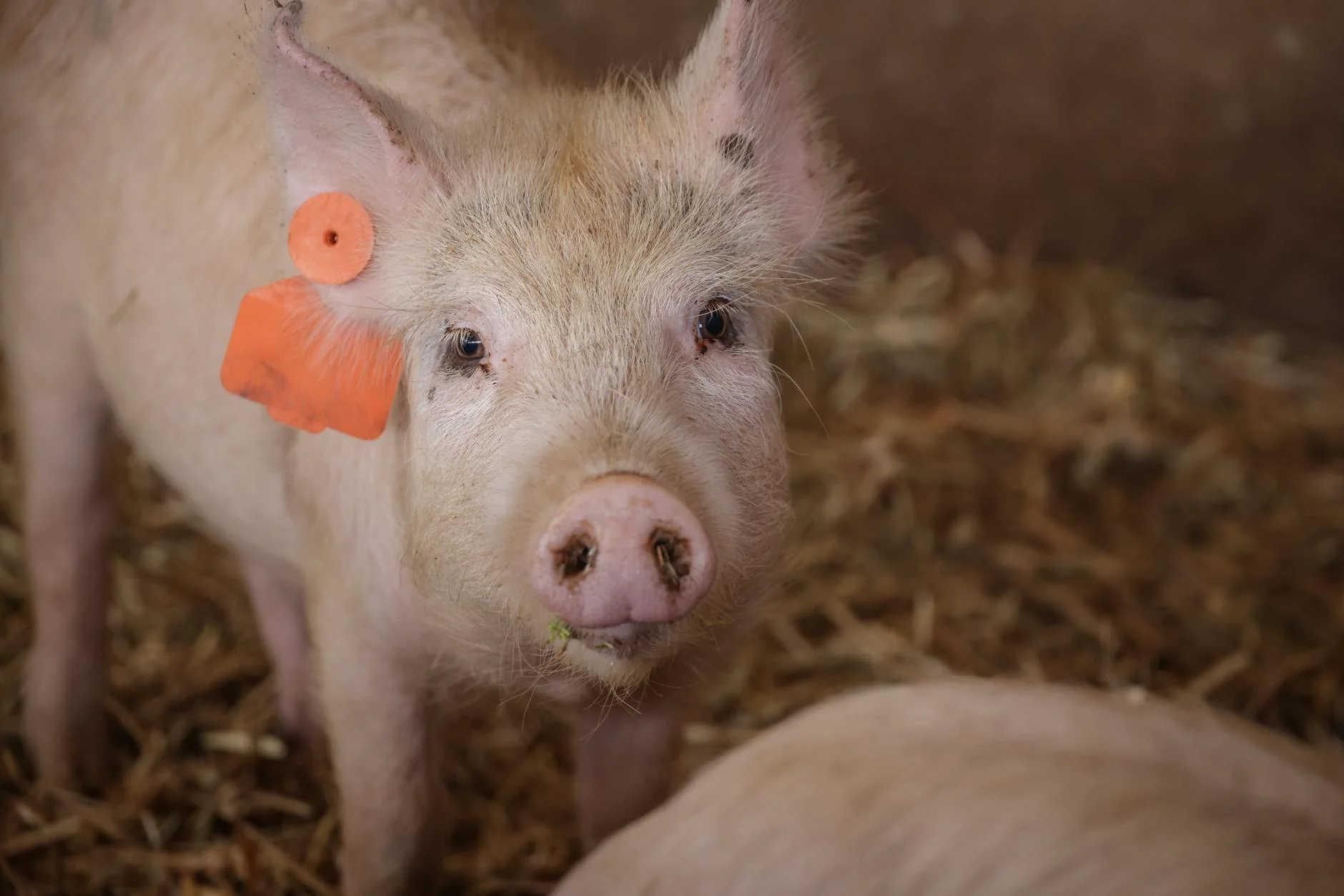
Scientists at a Chinese university have demonstrated that eye drops containing particles derived from pig semen can deliver cancer-killing compounds across the retina's protective barrier in mice, halting tumour growth while preserving vision. The technique, published in Science Advances on 27 March 2026, targets retinoblastoma — a childhood cancer that currently requires invasive injections, chemotherapy, or laser therapy, all of which risk collateral damage to healthy eye tissue [1].
Dispatch
SHENYANG, CHINA — 27 March 2026
The research comes from Yu Zhang and colleagues at Shenyang Pharmaceutical University. Nature News reported the findings:
Scientists have used pig semen to develop eye drops that can stop tumour growth in the retina and preserve vision, a study in mice shows. The work is published today in Science Advances. It is hoped that the drops could be developed to treat children with retinoblastoma, a cancer of the retina. The condition is typically treated with injections of drugs into the eye, chemotherapy or laser therapy, all of which can damage non-cancerous parts of the eye.
Nature News, 27 March 2026 [1]
The mechanism hinges on exosomes — submicroscopic particles naturally released by cells — which the team engineered to carry a nanozyme system containing carbon dots, manganese dioxide, and glucose oxidase. The critical innovation: the researchers sourced these exosomes from pig semen because sperm naturally penetrate the female reproductive tract, suggesting the particles possess inherent barrier-crossing properties [1].
Nature News elaborated on the delivery mechanism:
The team used exosomes derived from semen because the particles enable sperm to penetrate the female reproductive tract. In studies with human corneal cells, the researchers determined that the exosomes from pig semen can open and close tight junctions — semipermeable structures found in the external membrane of the cells on the surface of the eye. To improve the exosomes' selectivity, the team attached them to folic acid molecules. Retinoblastoma cells have much higher levels of folic acid than healthy cells do.
Nature News, 27 March 2026 [1]
In mice with retinal tumours, the treated animals showed tumours that remained small after 30 days, with eyesight comparable to tumour-free controls. Critically, when the same nanozyme components were applied without exosome packaging, the tumours continued to grow — and spread to other parts of the eye — because the components could not penetrate the barrier around the eye [1].
No major competing outlet has published independent verification or a contrasting analysis of this work as of publication date.
What's Really Happening

The Real Stakes
For patients: Retinoblastoma affects approximately 3,000 children globally each year, with cure rates exceeding 95% in high-income countries but dropping below 50% in low-income regions [2]. Current therapies preserve sight in roughly 75–80% of cases but carry significant morbidity — systemic chemotherapy toxicity, retinal scarring from laser therapy, and the procedural trauma of repeated intraocular injections [2]. If this approach advances to human trials and proves safe and efficacious, it would represent a genuine step forward for children whose tumours are small or caught early.
For pharmaceutical development: The exosome-as-delivery-vehicle model sidesteps one of oncology's hardest problems: getting drugs across biological barriers without triggering immune responses or systemic toxicity. If the pig-semen-derived exosomes prove biocompatible in humans — a major unresolved question — this could accelerate development of treatments for other barrier-protected tumours: glioblastoma, meningioma, and metastatic disease in the central nervous system. Chunxia Zhao noted the potential: The technique could improve drug delivery across other barriers that are similarly difficult to breach, such as the blood–brain barrier — to treat conditions including Alzheimer's disease — or the mucosal barrier [1]. This is not fringe speculation; it is a peer researcher identifying validated adjacencies.
For Chinese biotech positioning: Shenyang Pharmaceutical University is not a household name in Western oncology circles. This publication in Science Advances — a high-impact Nature portfolio journal — signals that Chinese academic institutions are now producing frontier-grade research in nanomedicine. If the team can translate this into a clinical-stage asset, it could attract venture capital and licensing interest from global pharma. For China's biotech ecosystem, this is a credibility marker.
For regulatory frameworks: No health authority has yet published guidance on exosome-based therapeutics or on the use of animal-derived biological materials in drug delivery systems. The FDA, EMA, and NMPA (China's regulator) will need to establish standards for manufacturing, characterisation, and safety testing before human trials can proceed [3]. This is not a barrier to the science — it is a known procedural hurdle that every novel modality faces.
Industry Context
The exosome-therapeutics space has grown rapidly over the past five years. Companies like Exosome Diagnostics (now part of Bio-Rad), Evox Therapeutics, and Aethlon Medical have raised hundreds of millions in venture capital to develop exosome-based diagnostics and therapeutics [4]. Most focus on engineering exosomes to carry RNA therapeutics or small-molecule drugs across barriers. The Shenyang team's approach — using exosomes as a physical shuttle for nanozyme systems — is methodologically distinct but philosophically aligned: treat exosomes as nature's drug-delivery vehicle.
The use of pig-derived biological material is not novel in pharmaceutical manufacturing. Pig heart valves have been used in cardiac surgery for decades; pig insulin preceded synthetic insulin; porcine-derived heparin remains a critical anticoagulant [5]. The regulatory and manufacturing infrastructure for sourcing, processing, and quality-controlling animal-derived biologics is mature. The challenge here is not sourcing pig semen — it is validating that exosomes derived from it are safe, immunologically inert, and consistent when scaled to clinical manufacturing volumes.
Impact Radar
Watch For
1. Human trial initiation by Shenyang Pharmaceutical or a partner: Watch for an IND application (US), CTA application (UK/EU), or NMPA clinical trial approval announcement. The team has demonstrated proof-of-concept; the next gate is safety and dosing in humans. If no trial begins within 24 months, the research may have encountered manufacturing or regulatory obstacles not discussed in the Nature article.
2. Licensing or partnership announcements: Exosome therapeutics are attracting major pharma interest. If Shenyang Pharmaceutical announces a deal with Novartis, Roche, Allergan, or another ophthalmology player, it signals that commercial viability has been assessed positively and that capital is flowing toward clinical development.
3. Publication of manufacturing and characterisation data: The Nature article does not detail exosome yield, purity, stability at room temperature, or shelf-life — all critical for a topical eye drop. If the team publishes supplementary data or a follow-up methods paper addressing these, it indicates progress toward clinical-grade manufacturing.
4. Regulatory guidance from NMPA, FDA, or EMA on exosome therapeutics: Health authorities could issue guidance on characterisation, potency assays, and safety testing for exosome-based drugs. Such guidance would either accelerate or constrain the pathway depending on its stringency. No public timeline has been established.
Bottom Line
This is credible early-stage science with genuine clinical potential — but it is not ready for patients. The exosome-based delivery system works in mice; scaling it to humans, validating safety, and manufacturing it at clinical volumes are separate problems. Watch for human trials within 24 months. If they begin and show promise, this could reshape how doctors treat not just retinoblastoma but a range of barrier-protected cancers and neurological diseases. Until then, it remains a proof-of-concept with significant translational distance ahead.
---