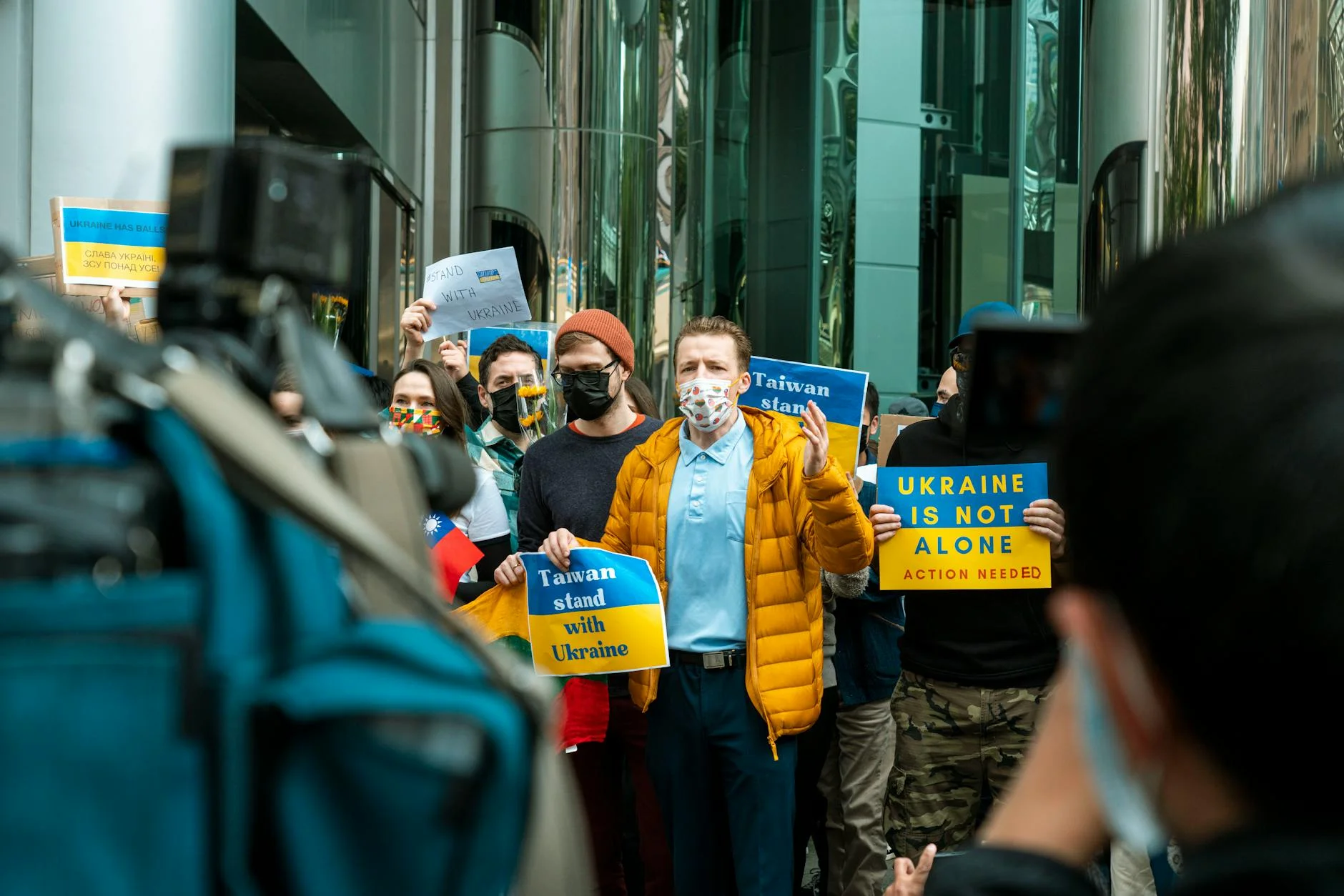
G7 foreign ministers meeting in France on 28 March 2026 reaffirmed their commitment to Ukraine while pledging to work "closely" toward a "just and durable" peace settlement. The statement marks the latest iteration of Western unity messaging on Ukraine—but offers no concrete mechanism for achieving the ceasefire that all parties claim to want.
Dispatch
PARIS, 28 MARCH 2026 — The G7 foreign ministers' statement, reported by NHK World on the morning of 28 March 2026, carries the hallmarks of consensus communiqué: broad commitments, no specifics, and language designed to offend no one while binding no one to action.
フランスで開かれているG7=主要7か国の外相会合は、ウクライナ支援をめぐる討議を行い、各国がウクライナへの連帯を改めて示すとともに、公正かつ永続的な和平の実現に向けて緊密に取り組んでいくことを確認しました。
NHK World, 28 March 2026
Translated: "The G7 foreign ministers' meeting held in France discussed Ukraine support and reaffirmed each nation's solidarity with Ukraine, while confirming they will work closely toward realizing a just and durable peace." [1]
No major international outlet has yet published a detailed breakdown of what "working closely" entails, what "just" means in practical terms, or what timeline the G7 envisions. The statement itself—available only through the NHK summary—lacks the granular detail that would allow independent verification of whether this represents a shift in Western strategy or merely routine reaffirmation.
What's Really Happening

The Real Stakes
The G7 statement serves a dual purpose: it maintains Western coalition cohesion on the surface while allowing each member state to pursue divergent Ukraine strategies beneath the surface.
For Ukraine: The reaffirmation of "solidarity" is a holding action, not a victory. Zelensky's visit to Saudi Arabia the day before the G7 meeting suggests he is hedging his bets—seeking military support from non-Western sources because Western supply chains remain unpredictable. The G7's commitment to "work closely" on peace does not translate into guaranteed weapons shipments, financial aid, or NATO membership. Confirmed: G7 members have provided substantial military and financial aid to Ukraine since 2022, but the pace and scope vary widely by member. [1] The statement does not announce new commitments.
For Russia: The emphasis on "durable" peace—rather than "Ukrainian victory" or "Russian withdrawal"—creates diplomatic space for Moscow to claim vindication. A "durable" settlement, in Russian reading, means one that acknowledges the territorial reality on the ground as of March 2026. Russia's negotiating position has strengthened since early 2022; any settlement that does not reverse all Russian territorial gains represents a de facto Russian victory. The G7's pivot toward "peace" language may signal that Western appetite for indefinite Ukraine support is waning.
For individual G7 members: The statement masks profound disagreement. Germany faces energy pressure and industrial competitiveness concerns that make prolonged Ukraine support costly. Japan, geographically distant from the conflict, balances support for the Western alliance against economic ties to Russia and China. Italy has historically maintained ambiguous positions on Russia. The U.S. position depends on the administration in power—the mention of Trump in the related NHK headlines [1] signals that American commitment to Ukraine remains contested domestically. The communiqué allows each member to claim it is pursuing peace while continuing to supply weapons.
One critical absence: no mention of verification mechanisms, enforcement, or what happens if Russia violates any settlement. This is not accidental. The G7 has not agreed on answers to these questions.
Geopolitical Dimension
The G7 statement occurs in a context of shifting great-power competition. The related NHK headlines mention Russian parliamentary delegations visiting the United States to discuss "relations improvement" and sanctions relief [1]—suggesting that behind-the-scenes negotiations on Ukraine may already be underway outside the G7 framework.
France's role: As the meeting's host, France has positioned itself as a potential mediator between the West and Russia. French President Emmanuel Macron has consistently advocated for diplomatic off-ramps and has maintained communication channels with Moscow. The G7's emphasis on "working closely" on peace may reflect French influence—a preference for negotiation over indefinite military support.
U.S. position: The Trump-related headlines [1] indicate that American Ukraine policy remains in flux. A U.S. administration less committed to indefinite support could accelerate G7 movement toward settlement talks. The G7 statement's timing—with Trump mentioned in parallel reporting—suggests the group may be preparing for a shift in American strategy.
China's absence: China is not a G7 member, but its role in any Ukraine settlement is increasingly relevant. China has maintained strategic ambiguity on the conflict and has not provided military support to Russia—suggesting Beijing may position itself as a mediator or guarantor of any settlement. The G7 statement makes no mention of Chinese involvement, a significant omission if serious peace negotiations are being contemplated.
Impact Radar
Watch For
1. U.S. diplomatic initiative within 60 days: If the Trump administration (or its successor) announces a specific Ukraine settlement proposal by late May 2026, the G7 statement will have been a precursor to a major shift in American strategy. Watch for announcements from the U.S. State Department or White House regarding direct negotiations with Russia. [Related: Trump administration mentioned in parallel NHK reporting, 27 March 2026.]
2. G7 follow-up meeting with named terms: The statement says the G7 will "work closely" but names no next meeting, no working group, and no timeline. If a follow-up G7 foreign ministers' meeting is announced for Q2 2026 with an explicit agenda on Ukraine peace terms, the March statement will have been a placeholder preceding substantive negotiations.
3. Russian response and negotiating position: Monitor Russian Foreign Ministry statements in the week following the G7 announcement. If Moscow signals willingness to engage in "peace talks" (rather than demanding Ukrainian surrender), it suggests the G7's language has created diplomatic opening. Alternatively, if Russia rejects the G7 framework, it indicates the statement carried no weight.
4. Ukrainian official response: Zelensky's government has historically resisted "peace" language that implies territorial compromise. Watch for Ukrainian statements accepting or rejecting the G7 framework. Rejection would signal that Kyiv remains committed to military victory and may seek alternative support channels (e.g., Saudi Arabia, Japan, Poland) outside the G7 consensus.
Bottom Line
The G7 foreign ministers' statement is a holding pattern, not a breakthrough. It reaffirms Western support for Ukraine while opening diplomatic space for settlement talks—a shift that reflects either genuine consensus on the need for negotiation or, more likely, divergent national interests masked by consensus language. The real test comes in the weeks ahead: if concrete peace proposals emerge from the U.S., France, or other G7 members, this statement will have been the opening move. If nothing follows, it was merely ritual.
The statement's most important element is what it does not say: no new weapons commitments, no timeline for NATO membership, no binding enforcement mechanism, and no definition of "just" peace. In diplomacy, silence is often louder than words.
---