Now let me write the analysis piece based on the extensive source material already provided.
---
Israel's Death-by-Hanging Law Draws Global Fury and War Crime Warnings
The Knesset passed a law that makes execution the default sentence for Palestinians — but not, in practice, for Jewish Israelis who commit identical crimes. The UN calls it what it is: a war crime in waiting.
Israel's parliament voted 62–48 on Monday to make death by hanging the default punishment for Palestinians in the occupied West Bank convicted of deadly attacks in military courts. Prime Minister Benjamin Netanyahu walked onto the Knesset floor to cast his vote personally. Within hours, the UN's most senior human rights official declared the law would constitute a war crime if applied to residents of occupied territory. Protests erupted from London to Jakarta. And National Security Minister Itamar Ben-Gvir, the bill's most vocal champion, wore a golden noose on his lapel.
Dispatch
DOHA, 1 April 2026 — Al Jazeera, the Qatari-headquartered broadcaster, reported on the wave of global demonstrations triggered by the legislation's passage:
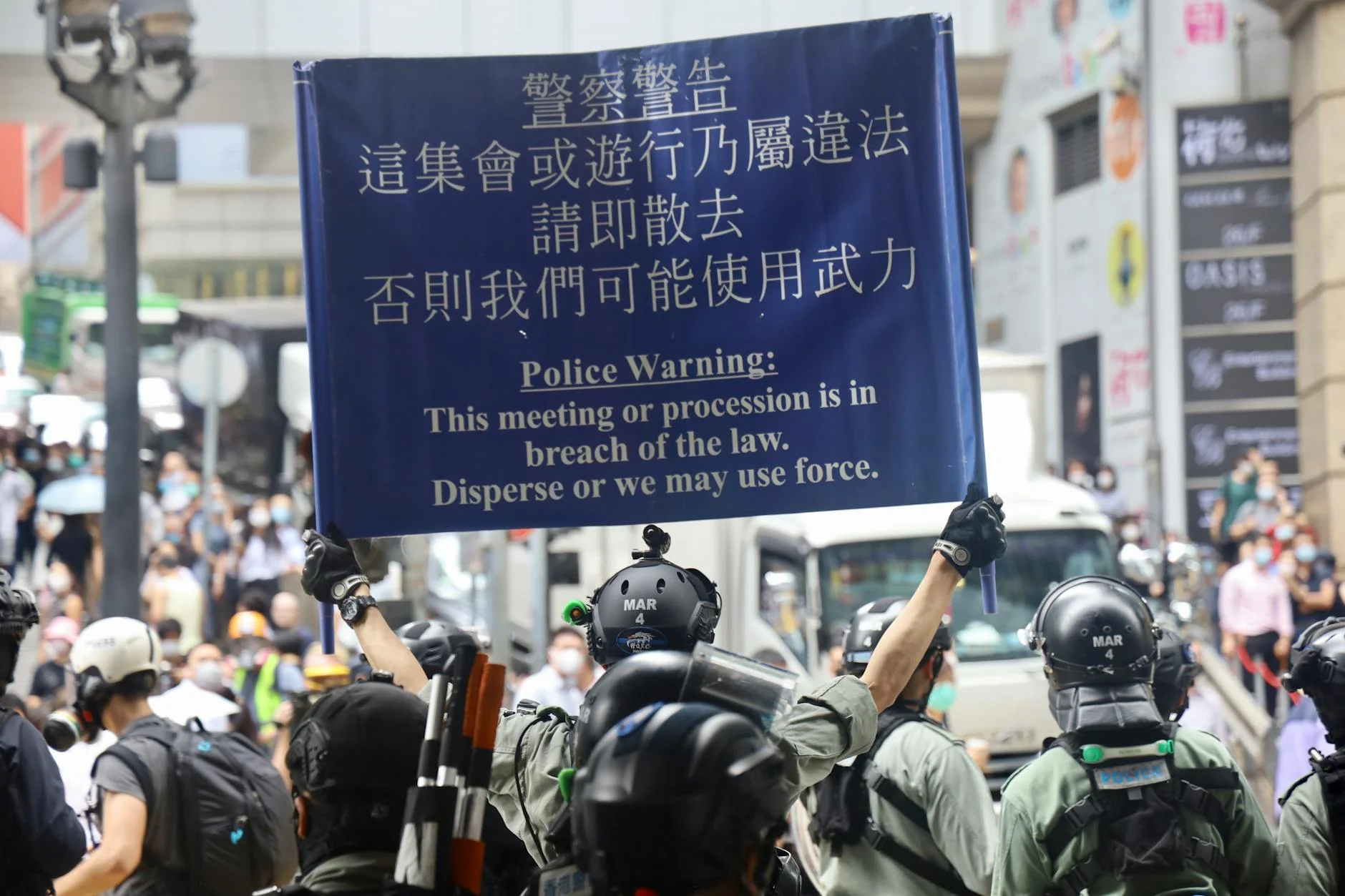
Protesters are condemning Israel's passing of a bill that makes the death penalty the default punishment for Palestinians convicted of deadly attacks. The UN has called the decision deeply discriminatory legislation.
Al Jazeera, 1 April 2026

Al Jazeera's Mohammad Saleh also reported from outside Downing Street in London, where demonstrators demanded that UK Prime Minister Keir Starmer move beyond verbal condemnation, calling it a law of death that only applies to Palestinians [4].
A sharply different register — more forensic, less protest-driven — came from The Guardian (London, 31 March 2026), which led with the legal implications rather than the street response:
A new Israeli law that would allow the execution of Palestinians convicted on terror charges for deadly attacks, but not Jewish extremists accused of similar crimes, would constitute a war crime if enacted, according to one of the UN's most senior human rights officials. Speaking amid mounting international condemnation of the bill, the UN's high commissioner for human rights, Volker Türk, described the law as patently inconsistent with Israel's international law obligations, including in relation to the right to life. He added that it raises serious concerns about due process violations, is deeply discriminatory, and must be promptly repealed.
The Guardian, 31 March 2026
The New York Times (31 March 2026) added a critical analytical dimension, reporting that experts say it almost certainly cannot be applied to Jewish extremists convicted of similar crimes and describing how some right-wing Israeli lawmakers enthusiastically adopted the noose as a symbol of their support for the law, wearing golden noose-shaped pins on their lapels in the Knesset [8].
Deutsche Welle (30 March 2026) provided the most granular legal breakdown, noting the law operates on two distinct tracks: one for Israeli criminal courts and one for military courts in the occupied West Bank that exclusively try Palestinians living there under military law [6].
What's Really Happening

The Real Stakes
The immediate losers are Palestinian defendants in Israeli military courts in the West Bank — a system where they already face near-certain conviction, limited access to counsel, and proceedings conducted in Hebrew. The law adds the ultimate penalty to a system that human rights organisations have spent decades documenting as falling far short of fair trial standards. Confirmed: Volker Türk, UN High Commissioner for Human Rights, stated that application of this law to residents of occupied Palestinian territory would constitute a war crime [3]. That is not activist rhetoric — it is a formal legal position from the UN's most senior human rights official, grounded in the Fourth Geneva Convention's prohibition on occupying powers imposing the death penalty on protected persons.
The winners, in the short term, are Israel's far-right coalition partners. Itamar Ben-Gvir, Minister of National Security and leader of Jewish Power, has campaigned on this issue for years. His golden noose lapel pin — worn repeatedly in the Knesset — is not subtle symbolism [3][8]. Ben-Gvir has transformed from a figure once barred from Israeli military service for extremism into the architect of a law that gives military courts the power to hang people. For him, this is a political triumph that cements his base and forces Netanyahu into ever-deeper dependence on the far right.
Projected: The law's passage will accelerate Israel's diplomatic isolation in Europe, where abolition of the death penalty is a foundational principle. Germany — traditionally Israel's most steadfast European ally after the Holocaust — has already broken cover. Stefan Kornelius, spokesperson for the German government, stated: The rejection of the death penalty is a fundamental principle of German policy and acknowledged that such a law would likely apply exclusively to Palestinians in the Palestinian territories [3]. When Berlin says this publicly, something structural has shifted.
Geopolitical Dimension
The law lands in an already incendiary regional context. The SCMP source material references Trump urging countries to just TAKE oil from the Strait of Hormuz amid a US-Israeli military campaign against Iran [10], while singling out Britain and France for refusing to assist. This broader confrontation means Israel's far-right government is operating with an unusual degree of American cover — Washington is unlikely to expend political capital criticising a death penalty law while coordinating strikes alongside the IDF.
The European response, by contrast, has been swift and unusually unified. The EU's Anouar El Anouni called it a clear step backwards — the introduction of the death penalty, together with the discriminatory nature of the law [3]. Spain's Pedro Sánchez invoked the word apartheid — language European leaders have historically avoided in reference to Israel [3]. Germany's statement acknowledged the ethnic targeting explicitly [3]. This is a coordinated European position forming in real time, and it carries consequences: EU-Israel association agreement reviews, potential conditioning of trade preferences, and ammunition for the International Criminal Court proceedings already underway.
The protest dimension spans multiple continents. Al Jazeera documented demonstrations targeting not just Israel but allied governments perceived as insufficiently responsive — protesters outside Downing Street demanded action from the UK government, not just words [4]. The Times of Israel acknowledged international Israeli protests against the law [12], indicating that the opposition includes Israeli citizens and diaspora communities, not only Palestinians and solidarity movements. This domestic Israeli dissent matters: it undermines the government's framing of the law as a national security consensus.
The law also sets a precedent that other authoritarian and occupation regimes will study. If a state can impose ethnically differentiated death penalty regimes on an occupied population without material consequence, the architecture of international humanitarian law — built painstakingly since 1949 — suffers a structural blow.

Impact Radar
Watch For
1. Israel's Supreme Court petition timeline. Rights organisations will file challenges within weeks. If the court agrees to hear the case — and if it issues an interim injunction freezing enforcement — the law becomes symbolic rather than operational. If the court declines or delays, the 90-day execution clock begins ticking from the first military court conviction under the new statute [3][5].
2. EU Foreign Affairs Council response. The coordinated statements from Brussels, Berlin, and Madrid suggest a formal Council discussion is imminent. Watch for any move to review the EU-Israel Association Agreement or to activate the agreement's human rights clause — a step the EU has historically avoided but which multiple member states are now publicly advocating.
3. The first military court prosecution under the new law. The statute is not retroactive [5][8], so its real-world impact depends on future cases. The Israeli military detains hundreds of Palestinians annually in the West Bank. The first capital prosecution will be the true test — of the law, of the courts, and of the international community's willingness to act beyond statements.
Bottom Line
Israel's Knesset has passed a law that makes hanging the default sentence for Palestinians convicted of deadly attacks in military courts — courts that do not try Jewish Israelis for equivalent crimes. The UN's highest human rights authority has declared this a war crime in waiting. The question is no longer whether this law is discriminatory — the state that passed it designed it to be. The question is whether any institution, Israeli or international, will stop it before the first noose is tied.