Israel's parliament passed a law on Monday making death by hanging the default sentence for Palestinians convicted of deadly attacks, triggering condemnation from the United Nations, the European Union, and protesters from London to the occupied West Bank [1][4][8]. The legislation, approved 62–48 with Prime Minister Benjamin Netanyahu voting in person, marks the first expansion of capital punishment in Israel since the state executed Adolf Eichmann in 1962 [5][8].
Dispatch
[LONDON, 1 April 2026] — Al Jazeera's Mohammad Saleh reported from outside Downing Street, where demonstrators confronted the British government's response to the legislation:
A law of death that only applies to Palestinians. Protesters gathered outside Downing Street to demand that UK Prime Minister Keir Starmer act rather than just condemn Israel's new death penalty law for Palestinians.
Al Jazeera, 1 April 2026 [2]

The protest reflected a wider frustration among campaigners who view Western condemnation as rhetorical cover for inaction. Starmer's government has not announced any diplomatic consequences beyond public statements of concern.
A sharply different register came from the Guardian, which obtained an extended statement from the UN's most senior human rights official:
Speaking amid mounting international condemnation of the bill, the UN's high commissioner for human rights, Volker Türk, described the law as patently inconsistent with Israel's international law obligations, including in relation to the right to life. He added that it raises serious concerns about due process violations, is deeply discriminatory, and must be promptly repealed.
Its application in a discriminatory manner would constitute an additional, particularly egravious violation of international law. Its application to residents of the occupied Palestinian territory would constitute a war crime, Türk said.
The Guardian, 31 March 2026 [1]
The New York Times added the structural detail that protesters have seized upon — the law's asymmetric architecture:
Israel's Parliament passed a law on Monday that would allow the hanging of Palestinians convicted of deadly militant attacks, but experts say it almost certainly cannot be applied to Jewish extremists convicted of similar crimes.
New York Times, 31 March 2026 [8]
Deutsche Welle provided the granular legal breakdown:
The law has two different tracks relating to trials in criminal courts in Israel and in military courts in the Israeli-occupied West Bank. The latter are under Israeli military administration and exclusively try Palestinians living there under military law.
DW, 30 March 2026 [5]
What's Really Happening
The Real Stakes
The immediate losers are Palestinians in the occupied West Bank, who now face the threat of state execution under a military court system that human rights organisations have long criticised for structural bias. But the blast radius extends well beyond the territories. Israel's international standing — already under severe strain from the Gaza war — faces a qualitative shift. Previous diplomatic friction centred on proportionality and civilian casualties, areas where governments could offer ambiguous statements. A law that the UN high commissioner explicitly labels a potential war crime [1] compresses the space for ambiguity to near zero.
Volker Türk, UN High Commissioner for Human Rights, said the law is deeply discriminatory and that its application to residents of the occupied Palestinian territory would constitute a war crime [1]. This is not NGO commentary; this is the UN's senior human rights official invoking the language of the Rome Statute. If the International Criminal Court takes up this framing, Israel — and states that continue to supply it with arms — face legal exposure that goes beyond diplomatic discomfort.
For Netanyahu, the calculus is domestic. The legislation cements his coalition with Ben-Gvir and Finance Minister Bezalel Smotrich, whose far-right parties have threatened to collapse the government over settlement policy and judicial matters. Confirmed: Netanyahu voted yes in person [4][5]. One scenario: if the Israeli Supreme Court strikes down the law — a legal challenge is widely expected [4][5] — Ben-Gvir could use the ruling as a pretext to demand further curbs on judicial independence, reigniting the constitutional crisis that paralysed Israel in 2023.
Geopolitical Dimension
The European response has been unusually unified and unusually blunt. EU spokesperson Anouar El Anouni called it a clear step backwards — the introduction of the death penalty, together with the discriminatory nature of the law [1]. Spain's Prime Minister Pedro Sánchez went furthest, writing on X: Same crime, different punishment. That is not justice. It is a step closer to apartheid [1]. Germany — historically Israel's most protective European ally — broke from its usual caution. Government spokesperson Stefan Kornelius said Berlin views the law passed yesterday with great concern and noted that such a law would likely apply exclusively to Palestinians in the Palestinian territories [1].
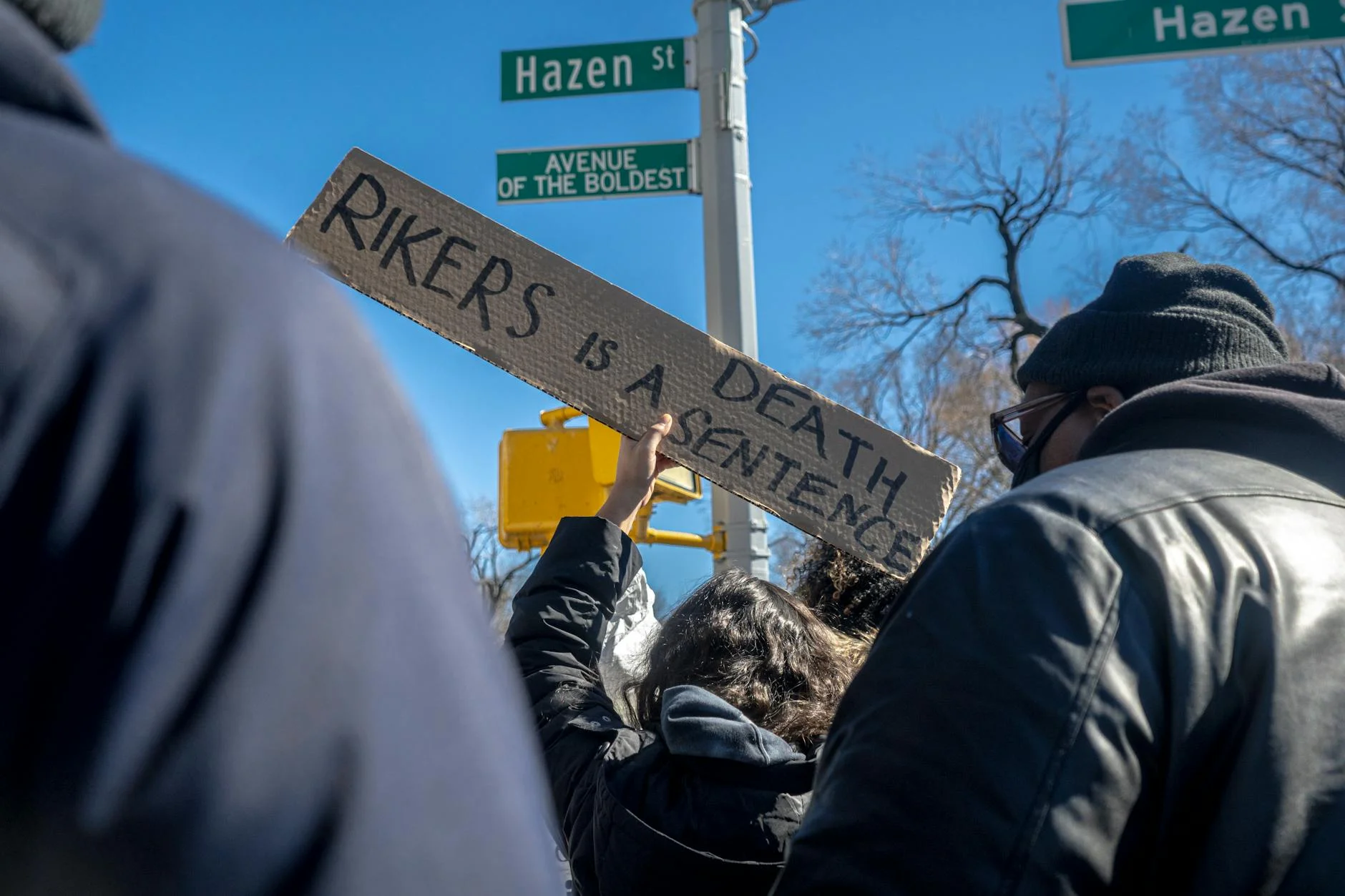
The UK occupies a particularly uncomfortable position. Protesters outside Downing Street explicitly demanded that Starmer move beyond condemnation to concrete action [2][3] — meaning, at minimum, a review of arms export licences and diplomatic downgrades. London has so far declined to signal any such steps. Britain's post-Brexit foreign policy relies heavily on bilateral trade relationships and security partnerships in the Middle East; punitive measures against Israel would collide with those interests. But the pressure from Labour's own base — many of whom regard the Gaza war as a defining moral issue — makes inaction politically costly as well.
The South China Morning Post, reporting from Hong Kong, framed the law in neutral security terms — a major victory for Israel's far right — without the normative language used by European outlets [4]. This split in global media framing matters: it signals that much of Asia and the Global South will treat this as an internal Israeli legal matter rather than a human rights emergency, limiting the diplomatic coalition available to push for repeal.
The absence of a strong US statement is conspicuous. Washington has not issued a formal position on the legislation as of publication. Should the Biden administration's successor continue to shield Israel from Security Council action, the law will stand without meaningful multilateral enforcement.
Impact Radar
Watch For
1. Israeli Supreme Court challenge. Both the South China Morning Post and DW report that the law is expected to face a legal challenge in Israel's high court [4][5]. If the court accepts the case and issues an injunction, watch whether Ben-Gvir uses the ruling to escalate demands for judicial overhaul — repeating the 2023 playbook.
2. ICC response. Türk's explicit invocation of war crime [1] lowers the evidentiary bar for an ICC referral. If the prosecutor's office opens a preliminary examination specifically on this law, it would mark the first time capital punishment legislation — as distinct from battlefield conduct — triggered an ICC investigation.
3. UK arms export review. The Downing Street protests [2][3] and Labour backbench pressure make a parliamentary debate on arms licences probable within weeks. If Starmer orders even a partial review, it would signal a broader European shift from rhetoric to consequence.
Bottom Line
Israel has passed a law that makes hanging the default punishment for Palestinians convicted of deadly attacks in military courts — while structuring the legislation so it almost certainly cannot apply to Jewish citizens who commit equivalent acts [8]. The UN high commissioner has called this a potential war crime [1]. The question is no longer whether international opinion has shifted against Israel's conduct, but whether any government will convert condemnation into enforceable consequences. So far, the answer is no.
---